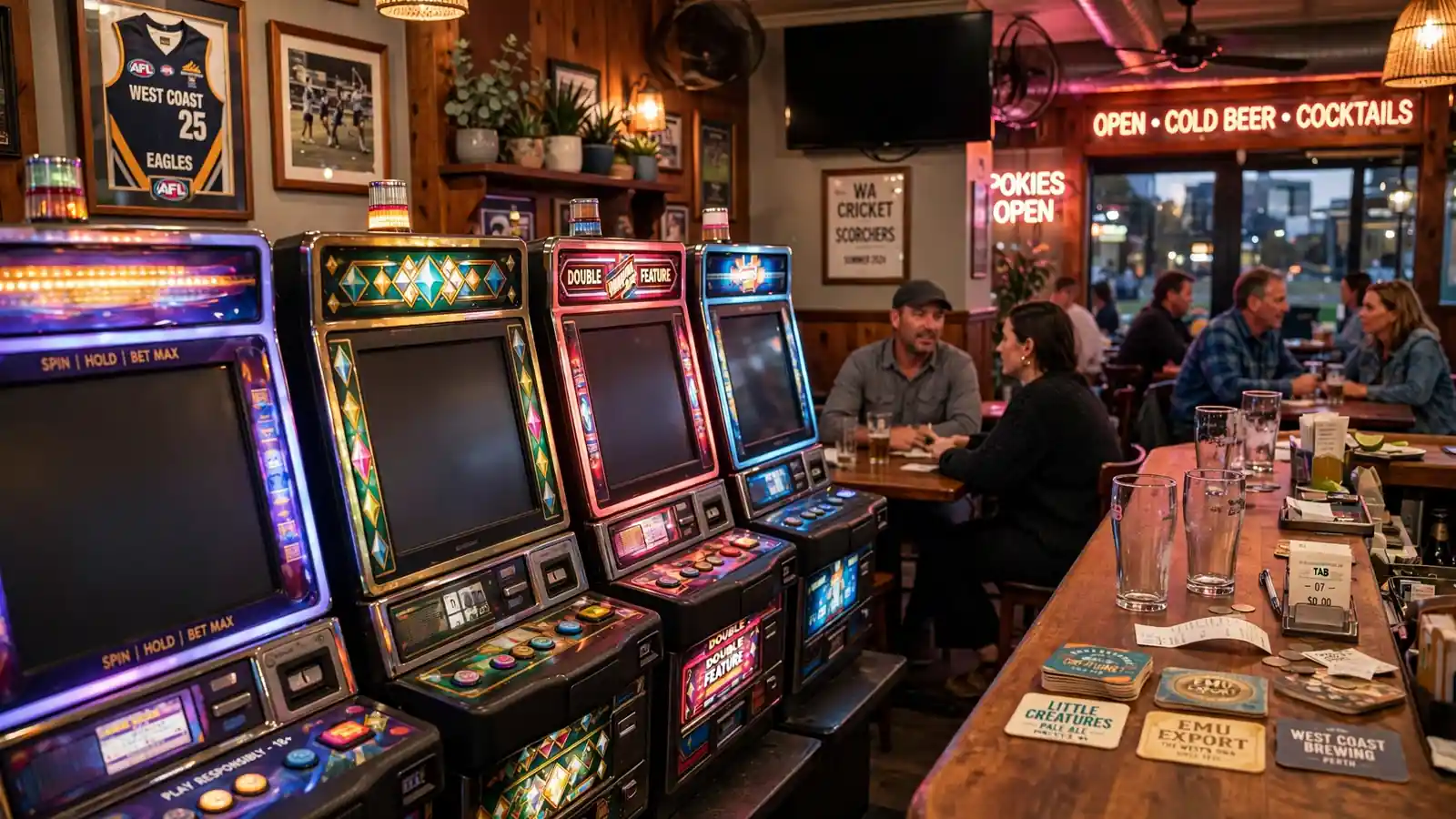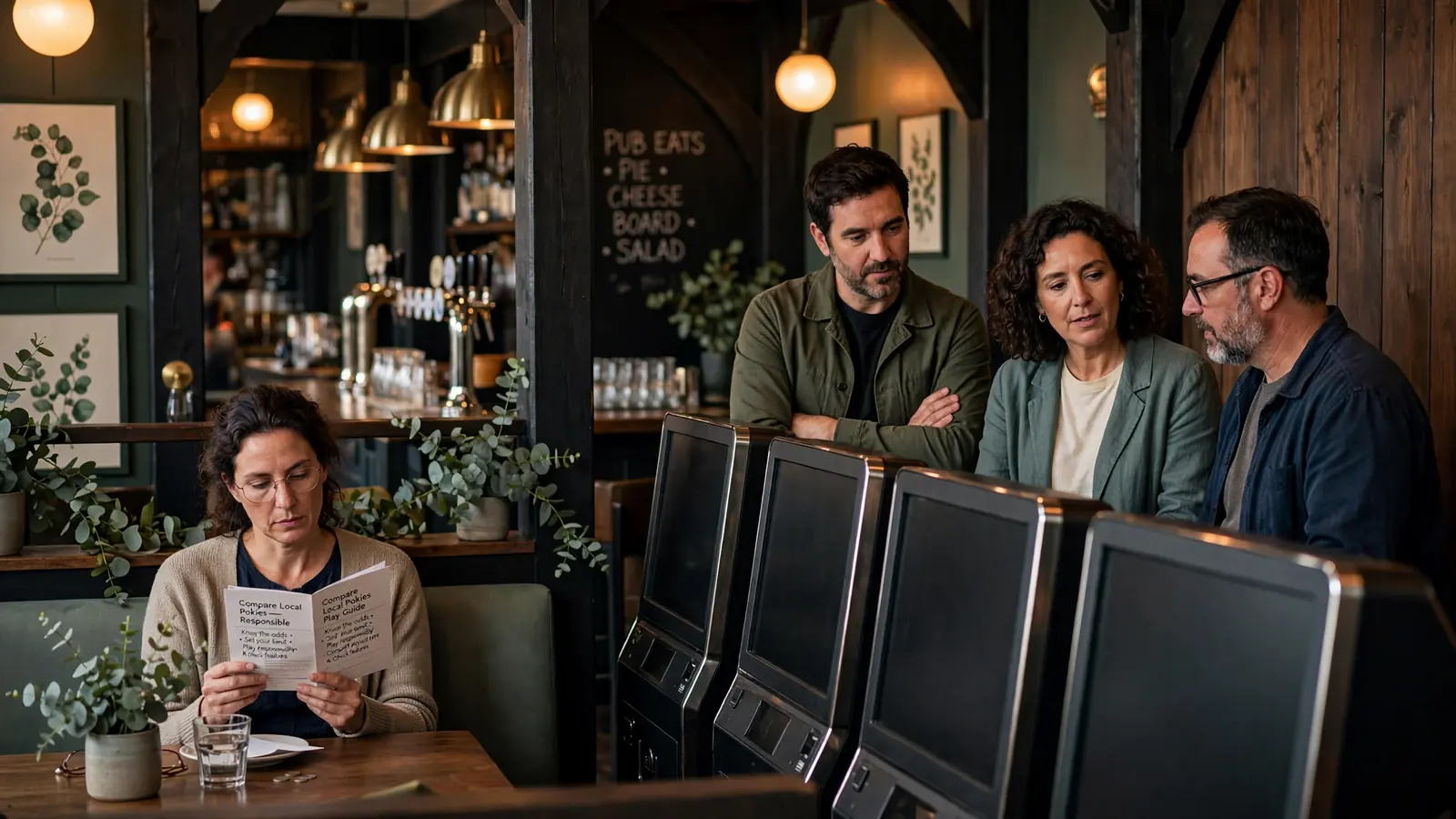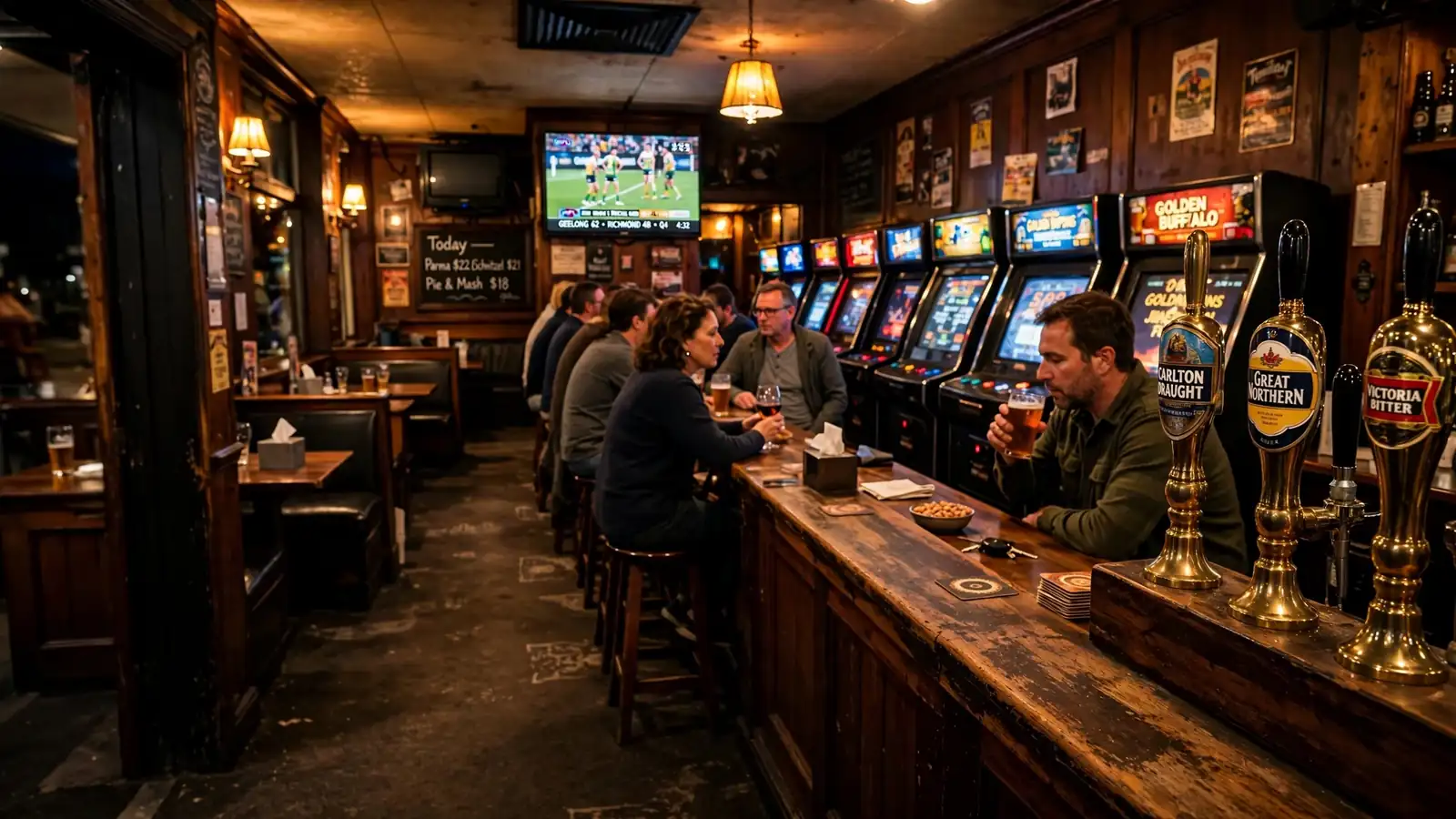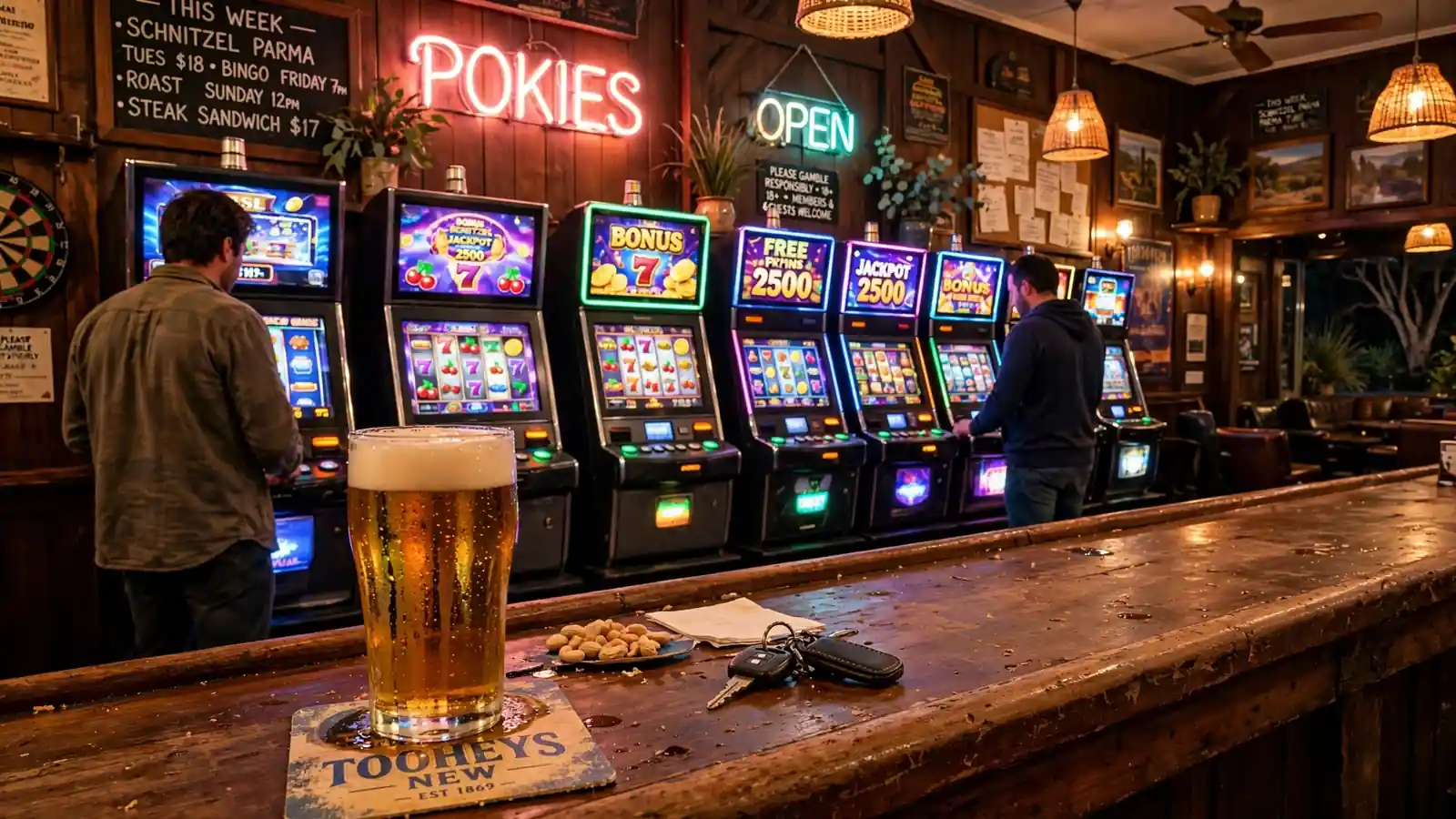
Venue opening status, machine availability and online search results can each leave important questions unanswered.
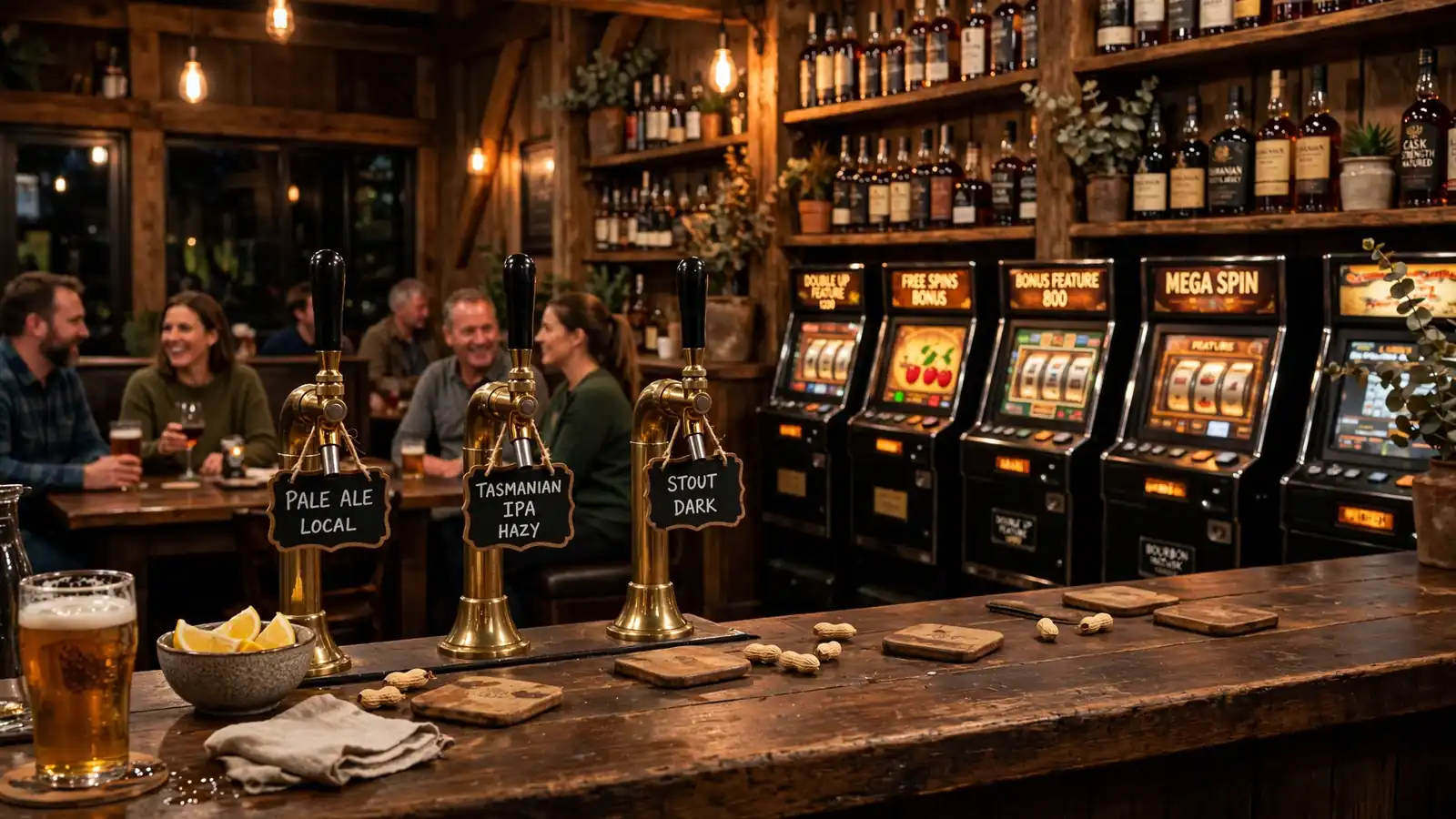
A venue showing as open is not the same thing as its pokies being available. That distinction is easy to miss when you are deciding whether to make a trip. An online listing may give you a useful starting point, but an “open now” label does not confirm that the machines are operating at the time you plan to arrive.
I have made that assumption before: saw a status that looked current, treated it as the answer, and only later realised I had not checked the thing I actually cared about. Now I ask the venue directly. It takes less time than guessing, and it avoids building a trip around a search result.
When you contact a venue, be specific. Ask whether the pokies will be operating at the time you expect to arrive, rather than asking only whether the venue is open. Those are separate questions. A venue might be open while a particular service or area is unavailable; the general status alone cannot settle that.
If you are checking ahead, give the staff member the day and approximate arrival time. If your plans change, check again. A confirmation for one time is not a promise about another, and an old listing may not reflect a temporary change. The simple question is: “Will the pokies be operating when I get there?”
Calling is often the clearest way to ask, but use whichever direct contact method the venue provides. If you do not get a clear answer, do not translate uncertainty into a yes. Try again later or make another plan. I know that sounds obvious. It is less obvious when you are already on your way.
A search result can compress several different things into one label: the business’s general opening status, information entered by the venue, or data that has not been updated recently. You cannot tell from the label alone which of those applies. So if you are checking whether the pokies are open now in Tasmania, use the result to identify whom to contact, not as proof that the machines are running.
The same goes for early or late plans. A result that appears to answer whether a place is open at a particular hour does not necessarily answer whether its pokies are operating then. Ask about the specific time you have in mind. Avoid assuming that one venue’s schedule tells you anything about another’s.
There is no useful shortcut in searching for a broad phrase such as “pokies open early” and treating the first result as a schedule. A result may be incomplete, and opening information can change. Direct confirmation is the part that matters.
If you are making a special trip, checking shortly before you leave is sensible. That is not because every venue changes its arrangements; it is because a previous answer or listing may not cover an unexpected change on the day. If you are already nearby, you can still call before going in rather than relying on an old status.
Keep the question narrow and practical. Confirm the day, the time, and that you mean the pokies themselves. You do not need a complicated script. A clear answer is useful; a vague one is not. If staff cannot confirm, treat the status as uncertain.
Some Australian reporting has described a requirement for venues with more than 20 gaming machines to have a Responsible gambling officer (RGO) on duty while those machines are operating, from 1 July. That is a venue-operations detail, not a way to tell whether a particular Tasmanian venue is open. It does not replace checking directly with the venue.
A broad search can turn up names, snippets, or pages that sound relevant without establishing that a particular place has operating pokies at the time you want to visit. A phrase such as “Crown Tasmania pokies” is not itself confirmation of a venue or its hours. Before acting on any result, identify the venue you mean and contact it directly.
I would not set out on the strength of a headline, an old listing, or a guess based on the hour. Ask the venue, get a clear answer for your intended visit, and check again if your timing changes. That is the only dependable way to turn “open now” from a hopeful label into information you can use.
A two-minute check beats a wasted trip.
If you’re looking for pokies options to consider in Tasmania in 2026, this list gives you a concise reference to the available operator details. Use the information provided to decide which services merit a closer look.
LuckyVibe
LuckyVibe is listed with a Curaçao Gaming Control Board licence, number OGL/2023/176/0095, held by Hollycorn N.V.
Vegaz Casino
Vegaz Casino lists a Curaçao OGL/2024/1335/0780 licence and a minimum deposit of EUR 20.
LevelUp Casino
LevelUp Casino lists a Curaçao eGaming licence, OGL/2023/174/0082, held by Dama N.V. Its minimum deposit is A$15.
SkyCrown
SkyCrown lists a Tobique Gaming Commission licence and a minimum deposit of A$30. Its stated payout times are around 10–15 minutes for crypto and 1–5 days for fiat.
SpinsUp
SpinsUp lists a Curaçao Gaming Control Board licence, OGL/2023/174/0082, held by Dama N.V.
JustCasino
JustCasino is listed with a Curaçao Gaming Control Board licence.
Uptown Pokies
Uptown Pokies is listed as operating since 2017 and has a minimum deposit of A$20. Its stated licensing jurisdiction is Curaçao.
Roby Casino
Roby Casino lists a Curaçao eGaming licence held by Roby Games Ltd.
Ricky Casino
Ricky Casino lists crypto payouts in under an hour and PayID payouts in 1–3 business days. The minimum deposit is A$20, or A$30 to qualify for the bonus.
MrPacho
MrPacho lists a minimum deposit of A$30. Its stated payout times are 30–120 minutes for crypto and 24–72 hours for fiat.
“Best paying” sounds like a promise about what will happen when you sit down. It isn’t. At most, it points you towards a return-to-player figure, or RTP: a percentage describing how much a pokie is designed to return over a very large number of plays. That figure is not a forecast for your session, and it does not tell you which machine will pay you next.
I used to treat a higher-looking RTP as a kind of edge I could carry into the room. That was the mistake. A theoretical return describes a broad pattern across many spins, not a personal balance sheet. You can have a short session that goes well, or one that gives nothing back, without either result proving that the published figure was false.
There is another wrinkle when people compare the same pokie across different casinos. A specialist affiliate review reports that some game providers let casinos choose between more than one RTP setting for a game. If that applies, the title alone may not tell you which return setting is in use at a particular casino. The game can look identical while its configured return differs. That is a reason to check the information for the specific game and venue, not a reason to assume every casino has chosen the same setting.
So I wouldn’t turn a general statement about provider options into a local ranking. If a page calls something the best paying pokie in Tasmania, look at what it actually shows: does it identify the game, the casino, and the RTP setting it is talking about? If those details are absent, the label is doing more work than the evidence.
Even with a setting confirmed, RTP doesn’t make individual spins predictable. A Random Number Generator determines each spin, and each spin is a fresh event. The result you just saw does not make a win “due”; a run of losses does not make the next spin more likely to pay. I’ve made that exact leap in my head, as if the machine had a memory and owed me a correction. It doesn’t.
That independence matters when you hear words like “hot,” “cold” or “ready.” They describe a story someone is telling about recent results, not a reliable way to read the next one. A string of wins may feel like momentum, and a string of losses may feel like a pattern, but neither changes the random process behind the following spin. The past can make a session feel charged. It cannot provide a dependable signal.
RTP is still useful, just in a narrower way. It can help you compare stated game settings when the information is clear and genuinely refers to the same basis. It cannot promise a return during your visit, tell you how long a run of results will last, or identify a guaranteed winner. Think of it as background information, not a personal forecast.
A percentage describing how much a pokie is designed to return over a very large number of plays, rather than a forecast for an individual session.
So when you’re weighing up the best pokies in Tasmania, separate the comparison from the sales pitch. Ask whether the RTP applies to that particular version of the game, and remember that even an accurately stated setting says nothing certain about your next spin. If the setting isn’t shown, don’t fill the gap with a guess. If it is shown, don’t mistake it for a promise.
That’s the limit. The number can describe a setting; it can’t tell you what your session will do.
A search for pokies near an airport, a CBD or somewhere “near me” is really a route-planning question: where could you go, and how would you get there? The wording can make the answer sound simpler than it is. Tasmania is a whole state, and “near Tasmania” or “near the airport” does not identify one starting point or one destination.
Start with the specific place you mean. If you are arriving by air, identify the airport and the area where you will be staying, then check a current map for venues in that area. If you are already in a city, use your actual location rather than relying on a broad CBD label. The result should be a real address you can assess against your plans, not just a name surfaced by a location search.
I have learnt not to treat a pin on a map as a travel plan. Check the address, the route and the transport option you intend to use before setting out. A result described as close may still be awkward to reach, particularly if you are unfamiliar with the area or travelling at a time when your preferred transport is limited. Don’t build the evening around a vague proximity label.
Tasmania-related searches can also be muddied by place names and state abbreviations. Someone searching from Victoria, for instance, may see results that are not actually on the Tasmanian side of the trip. Read the location details carefully and make sure the venue is in the place you intend to visit. “Near” needs a starting point.
For north Tasmania, narrow the search to the town or district where you will be, rather than treating the whole northern part of the state as one neighbourhood. The same applies to a CBD: specify the city, then check the address against your accommodation or other plans. That is ordinary trip planning, not a promise that a venue is next door.
If your intended destination is an airport itself, don’t assume that a general search result means pokies are inside the terminal or available as part of the airport. Confirm what the listing actually refers to and where its address is. A nearby result and an airport facility are different things.
There is one firm entry requirement to keep in mind: in Australia, you must be at least 18 to gamble, including on pokies. If you are under 18, you cannot gamble at a venue. If you are old enough, carry out the location check before travelling rather than relying on a rough map label or a phrase that leaves the destination unclear.
The useful result is not the one with the most confident wording. It is the one that gives you a specific place you can locate and assess for yourself. First pin down where you are going. Then decide whether the trip makes sense.
When I’m sizing up a pokies venue, I try to look past the room and the machines. How staff handle signs of gambling harm matters too. It is not a promise that a venue is “safe”; it is a practical way to judge whether its procedures are visible and taken seriously.
A useful starting point is to ask who is responsible for responding if a patron seems distressed or is struggling to stop. For venues with more than 20 gaming machines, a report by regionriverina.com.au describes a requirement for a Responsible gambling officer (RGO) to be on duty while the machines are operating. The report also describes a one-month grace period for venues to remove signage and introduce those officers. Because this is a reported requirement, rather than a venue-by-venue confirmation, ask the venue what applies there and whether an RGO is on duty.
That’s worth checking. A name on a roster matters less than having someone staff can direct you to when a situation needs attention.
The same report says venues are to keep a gambling incident register. It is meant to record occurrences, including behaviour that suggests someone may be at risk of gambling harm or already affected by it. You do not need to see private entries to ask how staff recognise a concern, who handles it, and what happens next. A clear answer is more useful than a poster full of reassuring language.
I also pay attention to where signs point people. A sign directing patrons to a gaming lounge should not be in the line of sight of an ATM or EFTPOS terminal. A sign directing patrons to an ATM should not be within eyesight of gaming machines. Those details can tell you whether the venue has thought carefully about the messages around play, rather than treating signage as decoration.
If you are comparing pokies venues in Tasmania, these are questions you can use without pretending there is one “best” room for everyone:
I’d also notice whether the venue makes it easy to step away from the machines and speak privately. That is an observation, not proof of compliance. If an answer feels vague, ask for clarification rather than assuming the procedure is in place.
One more thing: seeing an RGO or a sign does not tell you everything about how a venue operates. I would treat those as prompts for a conversation, not a guarantee. A venue that can explain its responsibilities clearly gives you more to work with than one relying on “responsible” as a slogan. No slogan needed.
A search for pokies on the Spirit of Tasmania can blur two different questions: whether a service is offered during a trip, and whether an online operator is legally allowed to offer real-money play to people in Australia. One does not answer the other. A page, advert or passenger discussion mentioning pokies is not proof that real-money games are available aboard the ferry.
I’d be wary of filling in the gaps myself. Seeing a game load on a phone, or finding a site that accepts Australian visitors, does not mean the operator is authorised to provide it here. Nor does the ferry setting turn an offshore site into an Australian-licensed casino.
The Interactive Gambling Act 2001 prohibits companies from providing real-money online pokies to people in Australia unless they hold a domestic licence. No Australian licences for online casinos have been issued, so there is no Australian-licensed online casino.
That is the operator’s legal position. The law does not make an individual player liable simply for playing on an offshore site that accepts them; the legal restriction is directed at the companies providing the service. It’s still important not to mistake that distinction for a safety guarantee. It says who the law targets, not whether an offshore operator will handle an account or winnings fairly.
The same distinction matters when a site promotes a no-deposit offer. “Free” can sound like there is nothing to weigh up, but the wording of a promotion does not change the licensing position. An offer is not evidence of an Australian licence, and there is no local online-casino licence for a site to hold.
The name Spirit of Tasmania in a search result might refer to a question, a discussion or an unrelated page. It does not confirm an onboard pokie service. I wouldn’t treat a result, a logo or a claim about internet access as confirmation that real-money games are provided during a crossing.
Likewise, searches mentioning Crown and Tasmania don’t establish that a Crown-branded casino or pokie service operates there. A familiar casino name in a phrase is not a venue listing or proof of an online service. Check what the operator actually says, but don’t let polished wording stand in for the legal status.
If you’re looking at an online site while in Australia, keep the core point in view: Australian companies cannot lawfully offer real-money online pokies without a domestic licence, and none have been issued. A player is not the target of that prohibition, but using an offshore site carries a different set of risks from visiting a venue. Don’t confuse “can access” with “locally licensed.” Big difference.
“Open all night” sounds clear until you’re trying to decide whether to leave home. A listing or a phrase on a page can describe a venue, its general business hours or a search category; it does not, by itself, confirm that pokies will be operating when you arrive. I’ve learned not to treat a confident label as a timetable.
If you’re looking for pokies available around the clock in Tasmania, check the particular venue’s current information and contact it directly before setting out. Ask specifically whether the gaming area and machines are operating at the time you plan to visit. That is more useful than relying on a general “open now” label, which may not answer the question you actually have.
There’s a difference between a venue being open and pokies being available. A place might have other services or areas that operate on a different schedule. So even if a listing gives opening hours, don’t assume those hours apply to the gaming area too. Get a direct answer, and if the information is unclear, make another plan rather than gambling on the wording.
The same goes for searches for late-night pokies venues or Tasmania pokies opening hours. Search results can help you find a place to check, but the result itself isn’t confirmation of a current schedule. Hours can change, and a page you saw earlier may not reflect what’s happening today. A phone call or a current venue notice is a better basis for a trip.
I also try to decide my own limits before I go, rather than after I’m already there. Deposit limits, loss limits and session time limits can help put boundaries around play. Self-exclusion is another standard tool for someone who wants to block their access to gambling. None of these tells you whether a venue is open; they’re separate choices about whether and how you want to play.
That distinction matters. A venue schedule answers when the machines are operating. Responsible-gambling tools help you manage your own participation. Neither can stand in for the other, and a “24-hour” label shouldn’t push you into playing simply because it sounds like there’s always time.
If you can’t verify the hours, pause before travelling. It’s a small check, but it can save a wasted trip—and keep a vague phrase from making the decision for you.
I’m careful with claims about Tasmania pokies because a confident-sounding answer can make a local guess look like a checked fact. I can’t responsibly name a “best” pokie in the state, attach a maximum bet to one, or promise a maximum cash payout. Those are specific claims about particular games or machines, not details you can safely infer from a broad label such as “Tasmania”.
That distinction matters. A game name by itself would not tell you what settings apply at a particular venue. Nor would a number copied from a discussion or an old listing prove what a machine offers now. I’ve learned not to treat a tidy answer as a reliable one just because it sounds precise. Precision without a solid basis is still guesswork.
The same goes for searches mentioning Parkes. A place name in a phrase doesn’t establish which venue is meant, whether it has pokies, or what machines are available there. I won’t turn that wording into a venue recommendation or imply that a local machine list exists.
There is a difference between saying what a regulator does and claiming detailed knowledge of local play. The Australian Communications and Media Authority (ACMA) enforces the Interactive Gambling Act 2001. That identifies a regulator and a law; it is not a catalogue of Tasmania venues, pokie titles, machine settings, or payout figures. Keeping those categories separate is less flashy, but it avoids giving you a false sense that a local detail has been checked.
So when you see a page promise the best pokies in Tasmania, look at what it actually supports. Does it identify the specific game and explain the basis for the claim, or does it simply place a familiar phrase beside a confident ranking? If it gives a maximum bet or cash payout, does it make clear which machine and setting that figure refers to? Without that context, the figure may not answer the question you meant to ask.
I know the temptation to find one neat number and be done with it. I’ve chased certainty in gambling before, and a neat answer can feel reassuring. It doesn’t make it dependable.
I’d rather leave out a local claim than dress up an assumption as a fact. That means no invented Tasmania game list, no made-up machine figures, and no suggestion that a broad search phrase proves what is available at a particular venue. Less impressive on the page. More honest in practice.
A result that appears to serve Tasmania is not proof that the operator will treat you fairly. I’ve learned not to let a local-sounding label do the work of checking what happens when money is involved. “Near Tasmania” describes how a page is presented, not whether you can get a withdrawal processed.
The same goes for searches for online pokies from Tasmania, or for games described as high-paying or high-limit. Those phrases can make a site look relevant to what you want, but they don’t tell you whether its payout terms are clear, whether it will ask for documents, or what happens if there’s a dispute. A polished page is still a polished page. That’s all.
The risk becomes real when you try to cash out. If an offshore casino refuses to pay your winnings, Australian players have no legal recourse in Australia. That is a serious gap, not a minor inconvenience. I wouldn’t treat a promise on a website, a customer-service chat, or a favourable-sounding review as a substitute for a way to resolve a dispute.
Before putting money anywhere, read the withdrawal rules closely. Check what identity and address documents the operator requires before your first withdrawal, and whether the rules explain how a payout can be delayed or refused. If those terms are hard to find, vague, or change when you ask about them, take that as a reason to stop—not as a puzzle you need to solve after depositing.
“Best paying” sounds like a useful shortcut, but it can distract from the question that matters most to a player: can you actually receive money the operator says you’ve won? A claimed payout rate or a large limit does not answer that. And seeing a site in results for Tasmania does not make it accountable to you here.
I know the temptation to think, “I’ll sort out the details if I win.” I’ve made that kind of bet on trust before. It’s backwards. Read the conditions before you hand over payment details, and don’t assume a local reference means local protection. If you cannot establish what would happen when a payout is challenged, the safest practical choice is not to deposit.
A search result can point you to a website. It cannot promise that the site will pay, or give you a remedy if it doesn’t. Keep that distinction in view. No shortcut here.
A search for pokies in Hobart’s CBD can look like a straightforward request for clubs or venues, but a page of results is not the same thing as a confirmed local directory. Listings can be out of date, refer to a different kind of business, or leave you unsure whether a club actually has pokies. I’ve learned not to treat a neat-looking result as proof.
The same goes for claims about the “best” pokies in the city. That word sounds like a verdict; often it is just a label attached to a venue or a page. It does not tell you whether a place is open to the public, what facilities it has, or whether the details are current. If you are considering a particular club, confirm the relevant details with the club itself before making plans.
Keep online casino pages separate from local venue information, too. They may use Hobart or Tasmania in their wording without being a directory of physical places. An Australian regulator has a role in that online space: the Australian Communications and Media Authority (ACMA) enforces the Interactive Gambling Act 2001. ACMA blocks access to illegal offshore gambling sites, and internet service providers must follow its blocklist.
That is general Australian context, not a way to identify a Hobart club. A site being accessible, or a result mentioning the CBD, does not establish that it is a local venue or that it is a safe option. ACMA’s blocking work concerns illegal offshore gambling sites; it is not a venue-rating system.
If you are looking into self-exclusion, separate the options carefully. BetStop applies to Australian-licensed operators; it does not bind offshore sites. It should not be mistaken for proof that every venue or online service is covered. For a physical club, ask the venue directly what self-exclusion arrangements it offers and how they work. Clear answers matter more than a broad promise on a page.
I’d keep the task narrow: verify the club directly, and treat online listings as leads rather than confirmation. That avoids confusing a local venue with an online service, or a search result with a reliable recommendation. No glossy label can do that checking for you.
A cashless option can sound straightforward: tap or transfer, then play. But a payment method used online does not tell you how a pokie at a physical venue accepts money. PayID, for instance, is a way to transfer funds through Australia’s New Payments Platform; it is not evidence that a Tasmanian machine supports cashless play. Different settings, different question.
I’ve learned not to treat a payment label as proof of how the whole experience works. Even an online payment feature says nothing by itself about a venue’s machines, rules or payment arrangements. For cashless pokies in Tasmania, ask the venue directly what payment options apply to its machines before making a trip. Get a clear answer, not a guess based on a website button or a general claim about digital payments.
The same caution applies to searches mentioning Newcastle, Tasmania. A place name in a result does not establish that there is a relevant venue there, let alone that it offers a particular pokie or cashless setup. Don’t plan around a listing until you have confirmed the venue’s identity and the details you need with the venue itself.
If you mean Newcastle in another state, make sure the location is clear before relying on any result. Similar names can send you in the wrong direction. Easy mistake.
So keep the two questions separate: where is the venue, and how can you pay to use its pokies? Confirm each directly. An online transfer method is not a local machine feature, and a search result is not confirmation of a venue.
Created by the ”Richard Casino” editorial team.