A practical guide to checking Melbourne pokies locations, venue details, operating information and the limits of what search results can confirm.
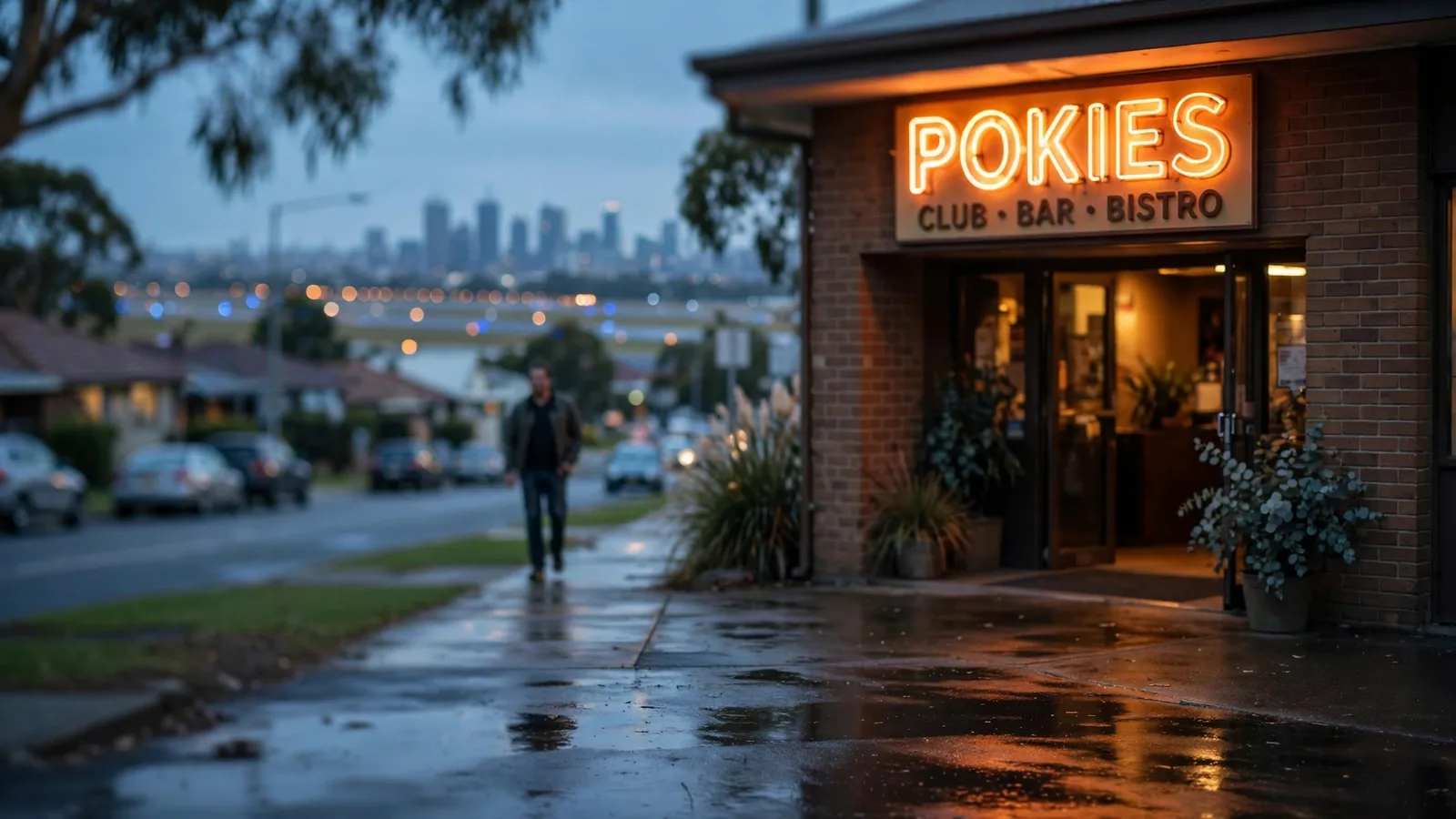
A map pin can make a place look close enough to fold into an airport trip. That does not tell you whether the venue is inside the airport, somewhere nearby, or simply returned because the search included “Melbourne Airport”. Those are different trips, and the distinction matters when you are deciding whether to make a detour.
I’ve learned not to treat a label on a map as a venue check. A result can be useful for finding a name or an address, but it does not confirm what is on the premises. If you are looking for pokies near Melbourne Airport, treat the location as something to verify, not a promise that a particular venue or machine is there.
Before changing your plans, open the venue’s own page or contact the venue directly. Check that the address matches the place you intend to visit and that the information is current. If the listing only gives a broad area or a map pin, look for a street address rather than assuming the pin marks an entrance.
If you’re looking for pokies options to consider in Melbourne in 2026, checking the available operator details can help you decide what to look into further. Use this list as a starting point and review each operator’s terms before signing up.
LuckyVibe
You can note that LuckyVibe lists a Curaçao Gaming Control Board licence, OGL/2023/176/0095, under Hollycorn N.V.
Vegaz Casino
Vegaz Casino lists a Curaçao OGL/2024/1335/0780 licence and a minimum deposit of EUR 20, details you can check against your preferences.
LevelUp Casino
LevelUp Casino lists a Curaçao eGaming OGL/2023/174/0082 licence under Dama N.V. Its stated minimum deposit is A$15.
SkyCrown
SkyCrown lists a Tobique Gaming Commission licence. You can also note its stated payout estimates: around 10–15 minutes for crypto and 1–5 days for fiat.
SpinsUp
SpinsUp lists a Curaçao Gaming Control Board OGL/2023/174/0082 licence under Dama N.V.
JustCasino
JustCasino lists a Curaçao Gaming Control Board licence; that is the operator detail available here for you to consider.
Uptown Pokies
Uptown Pokies is listed as operating since 2017 under a Curaçao licence. Its stated minimum deposit is A$20.
Roby Casino
Roby Casino lists a Curaçao eGaming licence under Roby Games Ltd.
Ricky Casino
Ricky Casino lists crypto payouts in under an hour and PayID payouts in 1–3 business days. You’ll need a minimum deposit of A$20, or A$30 to qualify for the bonus.
MrPacho
MrPacho lists crypto payout times of 30–120 minutes and fiat payout times of 24–72 hours. Its stated minimum deposit is A$30.
Then check the route from your actual starting point. “Near the airport” can mean different things depending on whether you are arriving, departing, meeting someone, or travelling from elsewhere. A map result does not tell you how easy it will be to reach the venue from your terminal or whether it fits your schedule. It is a starting point, not a travel plan.
This is the plain bit. Address first.
The same caution applies when you are searching around Melbourne Central. A result associated with the shopping centre or its surrounding area does not, on its own, establish that pokies are inside the centre. Confirm the venue’s address and the specific premises before setting off. A name that appears beside a landmark is not the same thing as a confirmed venue at that landmark.
Search tools often group results by relevance as well as location. So a result shown for Melbourne may not be close to the airport, and a result described as being near the CBD may not be convenient from where you are standing. Without checking the address and route, “near” is just a loose label.
That matters for searches around Port Melbourne, too. A suburb name can cover more ground than the result preview suggests. If you are looking for a particular kind of venue in that area, confirm the exact location rather than relying on the suburb label. The same goes for a general search for pokies in Melbourne: it can return places across a wide area, not just somewhere you can reach quickly.
“Near me” is especially dependent on your location settings. If your device is using an old location, or you have not allowed it to use your current one, the results may be centred somewhere other than where you are. Check the map’s starting point and compare the listed address with your own route. Small check. Better than a wasted trip.
There are two separate questions: where a venue is, and what it offers. A map listing may help with the first, but it should not be treated as proof of the second. If the venue’s own information does not clearly answer whether it has the facilities you are looking for, ask directly before travelling. Don’t infer it from a photo, a nearby landmark, or a category label.
I have been burned by trusting the neat little summary instead of checking the details. “Convenient” is often just a word on a screen; it does not account for your route, your reason for being in the area, or what you will find when you arrive.
For airport-related plans, consider the trip as a whole rather than judging by a map’s idea of proximity. Confirm the address, make sure you have identified the correct premises, and decide whether the detour makes sense for you. If those details are unclear, pause and check them rather than filling the gaps with assumptions.
The useful answer is sometimes simply that a location has not been confirmed. That is not a reason to guess. It is a reason to verify before you go.
When you’re trying to find pokies open in Melbourne right now, a result marked “open” can feel like the answer. I’ve learned to treat it as a lead, not a promise. A listing can be out of date, and a venue’s status can change before you arrive. The label alone doesn’t tell you whether the gaming area is operating or whether you can get in.
Before making the trip, check the venue’s own current information and, if it matters, contact the venue directly. Make sure you’re checking the right place and the right part of it: a venue may have several facilities, and a general listing may not spell out which one its status refers to. If you can’t confirm, don’t plan your night around the listing.
That applies whether you’re looking for somewhere open early, hoping to play after other plans, or simply checking what is available at this moment. A result that looks precise can still be wrong. I used to read the green “open” label as a settled fact. It isn’t.
The more useful check is the one you make on yourself. If you’re heading out because you feel you have to win back money, or because stopping feels difficult, the venue’s status is not the main issue. I’ve been there: telling myself one more session would put things right. It didn’t.
Responsible-gambling tools can give you some boundaries before you start. Deposit limits restrict what you put in; loss limits help set a ceiling on what you’re prepared to lose; session time limits can remind you when your planned time is up. Self-exclusion is an option for stepping away from gambling rather than relying on willpower in the moment.
These tools don’t change the odds or guarantee that you’ll stick to a plan. They’re most useful when you decide on them before the urge to keep going takes over. If you’re considering self-exclusion, check how the process works with the venue and what it covers. Don’t assume that a limit or exclusion you set in one place applies everywhere.
A quick check before leaving can include both the practical and personal questions: is the venue’s status confirmed, and do you still want to go for a reason you’re comfortable with? If the answer to the second one is no, you don’t owe the night another attempt. Not every open venue needs to become your destination.
Opening status and suitability are different things. A listing can’t tell you whether you’ll feel settled once you’re there, whether you’ll follow the limit you set, or whether this is a good time for you to gamble. That part is yours to decide, and it’s fine to change your mind after you’ve set out.
You also need to be at least 18 to gamble in Australia. If you’re under that age, you can’t legally gamble, regardless of what a venue listing says.
For anyone who does choose to go, a small plan is more useful than a hopeful one: decide beforehand what you can afford to lose, how long you intend to stay, and what would make you leave. Use the available limits where they help. If you find yourself moving the goalposts once you’re there, take that seriously rather than treating it as part of the game.
I don’t read an “open now” label as an invitation anymore. I check, make a choice, and keep the choice mine. An open door is still just a door.
A return-to-player figure can look like a neat answer to “best paying pokies in Melbourne”. It isn’t. It describes a game setting, not what you will take home from a session, and it cannot tell you whether the next spin will win.
Each pokie spin is an independent random event decided by a Random Number Generator. The machine does not remember that you have lost several times, and a run of wins does not make another win due. I used to read patterns into a screen because it felt better than admitting the outcome was unpredictable. It wasn’t a useful way to choose.
RTP, or return to player, is a theoretical measure of how much a game returns across play over time. That broad view is not a forecast for one person’s visit. Your own result can be very different: a short session may finish ahead, behind, or close to what you put in. A displayed figure cannot promise a payout, identify a “due” machine, or tell you when to stop.
There is another catch: the number may not belong to the game in every setting. A specialist review reports that some providers give casinos a choice of more than one RTP setting for the same pokie. That means a game with a familiar name could be configured differently at different casinos. The name alone does not settle the return figure.
So if you are comparing Melbourne casino pokies, ask what the figure refers to: the specific game and the setting in use, rather than just the title on the screen. If the information is not available or is unclear, don’t fill the gap with a guess. A confident-looking number is only useful when you know which version it describes. Still no promise.
This matters when people talk about the “best paying” pokies, too. “Best” can sound like a ranking of machines that reliably hand money back. RTP does not support that conclusion. It is one technical detail, not a personal outcome or a guarantee that one game will treat you better in the next session. A higher stated return, on its own, cannot tell you how your play will go.
For pokies in Melbourne CBD, across the city, or elsewhere, the same distinction applies: a venue or game label does not make outcomes predictable. Nor does a figure tell you how long a session will last or how much you might win. Those depend on chance and on your own decisions, not on a promise hidden in a percentage.
A theoretical measure of how much a game returns across play over time. It is a game setting and not a forecast for an individual player's session.
I now treat RTP as something to verify, not a reason to chase a machine. If a figure is stated, check that it applies to the exact game setting being offered. If it cannot be confirmed, I would rather leave it unknown than pretend the title answers the question. Then set your spending limit before you start, and stick to it; no return figure can do that part for you.
When I compare pokies venues, I don’t treat a polished room or a confident “best” label as evidence that the venue handles gambling harm well. What matters more is whether staff can explain the support available and whether the venue follows the rules that apply to it. A venue’s size can matter too, because some reported duties are tied to the number of machines.
A report by regionriverina.com.au describes a requirement that venues operating more than 20 gaming machines have a dedicated Responsible gambling officer (RGO) present while those machines are running, with the change taking effect from 1 July. That is a venue-level staffing obligation, not a claim that an RGO is available at every Melbourne venue. I’d check directly with a venue or the relevant regulator before relying on it as a Melbourne-specific requirement.
The same report describes a one-month grace period for venues to introduce the officers and remove signage. That transition detail is worth keeping in context: it is reported as part of the change, not a reason to assume that any particular venue has already made the changes or that every sign has the same rules. Signage around gambling areas is subject to specific restrictions, so a venue should not direct patrons towards gaming lounges from within sight of ATMs or EFTPOS terminals, or towards ATMs from within sight of gaming machines.
There is also a reporting duty described in the report. Venues are to keep a gambling incident register, recording events that may indicate a patron is at risk of gambling harm or is already affected by it. That makes the register more than a log of machine faults or customer complaints: it concerns behaviour that may call for a response. For a visitor, the useful question is not whether the venue advertises a “safe” experience, but whether staff can tell you how to raise a concern or ask for help.
I’ve learned not to confuse visible rules with a guarantee that gambling will stay harmless. A Responsible gambling officer and an incident register are safeguards, not a way to make pokies risk-free. Deposit limits, loss limits, session time limits and self-exclusion are among the standard tools available in responsible-gambling settings. If you want to use one, ask staff what the venue offers and how it works before you start playing. It is easier to decide with a clear head.
Nor does any of this tell you which venue has the “best” pokies. These requirements concern how a venue manages its responsibilities; they don’t establish that its machines are more enjoyable, fairer or more likely to pay. Each spin remains an independent random event, so a venue’s staffing arrangements cannot turn a run of losses into a reason to keep going.
For me, the practical check is simple: ask who can help, what limits or self-exclusion options are available, and how a concern is handled. If the answer is vague, I don’t read that as a promise of better play. I read it as a reason to pause. No sales pitch needed.
A name can tell you which property someone means; it can’t tell you what your visit will be like. If you’re considering Crown Melbourne for pokies, separate the broad idea of going to a venue from claims about particular machines, a dedicated room or a “best” experience. Those details need to come from the venue itself, not from a confident-sounding label.
I’ve learned not to treat “best” as a useful description on its own. It might mean a layout someone likes, a particular atmosphere, or simply a headline designed to get attention. None of that tells you whether the venue has the facilities you want, or whether a specific pokie is available when you arrive. That’s a basic distinction, but I’ve ignored it before. Costly habit.
Before making the trip, use Crown Melbourne’s own current information or contact the venue and ask the question that matters to you. If you’re looking for a particular kind of pokie, ask whether it is available. If the room itself matters, ask what you can expect from the space and whether any access conditions apply. A clear answer is more useful than an online list that doesn’t explain when it was checked.
Treat player comments as personal accounts, not as a promise that your visit will match theirs. One person’s favourite room or machine may not suit you; another person’s description may refer to a past visit. Even a detailed post can’t establish what is available today. I find it helps to ask what the claim actually rests on: a recent direct check, or someone repeating what they heard?
It’s also worth deciding what would make you leave rather than keep spending. Deposit and loss limits, session time limits and self-exclusion are responsible-gambling tools; use them before play if they fit your situation. If you feel pressure to chase a loss or stay longer than planned, stepping away is a sound choice, not a failure.
Nothing about a venue’s name or reputation tells you that a particular pokie will pay out, or that a visit will be worthwhile. I’d keep the decision plain: check the detail you need with the venue, set your own boundary, and don’t let a glowing description make the decision for you. “Best” is still just a word.
The line is easy to blur when a site looks polished or a payment option feels familiar. But a cashless deposit does not change the legal status of online pokies. In Australia, the Interactive Gambling Act 2001 prohibits companies from providing real-money online pokies to people here unless they hold a domestic licence. None have been issued, so there is no Australian-licensed online casino.
That distinction matters when a Melbourne player sees an online offer presented as local. A site may use Australian language or accept an Australian payment method; neither makes it locally licensed. PayID, for instance, is a way to transfer money through the New Payments Platform. It is not evidence that an online casino is lawful, fair or transparent about its games. Payment method and legal status are separate questions.
I used to treat a familiar-looking checkout as reassurance. It wasn’t. A payment can go through without giving you the protections you might assume come with a domestic operator. Keep that distinction clear.
The law’s prohibition is directed at the companies providing the service, rather than making the player the target of that rule. Australians may be able to access offshore sites that accept them, but access is not the same as local oversight. The Australian Communications and Media Authority blocks illegal offshore gambling sites, and internet providers must follow its blocklist. A site appearing in a result, or loading at a particular moment, does not establish that it is legitimate or protected.
The practical risk becomes stark if an offshore operator withholds a withdrawal. An Australian player has no legal recourse in Australia to compel that casino to pay. That is not a small-print inconvenience; it changes what you can do if a dispute goes badly. “Fast cash-out” is a sales phrase, not a remedy.
Searches for online pokies near Melbourne, high-limit play or games described as paying well can make offshore offers sound like a local alternative. They are not a way to find Australian-licensed online pokies: there is no such licence. Nor does calling a site “cashless” move it outside the law. The same applies whether a deposit is made through a bank transfer or another payment route.
For in-person play, cashless payment features are a separate question from online gambling. I would not infer from the word “cashless” that a particular Melbourne venue has a feature, or that an online site has Australian approval. Check what is actually being offered, and don’t treat a payment logo as a safety certificate. No shortcut there.
A venue’s trading hours and the hours when its pokies are available are not necessarily the same thing. That distinction is easy to miss when you are planning a late visit: a place may be open while a particular area or service is unavailable. So don’t read “open” as proof that pokies can be played at that time.
I’ve learned not to build a trip around a short listing or a map label. Those can be useful clues, but they may not reflect a recent change, a special closure or the operating arrangements on the day. A claim that a venue is open around the clock deserves the same check as any other opening-time claim. “24-hour” sounds definite; it still needs to match the venue’s own current information.
Before setting out, check the venue’s official website or contact the venue directly. Look for information that clearly refers to the pokies or gaming area, rather than just the building’s general opening hours. If the wording is unclear, ask whether the machines are available at the time you plan to arrive. Keep the answer current: information you saw earlier may not hold for another visit.
For Melbourne pokies opening hours, there is no reliable city-wide timetable to apply to every venue. A time listed for one place tells you nothing about another. Nor does a general result for Melbourne establish that a specific venue is open overnight. Treat each location as its own check, and confirm both the address and the hours before travelling.
I would also avoid assuming that a venue’s usual schedule settles a one-off visit. Public holidays, private functions or temporary operational changes may affect access; check directly if timing matters. No guesswork.
This is a practical boundary, not a promise of availability: the exact hours for individual Melbourne venues, including overnight access, need to come from those venues themselves. If you cannot get a clear answer, make another plan rather than relying on an old listing. A closed door is a poor way to find out.
If you’re looking around East Melbourne, the south-east, St Kilda or the western suburbs, a suburb name alone won’t tell you what a venue offers. I’ve learned not to treat a broad area label as a recommendation. It may help narrow down where to look, but it doesn’t confirm that a particular club or hotel has pokies, what its facilities are like, or whether it suits your plans.
That distinction matters when listings lump nearby suburbs together. “Eastern suburbs” can cover a wide patch, and the same goes for the south-east and west. Before travelling, check the venue’s own current information and contact it if a detail matters to you. That’s less exciting than a neat list of “best” places, but it beats setting off on an assumption.
The phrase “Newcastle Melbourne” can also muddle two different locations. If you mean Newcastle, make sure you’re looking at information for the place you intend to visit rather than a Melbourne result that happens to include both names. A location label isn’t proof of a venue’s address. Basic, but useful.
St Kilda is a more specific area to search, yet the same rule applies: don’t infer that a particular venue has pokies from a suburb reference or an old directory entry. Check the actual venue details before you make the trip. No guesswork.
And if you’re trying to find pokies with a particular maximum bet, don’t assume that an area listing answers that question. A suburb doesn’t identify the machines available at a venue, and a venue name by itself won’t tell you the settings on a particular pokie. I wouldn’t travel on the strength of a vague label or a search snippet; ask the venue directly what it can confirm.
I’ve made the mistake of treating a polished listing as if someone had checked every detail. It’s easy to do, especially when several suburbs appear on one page. But a page grouping Melbourne’s east, south-east and west is not a checked directory of individual venues. Use it only as a starting point, then verify the specific place and the detail you care about.
For any session, set a spending limit you can stick to before you start. Deposit and loss limits, session time limits and self-exclusion are tools that can help keep gambling within bounds. A location search won’t make the decision for you. Neither will a “best” label.
A list of Melbourne CBD pokies can look useful while telling you very little about what a particular club offers. A name associated with the city centre is not proof that pokies are available there, and a polished listing is not a reason to assume its details are current. I’ve learned to separate “sounds like a match” from “confirmed at the venue”. Not the same thing.
If you’re considering a central Melbourne club, check with the venue directly before making plans. Ask specifically whether it has pokies and whether the information you found applies to that location. Club names and descriptions can be easy to mix up, especially when several places appear in the same set of results. Don’t let a broad label do the checking for you.
“Best” is another slippery word. It might mean convenient, comfortable, or simply familiar to whoever wrote the description. It does not establish that one venue has better machines or better chances. Each pokie spin is a separate random event, so a confident ranking cannot turn a game into a reliable way to win. I’d treat promotional language as a claim to question, not a reason to spend.
If you’re asking about self-exclusion, think about it before you arrive, not only after a difficult session. Deposit limits, loss limits, session time limits and self-exclusion are responsible-gambling tools, but you should ask the venue what options it can apply on site. Don’t assume that a tool available in one setting automatically covers another.
I’ve made the mistake of treating a promising description as the whole story. A better check is simple: confirm the exact venue, ask what is actually available there, and decide in advance what your personal stop point is. If gambling is starting to feel hard to control, stepping away is a better move than trying to find a more convincing venue. Short version: verify first, then choose whether to go.
North Melbourne and South Melbourne are distinct places, so a result labelled for one should not be treated as a match for the other. That sounds obvious, but I’ve learned not to let a familiar suburb name do the checking for me. A venue’s address and its actual facilities matter more than a broad area tag.
If you’re considering a particular place, confirm directly with the venue that it has pokies and that the address is the one you intend to visit. A map pin, directory entry or old mention can be useful for narrowing things down, but it is not the same as confirmation from the venue. I’d also check the venue’s own details before setting out, especially if the trip depends on finding pokies there.
The same caution applies when comparing North Melbourne with South Melbourne. Don’t assume that a listing covering “Melbourne” refers to either one, or that nearby means walkable. Work from the exact address, then decide whether the trip makes sense for you. No guesswork.
I’ve made the mistake of treating a place name as proof and planning around it. It’s a small check to make beforehand, and it can save a wasted trip. Keep the decision practical: confirm the specific venue, and don’t read more into a suburb label than it tells you.
Pokies are gambling, not a reliable way to make money. Set a limit before you play and stop when you reach it; deposit limits, loss limits, session time limits and self-exclusion are tools that can help keep play within boundaries. You must be at least eighteen to gamble in Australia. If those limits feel hard to stick to, stepping away is a sound choice.
Yes, Australians can legally play on offshore sites that accept them, but companies cannot legally offer real-money online pokies to Australian residents without a domestic licence, and no such licences have been issued. If an offshore casino refuses to pay, you have no legal recourse in Australia.
Each spin is an independent random event determined by a Random Number Generator, but some providers allow casinos to choose between different RTP settings for the same game. Check the game’s RTP at the casino you use.
Compare the wagering requirement with the bonus and the amount you would need to bet before withdrawing winnings. For example, a $500 bonus with a 40x requirement means $20,000 in bets; a 35x requirement on a $500 deposit plus a $500 bonus means $35,000 in bets.
Prepared by the Richard Casino editorial staff.