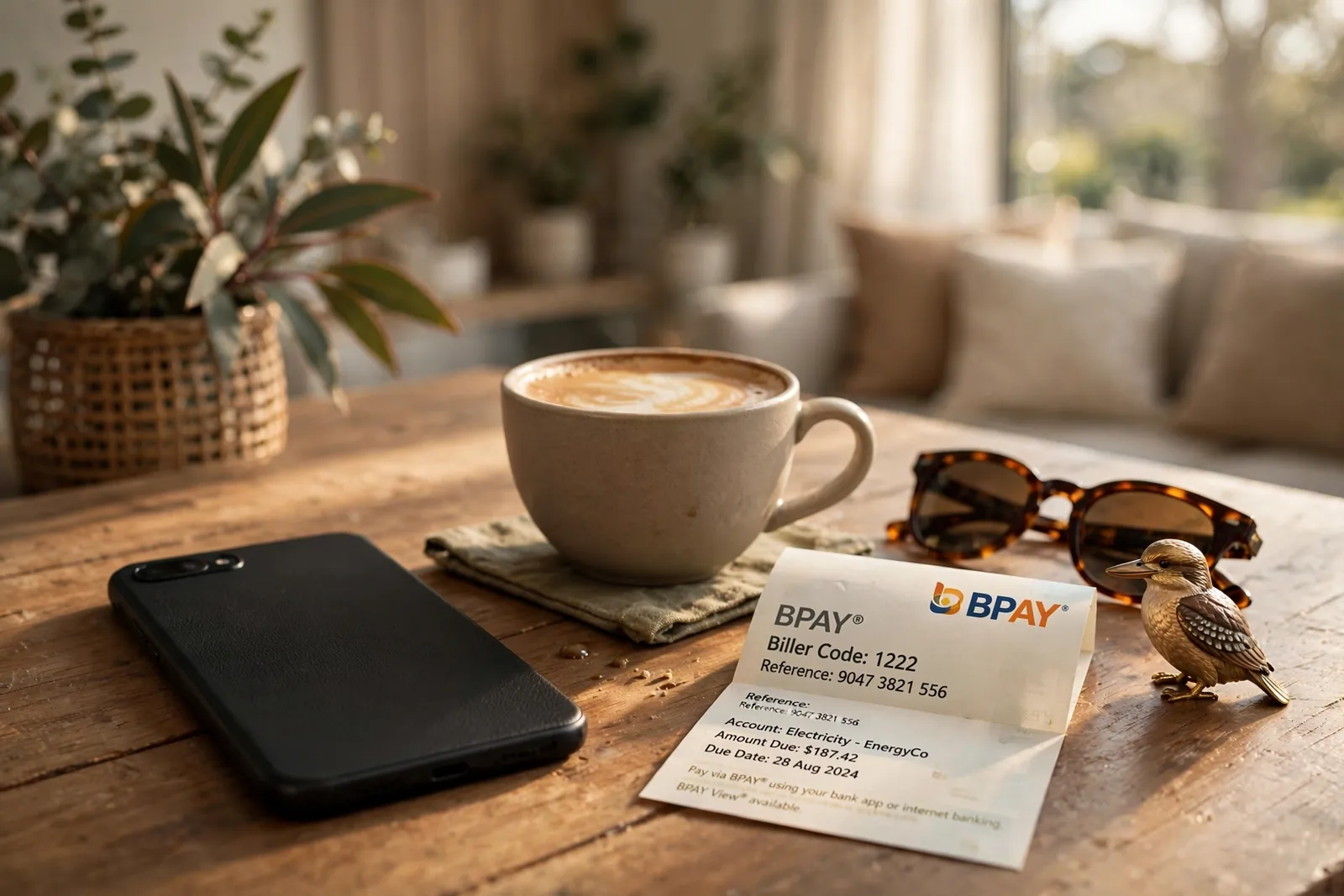
A payment badge alone cannot establish Australian availability; deposits, withdrawals, game access and bonus terms need separate checks.

I can’t give you a confirmed list of Australian-facing casino sites that accept PayID. That is the plain answer, even if it is less satisfying than a page of names and badges. I would rather leave a gap than send you toward a service on the strength of a claim I cannot substantiate.
The phrase “accepts PayID” sounds like a simple yes-or-no fact. For a particular service, it would need to be true for the relevant customers and at the time they try to use it. But a general search for Australian online casinos and PayID does not, by itself, establish that any named site currently offers the method to Australians. A result that looks like a direct answer is not the same thing as a confirmed answer.
That distinction matters because I have made the mistake of treating confident wording as evidence. A payment logo, a headline or a short line in a review can feel like a settled fact when you are trying to get a quick answer. It isn’t enough for me to turn that into a recommendation. Without reliable confirmation tied to the actual service and its Australian availability, naming a site would be guesswork dressed up as a shortlist.
If you’re looking for casinos that accept PayID in Australia in 2026, check the payment details carefully: the information available for each operator varies. Use these notes as a starting point when deciding what to verify.
LuckyVibe
You can note LuckyVibe’s listed Curaçao Gaming Control Board licence, OGL/2023/176/0095, held by Hollycorn N.V. No PayID or deposit details are specified here.
Vegaz Casino
Vegaz Casino lists Curaçao licence OGL/2024/1335/0780 and a minimum deposit of EUR 20. No PayID details are specified here.
LevelUp Casino
LevelUp Casino lists a Curaçao eGaming licence, OGL/2023/174/0082, held by Dama N.V., and a minimum deposit of A$15. No PayID details are specified here.
SkyCrown
SkyCrown lists a Tobique Gaming Commission licence and a minimum deposit of A$30. Its listed payout times are around 10–15 minutes for crypto and 1–5 days for fiat; no PayID-specific timing is provided.
SpinsUp
You can note SpinsUp’s listed Curaçao Gaming Control Board licence, OGL/2023/174/0082, held by Dama N.V. No PayID or deposit details are specified here.
JustCasino
JustCasino is listed with a Curaçao Gaming Control Board licence. No PayID or deposit details are specified here.
Uptown Pokies
Uptown Pokies is listed as operating since 2017 under a Curaçao licence, with a minimum deposit of A$20. No PayID details are specified here.
Roby Casino
Roby Casino is listed with a Curaçao eGaming licence held by Roby Games Ltd. No PayID or deposit details are specified here.
Ricky Casino
Ricky Casino lists PayID payouts in 1–3 business days and crypto payouts in under an hour. The minimum deposit is A$20, or A$30 to qualify for the bonus.
MrPacho
MrPacho lists a minimum deposit of A$30. Its stated payout times are 30–120 minutes for crypto and 24–72 hours for fiat; no PayID-specific timing is provided.
So, if your question is whether there is a verified “best” Australian casino using PayID, I can’t rank one. I also can’t identify a confirmed mobile option or say that a particular Australian-facing site takes PayID deposits. Those are specific claims about operators, not things that can be inferred from the popularity of PayID or from the wording of a page.
That does not mean every claim you encounter is necessarily false. It means I can’t responsibly turn those claims into a directory. There is a difference between “I saw this advertised” and “I can confirm this is available to Australian customers.” I’m keeping that difference visible rather than filling the space with names.
It is tempting to treat a cluster of similar pages as confirmation. I’ve done that too: one statement appears in several places, and repetition starts to look like independent evidence. But repeated wording can still trace back to the same unconfirmed assertion. Unless the claim can be connected to a clear, current statement from the service itself and to the customers it applies to, the number of pages repeating it does not settle the question.
The wording can also blur separate things. A page may mention PayID somewhere without establishing that it is available for the relevant customer, or may use broad language that leaves the actual payment arrangement unclear. I’m not going to infer acceptance from a passing mention. That would make the answer sound more definite than it is.
There is another reason not to improvise. A site’s name appearing beside a payment method is easy to publish and hard for a reader to assess from a single snippet. If I gave you a list here, you could reasonably take it as confirmation that each named service accepts PayID in Australia. I have no basis to make that promise, so I won’t make the list.
This is not a claim that PayID cannot be used by any gambling service, nor a claim that no site has ever displayed it. It is narrower: I cannot verify which Australian-facing casino sites accept it. That boundary is important. Turning uncertainty into a universal yes or no would be as careless as pretending to know the names.
I know that is not the neat answer people want when they are comparing payment options. Still, a neat answer built from unconfirmed names is worse than an honest limit. No invented shortlist. No borrowed confidence. Just the point I can stand behind: I can’t identify a confirmed Australian-facing casino that accepts PayID.
A PayID badge can look like a useful answer: it appears to say that a site accepts the payment method. But a badge on its own does not tell you who placed it there, when it was checked, or whether it describes a service available to people in Australia. I would not treat that little logo as proof. It is a claim, and claims need context.
That matters when a page labels something the “best PayID casino” or presents a shortlist of sites said to accept PayID deposits. A polished graphic, a payment-method icon or a confident sentence may be easy to publish; none shows, by itself, that the statement is accurate or current. And if the page earns money from clicks or referrals, its enthusiasm is not independent confirmation. The fine print matters more than the sales pitch.
Start by reading the wording closely. Does it say PayID is available to Australian customers, or merely mention the method somewhere on a general payments page? Is the claim about a casino service, a different product, or a payment option that may not be offered to every visitor? Those distinctions can disappear in a headline.
Then look for an explanation from the service itself, rather than relying only on a third-party badge or review. Even an operator’s statement is still a claim to assess, not a guarantee. Check whether the information is dated and whether it clearly applies to Australian users. If the page gives no way to tell when it was reviewed, treat the claim cautiously. Old payment information can linger after arrangements change.
This is not about finding a cleverer way to get around a missing detail. If a page cannot clearly establish what it means, the sensible conclusion is that it has not established it.
Words such as “instant,” “easy” and “trusted” are not evidence. They can make a payment claim sound settled while leaving the useful questions unanswered. Look for clear, consistent wording across the relevant pages and terms. If one page says PayID is supported but another does not mention it, that mismatch is a reason to pause, not to assume the more attractive version is right.
I have learned not to let a tidy-looking payment panel do the thinking for me. A badge can be copied, left unchanged or presented without enough detail to judge what it means. The same goes for a review that announces a site is one of the best casino websites for PayID: a ranking is not proof of availability, and praise does not fill gaps in the underlying information.
Be wary, too, of pages that use “best” as if it were a measurable standard. Best for whom? Based on what evidence? Without a clear method and verifiable support, it is just a flattering label. I would rather see a cautious statement with a clear basis than a bold verdict with none.
There is a bigger issue that a payment badge cannot resolve. Under the Interactive Gambling Act 2001, operators may not provide real-money online casino games to people physically in Australia. The Australian Communications and Media Authority enforces that law, and access to offshore services may be blocked. A page describing an offshore service as an Australian option does not make that service lawful or locally regulated.
Australian consumer law does not protect players who use offshore casinos. That is not a small qualification to tuck beneath a payment logo; it changes what a reader can rely on if something goes wrong. I would not read “available to Australians” as meaning approved for Australian customers, or as a promise of local consumer protection.
So a shortlist labelled “PayID casino sites” should not be treated as a recommendation simply because it has a local flag, Australian wording or a row of payment icons. Those are presentation choices. They do not establish that the service is permitted to operate here, that the payment claim applies to Australian residents, or that the claim has been checked recently.
Before giving any payment claim weight, I would want to see what supports it, who the statement is meant to cover, and whether the information is current and consistent. I would also ask whether the page makes its commercial interest clear and whether it avoids turning an unverified claim into a recommendation. If those points are hard to establish, the shortlist has not earned your confidence.
That is a stricter test than spotting a PayID logo. It should be. A payment badge can tell you what a page wants you to believe; it cannot, by itself, show that the claim is true, suitable for someone in Australia, or protected by Australian consumer law.
A deposit is not just the moment money leaves your account. It is also the point where the payment route, the recipient and the account details need to line up. With a PayID casino deposit, those details matter before you act—not after a payment has gone somewhere unexpected.
I would not treat a payment logo or a mention of PayID as a set of usable instructions. A payment option needs to be identifiable in the cashier, and its terms need to explain what happens when you select it. If there is no clear account of the steps, the safer choice is not to guess, follow an old guide or send money to details copied from a message. A familiar payment name is not proof that a particular transfer is supported.
The first thing to establish is whether the payment method is genuinely offered for the transaction in question. A service might mention PayID in general without making clear whether it applies to deposits, withdrawals or both. Those are separate functions. No improvising.
Then look at the recipient information and the payment reference, if one is requested. A bank-linked payment relies on details being entered accurately. Before submitting anything, you would need to know whose account is receiving the funds, whether the displayed details are current, and whether any reference must be included exactly as shown. If the instructions are inconsistent or the recipient is unclear, stop rather than trying a small payment to test the system. Even a small transfer can be difficult to unwind.
Those conditions can depend on the service and may change. Check the amount displayed in the payment flow and any relevant terms before committing. Also make sure you understand whether the sum is being handled in Australian dollars or converted, and whether a fee could apply. Do not infer that a transfer is free simply because the payment method itself is familiar.
Timing deserves the same caution. A deposit screen might describe a payment as immediate, pending or subject to checks, but those words need to relate to the actual method and transaction. A bank transfer and a card payment are not interchangeable, and a general statement about one method tells you nothing dependable about another. If funds leave your account but do not appear in a balance, keep the confirmation and contact the relevant payment provider through its official channel. Avoid sending a second payment just to make the first one appear.
Identity checks can also affect financial activity. Online gambling services commonly ask customers to verify their identity before allowing financial transactions. That means a payment may not be the only step involved, and you should understand what information is requested and how it is handled before sharing documents or banking details. Do not send sensitive information through an informal chat or an unverified address.
There is a larger issue behind the cashier. The Interactive Gambling Act 2001 prohibits operators from providing real-money online casino games to people in Australia. Australians who use offshore casino services are not protected by Australian consumer law. That is not a reason to treat a payment screen as reassurance; it is a reason to be particularly cautious about the consequences of a disputed transfer.
A PayID deposit should never be assumed available, straightforward or reversible. Confirm the route, recipient, currency, fees, limits, timing and identity requirements before making any payment—and if the terms are unclear, leave it there.
When a page says that a casino accepts PayID in Australia, the wording can sound more definite than the information behind it. I’ve learned not to treat a bold payment label as proof. It may be a broad claim, a summary written by someone else, or an old detail that no longer reflects what a service offers. The phrase itself does not establish that a PayID payment is available to someone in Australia.
The Australian wording matters. “Available to Australian players” can describe an audience a page is trying to reach; it does not tell you whether the service can lawfully provide real-money online casino games to people physically in Australia. Under the Interactive Gambling Act 2001, operators are prohibited from providing those games to customers here. The Australian Communications and Media Authority is responsible for enforcing that law. A payment claim does not change the legal position.
There is another distinction that is easy to miss: a page may describe PayID as a payment option without showing that the claim applies to Australian customers. A general list of payment methods might cover several countries, or it might repeat information without specifying where it applies. “PayID accepted” is not the same as a clearly supported statement about access from Australia.
I would also read the wording around a claim, not just the badge. Does the page say who the information applies to? Is it describing a current service, or repeating a general statement? Does the text make clear whether it is the operator’s own information or an outside description? If those points are blurred, the confident headline is doing more work than the detail beneath it.
That is not a checklist for finding a site to use. It is a way to avoid mistaking marketing language for confirmation. A claim can be precise in appearance while leaving the key point unresolved: whether PayID access is actually available to a person in Australia. Without dependable, current confirmation, it is safer to treat the wording as unverified rather than infer that the option exists.
Be wary of phrases such as “best” or “top” when they appear beside a payment claim. They express a judgement, not evidence of Australian availability. Likewise, “PayID casino” may simply be shorthand used by a page; it does not prove that a casino accepts PayID, or that the service is lawful for Australian residents. Strong labels. Thin support.
The legal setting also changes how I read a claim aimed at Australians. The law prohibits operators from providing real-money online casino games here, while Australian consumer law does not protect players who use offshore casinos. So an Australian-focused payment statement should not be mistaken for a sign that a service is locally authorised or that local consumer protections apply. That distinction is worth keeping in view even when the wording is presented as a simple payment fact.
In short, read “PayID” and “Australia” as two separate parts of a claim, not as proof that they fit together. The words may indicate what a page wants to suggest; they do not, by themselves, establish access, legality, or consumer protection. I’ve seen enough polished claims to know that presentation can be neat while the important answer remains unclear.
A payment label and a game catalogue describe different things. PayID, when discussed as a payment option, concerns how money might move. A game listing concerns what a gambling service offers. Seeing those ideas together in a heading does not establish that they are linked.
That distinction matters with phrases such as “PayID games”. They can sound as if a particular game has a PayID feature, but the wording alone does not show that. A payment method is not a game mechanic, a game title, or evidence that a service provides a particular kind of play. I’d keep those claims in separate boxes.
The same goes for “PayID casino payment options”. That phrase is about a possible way to pay, not about what appears in a game catalogue. And a catalogue, even if one is shown, cannot by itself confirm which payment methods a service accepts. One label does not prove the other. Easy to blur.
I can’t establish a connection between PayID and any particular casino game, or confirm that any game is specifically available “using PayID”. It would be a stretch to turn a payment-related phrase into a claim about individual titles or categories. The careful reading is narrower: the wording raises a payment question, not a verified statement about games.
That also applies to searches that mention a “PayID slot game”. The words don’t identify a confirmed title or show that a payment method is attached to a game. They combine two separate subjects. A payment option, if available, would concern the transaction; it wouldn’t make the game itself a PayID product.
I used to read a familiar payment badge as a shortcut for the whole service. It isn’t. Payment availability and game availability would each need to be established on their own, and neither can stand in for the other. A claim about one does not settle the other.
So when you encounter PayID beside references to casino games, read the parts independently. The payment wording does not verify a game catalogue, and a game description does not verify a payment route. Keep the distinction plain. No leap from one label to the next.
The key distinction is between the operator’s conduct and the player’s. Under the Interactive Gambling Act 2001, providing real-money online casino games to people in Australia is prohibited. That covers casino-style games such as poker and table games, as well as pokies. The law is aimed at the service provider; it does not explicitly make an Australian player’s use of an offshore site a criminal offence.
That distinction can be easy to misread. “Not a crime for the player” does not mean an offshore casino is approved to serve Australians, or that the service has local authorisation. The Australian Communications and Media Authority, known as ACMA, administers enforcement of the Act. Offshore sites may also be subject to access restrictions. No green light here.
There is a consumer-protection gap, too. Australian consumer law does not protect players who use offshore casinos. If a dispute arises over an account, a payment, or winnings, you should not assume that the remedies available for a domestic purchase will apply. Nor should a payment logo or an Australian-facing page be taken as proof that the operator is subject to Australian oversight.
That matters when a site is described as an Australian casino accepting PayID. The payment wording does not change the legal status of the gambling service. Whether a website mentions PayID, another bank-linked method, or no payment option at all, the central question is whether it is offering prohibited online casino gambling to people in Australia. A familiar local payment label is not a substitute for legal protection.
I’ve learned not to treat a polished page as a safety net. A site can look tailored to Australian users while leaving them outside the protections they might expect at home. If you are trying to understand your position, separate two questions: whether the law criminalises the player, and whether the operator is permitted to provide the service. The answer to one does not settle the other.
This is general information, not legal advice about a particular dispute. The plain takeaway is that Australian law prohibits operators from providing real-money online casino games to people here, while it does not explicitly criminalise a player for using an offshore site. That is not the same as endorsement, local regulation, or consumer recourse. Don’t confuse the gap with protection.
A payment option shown for deposits does not, by itself, establish that the same route is available for withdrawals. That distinction matters if you are trying to work out whether a casino offers a PayID withdrawal: a cashier may describe ways to add funds without confirming how a balance can be paid out.
I would treat “PayID accepted” as a claim about a particular transaction, not proof that PayID works in both directions. So claims of an instant PayID casino withdrawal cannot be relied on as established details. Fast deposit language is not a payout timetable.
There is another practical wrinkle: online casinos typically require customers to complete a Know Your Customer assessment before financial transactions. That requirement does not tell you which withdrawal method will be allowed, or when a request will be processed. It is a separate condition to bear in mind, not evidence that PayID is supported.
If you encounter a claim about PayID payouts, read it narrowly. Does it specifically refer to withdrawals, or only deposits? Does it explain any conditions, fees, or processing stages? Those details would need to be confirmed directly in the operator’s current terms and cashier before you could treat the claim as applicable.
Most importantly, Australians should not mistake a payment claim for reassurance about the service itself. Australian consumer law does not protect players using offshore casinos. A payment label cannot change that. No shortcut there.
I have learned not to count a balance as accessible just because a deposit route sounds straightforward. For a casino with PayID withdrawal, the key point is confirmation of the payout route itself, not a badge or a deposit instruction. Without that, the responsible answer is that availability and timing remain unknown—not that withdrawals are instant, delayed, or guaranteed.
“Real money” can make a payment claim sound more concrete than it is. It describes the kind of gambling being discussed; it does not establish that PayID is available, that a payment would be accepted, or that funds could be returned through PayID. A mention of debit payments does not fill those gaps either. Payment wording is not proof of a working route.
I have learned not to treat a confident label as a promise. A page can use “PayID” alongside claims about casino play or promotions without showing that the service is accessible to Australians or that the payment method works for them. Nor does a promotion label tell you whether any payment would qualify. Those are separate claims, not one confirmed arrangement.
There is a more important issue than the payment wording. Under Australia’s Interactive Gambling Act 2001, operators cannot provide real-money online casino games to people in Australia. That includes casino-style games such as poker and table games. The Australian Communications and Media Authority enforces the law, and offshore services are subject to blocking measures. A PayID mention does not change that legal position.
Players are not criminally liable simply for using an offshore casino, but that does not make the service lawful for the operator or make it safe for the customer. Australian consumer law does not protect players who use offshore casinos. If money is disputed, or a service becomes inaccessible, you should not assume local consumer protections will resolve it.
So “real-money PayID casino” is a description to treat with care, not a confirmation of access, payment acceptance, or payout. I would not rely on a badge, headline, or promotional wording to make a financial decision. The legal reality comes first. The payment label comes second.
Calling PayID a casino payment method would mean more than finding its name beside a list of other payment options. The relevant question is whether the service itself offers PayID as a way to pay, and whether that route is available to a person in Australia. Without those details, “pay with PayID” is just a description of what someone hopes to do, not a confirmed payment option.
I’ve learned not to treat familiar payment names as interchangeable. A method being used in one setting does not establish that a particular gambling service accepts it. Nor does a general reference to bank-linked payments tell you whether PayID is supported. The distinction is small on a page, but it matters when money is involved.
To describe PayID as available, you would need clear, current information identifying it as a payment option for the relevant service and showing that the option applies to Australian customers. You would also need to know who processes the payment and what conditions apply. Those are facts about the payment route, not assumptions to fill in from the name alone.
I would not infer that PayID works because a page mentions bank payments, or because the service appears to accept some other payment method. Those are separate claims. A payment method can only be described accurately when its availability and conditions are stated plainly.
There is another limit worth keeping in view: using a payment service does not make an online casino lawful in Australia. The Interactive Gambling Act 2001 prohibits operators from providing real-money online casino games to people in Australia. Australian consumer law does not protect players who use offshore casinos. That is the harder part.
A payment method and an offer are separate things. Even if a service displays PayID as a way to deposit, that alone would not show that a PayID payment qualifies for any promotion. I used to treat a payment logo as if it answered every cashier question. It doesn’t.
The same goes for wording about a PayID-linked offer, including claims about a no-deposit bonus. A phrase on a page does not establish that an offer is available, that it applies to Australian users, or that a particular payment route meets its conditions. I can’t confirm that a PayID deposit qualifies for any casino offer, so I wouldn’t treat the two as a package deal.
Bonus terms can also make a distinction between how an account is funded and what conditions apply to an offer. Without confirmed terms for a specific service and offer, there’s no sound basis to say whether a deposit method affects eligibility, or what restrictions might apply. Don’t fill those gaps with assumptions based on a badge or headline. Fine print matters.
That caution is not an endorsement or invitation to use an offshore casino. Real-money online casino services are prohibited for operators providing them to people in Australia, and Australian consumer law does not protect players who use offshore casinos. A promotional claim does not change that position.
So, keep the questions separate: does the cashier list PayID, and do the stated conditions say that a PayID-funded account qualifies for an offer? Neither answer should be inferred from the other. If the conditions are unclear or unavailable, the honest answer is that eligibility has not been established. No guesswork.
Jackpot City Casino, Spin Palace, Ruby Fortune, Ignition Casino, Joe Fortune and PlayAmo are listed as accepting Amex deposits for Australian players. Availability can vary, so check the cashier before depositing.
Check the casino cashier’s payment options for American Express. If it is available, select it, enter your card details and the deposit amount in AUD, then submit the payment.
Amex casino deposits are processed instantly.
Amex deposits typically have no fee, but a casino may charge a 1.5% surcharge. A 3% currency conversion fee may also apply, and withdrawals can incur fees.
Deposits are typically free, though a casino may add a 1.5% surcharge. Amex cards can incur a 3% currency conversion fee, and withdrawal fees may apply.
Yes. Each casino sets its own Amex deposit and withdrawal limits, so check the limits shown by the casino before making a transaction.
Created by the ”Richard Casino” editorial team.