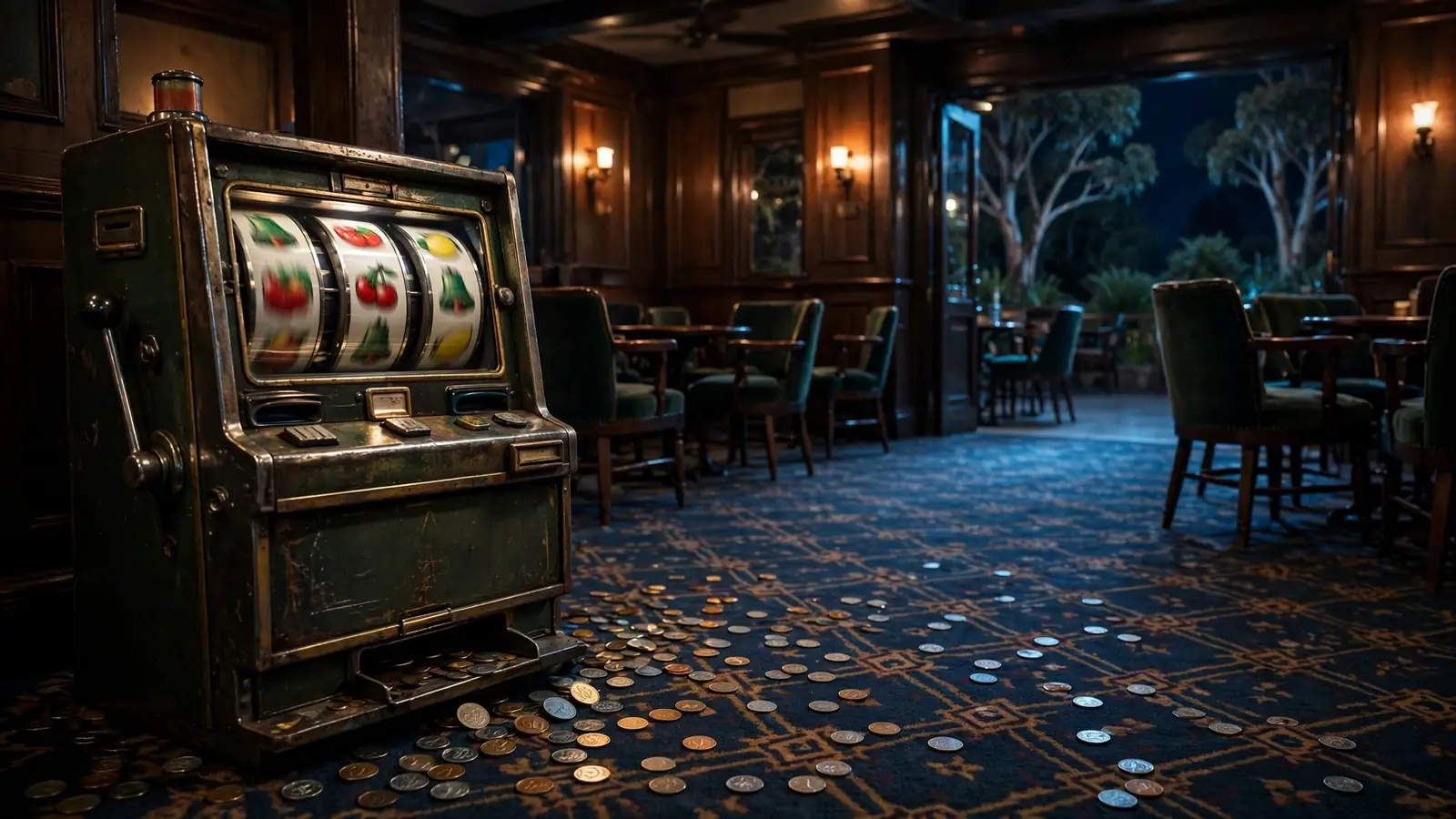
A practical look at classic three-reel play, bonus rounds, browser games and the limits of RTP as a guide to outcomes.

A bonus can make a slot feel more dramatic without changing what its advertised return means. I used to treat a feature round as a sign that a game was somehow more generous. That was a muddle: the feature describes a possible sequence of play, while RTP is a theoretical figure about long-run returns. One does not prove the other.
Sweet Bonanza is a useful example because its free spins have a clear feature of their own. A specialist review describes four or more scatter symbols as awarding ten free spins. Treat that as a reported version of the rules, not a promise that every copy of the game works identically. Game settings can vary, so the instructions shown inside the game matter more than a summary elsewhere.
During the free spins, multiplier bombs may appear. The same specialist review says their values are added together and then applied to a winning tumble. In plain terms, the feature can gather multipliers before they affect a win in that sequence. That can make a round feel like it is building towards something. It does not mean a win is due, or that the next spin is more likely to trigger the feature.
Choosing where to play 3-reel slots in Australia means weighing the operator details that are available before you sign up. Use these notes as a starting point and check the relevant terms for yourself.
LuckyVibe
LuckyVibe lists a Curacao Gaming Control Board licence, OGL/2023/176/0095, held by Hollycorn N.V.
Vegaz Casino
Vegaz Casino lists a Curacao OGL/2024/1335/0780 licence and a minimum deposit of EUR 20.
LevelUp Casino
LevelUp Casino lists a Curacao eGaming OGL/2023/174/0082 licence held by Dama N.V. Its minimum deposit is A$15.
SkyCrown
SkyCrown lists a Tobique Gaming Commission licence. Its stated payout speed is around 10–15 minutes for crypto and 1–5 days for fiat; the minimum deposit is A$30.
SpinsUp
SpinsUp lists a Curacao Gaming Control Board OGL/2023/174/0082 licence held by Dama N.V.
JustCasino
JustCasino lists a Curacao Gaming Control Board licence.
Uptown Pokies
Uptown Pokies is described as operating since 2017 and lists a Curacao licence. Its minimum deposit is A$20.
Roby Casino
Roby Casino lists a Curacao eGaming licence held by Roby Games Ltd.
Ricky Casino
Ricky Casino lists crypto payouts in under an hour and PayID payouts in 1–3 business days. The minimum deposit is A$20, or A$30 to qualify for the bonus.
MrPacho
MrPacho lists crypto payouts in 30–120 minutes and fiat payouts in 24–72 hours. Its minimum deposit is A$30.
That distinction matters if you are looking at bonus features in online pokies, including games described as three-reel slots. A feature can change what happens after certain symbols appear, but it is not a measure of the slot’s expected return. Nor should Sweet Bonanza be mistaken for a template for every three-reel game: its bonus mechanics are an example, not a definition of the category.
There is another wrinkle: the version available through an operator may use a different RTP setting from another version. A specialist review reports Sweet Bonanza at 96.51%, while noting that versions can show a different figure. The operator selects the game build, and the lobby tile does not reveal that configuration. The in-game information panel is the place to check the displayed rules and RTP before any decision to wager.
“Big multipliers” sounds like a verdict. It isn’t. The multiplier feature describes how a winning tumble may be affected during free spins; it does not tell you how often the bonus will arrive, how much a session will return, or whether the game is a better choice than another one. I once saw a flashy feature and mentally counted the winnings before they existed. That was wishful accounting.
If you are comparing bonus-heavy games, separate the questions. What symbols trigger the feature? What happens once it starts? How are multipliers applied? Then, separately, what RTP does the specific game version display? A tidy explanation of a bonus can help you understand the rules, but it cannot answer the return question on its own.
This is also why a game’s free-spin round should not be confused with a “free” way to improve the odds. The feature is part of the game’s design, not a separate guarantee. It may produce a memorable run, or it may pass without the result you hoped for. The rules explain the mechanics; the RTP remains theoretical.
For someone browsing 3-reel bonus slots or free versions of slots with bonus rounds, the useful habit is to read the feature description rather than judge by its name or animation. Sweet Bonanza’s scatter trigger and multiplier bombs are specific mechanics. They do not establish that every bonus round has the same structure, and they do not make a game a three-reel slot.
One practical detail is easy to miss: the game information can differ between versions, including the RTP setting. So a number quoted in a review is not a substitute for checking the actual in-game panel. This is not a trick for predicting results. It is simply a way to know which rules and stated return apply to the version on screen.
For Australian readers, this is an explanation of game mechanics, not a recommendation to play for real money. Online casino-style games are restricted under Australian law. The feature itself does not change that, and it does not turn a prohibited service into a safer or more favourable bet. The bright animation is the easy part to notice. The terms are the part worth reading.
A 3-reel casino slot turns a spin into a displayed result. You press the spin control, the reels move on screen, and symbols settle into a combination. That simple sequence can look like a little mechanical process: the reels slow down one by one, and the final picture appears to be assembled in front of you. But the animation is not a window into a physical machine deciding what to show. The underlying result is random.
Online pokies use a Random Number Generator (RNG). Each spin is a separate event, with its result independent of the spins before and after it. The symbols shown when the reels stop are the visible outcome of that event. Watching one reel pause before another does not mean the first has influenced the next, and the animation does not give you a way to steer the result.
I used to read too much into that pause. If the first two reels showed matching symbols, I’d lean in as if the last one had become more likely to match. It hadn’t. The near-match was just the picture on the screen, not evidence that the game was “setting up” anything. Looks convincing. Still random.
A three-reel layout is a compact way to present the game: three vertical columns of symbols, shown in motion and then at rest. The game’s rules explain how the settled symbols are assessed. Depending on the particular game, that may involve a specified line or another defined way of recognising a winning combination. The layout alone does not tell you every rule, so the symbol arrangement should be read alongside the game information.
This distinction matters because the screen gives you a visual story. Reels appear to spin, slow and stop; symbols seem to pass through possible combinations on the way. It is natural to treat that movement as if the game were choosing among visible positions in real time. The important point is simpler: the displayed movement is part of how the result is presented, while the RNG supplies the random outcome.
That does not mean every 3-reel game must look or behave exactly alike. The layout is a format, not a promise about a particular set of rules. Symbols, pay arrangements and presentation can differ between games. You cannot work out the underlying result process just by noticing that a game has three columns, or by comparing its animations with another title.
An independent spin does not remember what happened on the previous one. A blank result does not make a matching combination due, and a previous win does not make another win less possible on the next spin. Those events do not push the next outcome in either direction. The RNG is used for each spin; the game does not build a personal sequence around what you just saw.
That can be awkward to accept because people are good at finding patterns in pictures. A symbol appearing several times may feel meaningful, and a result that misses by one position can feel closer than it really is. But the screen’s arrangement is not a signal about what will happen next. The reels are not inching toward a promised result. They are showing outcomes generated separately.
I’ve made the same mistake in reverse, too: seeing a run that felt cold and deciding the game must be about to turn. That thought gives a random sequence a plot it does not have. A three-reel game may look familiar and easy to read, but familiarity with the layout is not insight into the next spin.
People sometimes use “three-reel slot” and “3-reel casino game” to describe the same broad layout. The wording tells you how many reels are shown, not whether a game is predictable, how often a particular combination appears, or what the next result will be. The name can help distinguish the format from games with more reels, but it cannot do the work of the rules panel.
Online versions can also make a basic layout look more active with sound, movement or visual effects. Those details affect the presentation, not the independence of each spin. A dramatic stop or a symbol passing close to a line may draw attention, but it does not change the RNG principle.
So when you look at a 3-reel slot, separate what you can see from what the game is doing underneath. You can see the reels, the symbols and the result the game displays. You cannot infer the next outcome from the previous picture, the speed of the animation or a near-match. The format is straightforward; the randomness is the part that refuses to become a pattern.
RTP is useful when comparing 3-reel slots, but it is easy to ask too much of the figure. The letters stand for return to player: a theoretical calculation of how a game performs across a vast number of spins, often millions. It describes a long-run expectation, not a forecast for the next spin or a guarantee about what one person will get back.
That distinction took me a while to accept. I used to see a high RTP and treat it like a quiet promise that a session would go my way. It isn’t. A game can have a stated RTP and still produce a short session that feels nothing like that percentage. The number is calculated across an enormous sample; your experience is only a tiny part of it.
If two games are otherwise being assessed on the same basis, a higher RTP theoretically means a better return over time than a lower one. That makes the figure a comparison tool, not a verdict that one game is “better” in every sense. It says something about expected return over the long run. It does not tell you when a win will happen, how often a particular session will pay, or how much you might finish with.
For someone looking at the best 3-reel slots in Australia, that matters more than a catchy label. RTP gives you one measurable point to check, but it cannot describe the whole experience or settle what will happen during play. I now read it as background information, not a reason to expect a result.
Players are often advised to look for games with an RTP of 96% or higher. Treat that as a comparison threshold, not as a promise of receiving that share back during your own session. Even when a figure clears it, the calculation still concerns performance over a vast number of spins. A short run can land well above or below the theoretical return.
No magic switch.
The RTP is usually shown in the game’s rules or paytable. I’d look there rather than relying on a title, a lobby description or a general claim about a game. The rules and paytable are where the game’s own information is presented, and they give you a direct place to check the stated figure.
It is worth reading the number carefully and making sure you understand what it represents. RTP is not a session target, a minimum return or a timetable for wins. It does not mean that an individual player should expect a particular result after a certain number of spins. It is a statistical measure built across far more play than one person can experience.
The same caution applies when comparing a 3-reel slot with another format. The reel layout does not turn RTP into a short-term prediction. If you see a percentage attached to a game, ask what kind of claim it is: a theoretical long-run figure, rather than a promise about your next visit.
I’ve found it helpful to separate two questions. First: what RTP does the game state in its rules or paytable? Second: am I mistaking that long-run statistic for a personal forecast? The first can be checked. The second is where wishful thinking tends to sneak in.
That is the useful limit of RTP. It can help you compare stated theoretical returns, and a higher figure has a better theoretical return over time than a lower one. But it cannot tell you how an individual session will go. Keep that line clear, and the percentage becomes information rather than advertising.
A classic 3-reel slot has a look that’s easy to recognise: three vertical columns, a compact arrangement of symbols and a layout that often borrows from the fruit-machine era. Bells, bars, fruit and sevens are familiar sights, though the exact symbols depend on the game. The appeal is partly visual. There’s less on screen to learn than in a slot crowded with layers of menus and animated effects.
I’ve found that this stripped-back style can feel more direct. You see the reels, set a stake and spin; the presentation doesn’t ask you to follow a long sequence of feature explanations. That simplicity is about the way the game looks and feels, though. It isn’t a promise that the outcome is easier to read or that a win is more likely.
“Classic” is a style label, not a guarantee that every game follows the same rules. Some games show one payline, while others may offer more ways for symbols to form a winning combination. Paytables and controls can differ, too. I used to assume that three reels meant one simple line and little else. That shortcut made me miss details that were right there in the game information.
The useful habit is to check the layout before you spin. Look at where a winning combination has to land, which symbols count and how the game displays its rules. Don’t judge a slot’s mechanics from a title or a familiar-looking set of fruit symbols. Two games can share the same old-school appearance yet handle combinations differently.
There’s also a difference between a classic-looking game and an old physical machine. An online slot can recreate the visual style without being a mechanical device with spinning drums. Its appearance may evoke that older format, but the presentation doesn’t tell you how each result is generated. A Random Number Generator determines each spin as a separate random event; the previous result doesn’t set up the next one.
Online slots recreate the visual style of old machines using a Random Number Generator to determine each spin as a separate random event, rather than using physical spinning drums.
That distinction matters when the reels seem to be “nearly there.” A symbol stopping just above or below a line can look like a clue, especially when the game uses familiar, bold images. I’ve caught myself reading meaning into that kind of near miss. It’s part of what makes a simple screen feel engaging, not evidence that the next spin is due to complete the pattern.
When I’m choosing a classic-style game, I pay attention to whether I can understand its rules without hunting through layers of effects. Clear symbols and a familiar layout can make a game easier to follow, but I still check what the paytable says rather than filling gaps with assumptions. If the rules aren’t clear to me, I don’t treat the game’s nostalgic look as a substitute for them.
The old-school feel can be enjoyable on its own: fewer visual distractions, recognisable symbols and a pace that leaves room to watch the reels. But a clean design isn’t a strategy. I’ve had to learn that the hard way. A classic 3-reel slot is best approached as a particular presentation of a slot game, not as a special category where appearances reveal what will happen.
A search for three-reel pokies that take real money can make access look like the only question: does the game load, and does the payment option work? In Australia, that misses the more important distinction. A website being reachable does not mean its online casino service is lawful here.
The Interactive Gambling Act 2001 prohibits operators from providing real-money online casino games to people in Australia. That includes pokies, whether they have three reels or a more elaborate layout. Australian-licensed operators cannot offer these games online, and an offshore licence does not make the service locally authorised.
The law places the obligation on the operator, not on an individual player. Australians are not penalised simply for playing at an offshore site. I would not read that as a sign that such a site is approved or protected, though. Offshore operators sit outside Australian consumer protection, so if a dispute arises, the protections available through a local system may not apply. Reachable is not the same as safe.
The Australian Communications and Media Authority (ACMA) is the federal regulator responsible for enforcing the Act and monitoring compliance with interactive gambling laws. It can ask Australian internet service providers to block websites that provide prohibited gambling services or advertise them in Australia.
Those blocks are part of active enforcement, not just a warning on a page. Following enforcement actions, ACMA has blocked more than 1,455 illegal gambling and affiliate websites since November 2019. Blocking can change what is accessible from Australia, but it does not turn a prohibited service into a lawful one—or make a site’s claims about its status reliable.
There is also a difference in the published count of illegal services that have withdrawn since ACMA began enforcing the rules in 2017: one figure is more than 210, while another is over 190. Both describe withdrawals from the Australian market; the figures do not match. The practical point is that enforcement has led services to leave, as well as to websites being blocked.
A page offering three-reel play for real money may appear alongside free online games, but those are different arrangements. A free-play version does not involve wagering real money; it should not be treated as proof that a real-money casino service is permitted. I used to assume that a working site had passed some meaningful local check. That was a poor shortcut.
The same goes for familiar payment methods, polished design or a game opening without trouble. None of those details changes the legal status of an online casino service in Australia. Nor does a foreign licence amount to Australian approval. The issue is the service being offered to people here.
So if you are weighing real-money play, keep the legal position clear: operators cannot lawfully provide online pokies to Australians, ACMA can pursue prohibited services and block access, and an offshore site does not bring local consumer protection with it. A game loading is just a game loading.
A free-play version of a three-reel game can help you get your bearings before you decide whether you even like its layout. You can see where the spin control sits, how the symbols are arranged and where the game explains its rules. That is practical knowledge. It is not a preview of what a later session will pay.
I used to treat a few practice spins like a small test run: if the symbols seemed to line up, I felt I had learned something about what might happen next. I hadn’t. A slot uses a Random Number Generator, and each spin is a separate random event, unrelated to the spins before or after it. Free play does not turn that process into a pattern you can read.
That distinction matters when browsing free three-reel slot games. The useful question is whether the game makes sense to you: can you follow the paytable, recognise the symbols and understand what the controls do? If you find the layout confusing or simply don’t enjoy the pace, you can move on without mistaking familiarity for an edge.
Free mode is a rehearsal of the interface, not the outcome. It can show you how the game presents a win or a loss, but seeing either result does not tell you what the next spin will bring. A run of similar results is still just a run. The next spin is not obliged to continue it, and it is not obliged to correct it.
That was my mistake: I confused knowing how a game worked with knowing how it would behave. Those are different things. Free play can answer the first question. It cannot answer the second.
If you want to get something useful from a free session, keep your attention on the parts you can actually learn. Read the rules on screen. Notice how the game signals a result. Work out whether the format holds your interest. Then leave the session with those answers, rather than a theory built from a handful of spins.
There is no special forecasting value in free 3-reel play. The same independence of spins applies whether you are practising or not. Familiarity can make the game easier to follow; it cannot make random results predictable.
That’s the line.
“Play in your browser” describes how a game is delivered, not what kind of game it is. A page may load a slot through the browser without asking you to install a separate application. That can sound simpler than a download, but it does not tell you whether the game is available, what its terms are, or whether access is lawful in your location.
The same distinction applies to three-reel games. Some may be presented as browser-based, while others may require an app or another form of installation. The label alone is not a guarantee: the actual route depends on the service and the game. I used to read “no download” as if it meant there was nothing else to check. It only described one part of the setup.
Search phrases such as “free download” and “no download” can blur two separate ideas: installing software and playing without real-money stakes. A browser game is not necessarily free, and the absence of an installation does not establish that it is a practice version. Check what the page says about the game before interacting with it, rather than inferring the terms from a button or banner.
There is also no change to the underlying randomness just because a game runs in a browser. Each spin is generated independently by a Random Number Generator; choosing a different access route does not make one spin depend on another. Different packaging, same uncertainty.
For people in Australia, browser access does not make a prohibited real-money online casino service permissible. The Interactive Gambling Act 2001 restricts operators from providing online casino games to people in the country. The delivery method does not alter that legal distinction.
So “no download” is best read narrowly: it may mean the game is accessed through a web page rather than installed as a separate program. It is not proof of safety, free play, or permission to use a real-money service. Small label. Big assumptions.
When I play a three-reel slot, I try not to turn a handful of spins into a story. A couple of wins can make it feel as if the game has warmed up; a run of blanks can make the next spin seem overdue. I’ve read both meanings into the same sort of short session. Neither tells me what comes next.
Each spin is generated as a separate random event, independent of the spins before and after it. So a result does not build momentum, and a losing run does not force a win to follow. The reels may look familiar from one turn to the next, but that visual repetition is not evidence of a pattern. A random sequence can still look lopsided when you see only a small part of it.
That is where my own bad habit used to creep in: I’d change my stake or keep going because the last few results seemed to be “saying” something. They weren’t. I was supplying the explanation after the fact. A short run is just a short run.
It helps to decide what you want from a session before you start. If you’re there for a few spins, keep it to that rather than letting a near miss or a small win rewrite the plan. I also try not to treat a particular symbol, reel position or repeated result as a clue. The previous outcome does not make the next one more likely.
A simple pause can be useful when you notice yourself chasing a pattern. Not because it changes the game, but because it gives you a moment to notice whether you’re still playing as intended. No secret method. Just a check on your own decisions.
Whether you’re playing for real money or trying a free version, the same caution applies to interpreting results: a brief session can show you what happened, not what must happen next. Keep the distinction clear. Random does not mean every tiny run looks balanced; it means the next result is not dictated by the last one.
I still enjoy a few spins. I just don’t ask them to predict the next few.
An online three-reel pokie may look like a small, simple game, but its outcome is still generated electronically. The software uses a Random Number Generator (RNG), and each spin’s result is selected at random. The reels’ familiar layout does not make the next result easier to read.
You may see an RTP percentage in a game’s information. That figure describes theoretical performance across a very large number of spins; it is not a forecast for one player or a short session. A published percentage is useful context, not a promise that a particular run will return a set share of your stake.
There is also a practical wrinkle: the figure shown in a lobby or promotional description may not identify the version actually configured for a particular service. A specialist review can report one RTP, while the game’s own information panel may show another configuration. I’d treat the in-game details as the relevant place to check, rather than assuming every online listing describes the same build.
That distinction matters when comparing online three-reel games. A familiar title or plain interface tells you little about its configured return, and a published number does not turn random outcomes into a pattern you can follow. The number describes a model over time. It does not tell you what happens next.
Free versions may let you see the presentation and controls, but they do not make the RNG predictable or establish what a real-money version would return. And “online” does not mean that a game is legally offered to Australians; the format and the legal status of a service are separate questions.
I used to read a percentage as if it were a hint about the next session. It isn’t. Check what the game itself displays, understand what the figure represents, then leave it at that. The maths stays theoretical.
“3-reel” and “three-reel slots” are two ways of describing the same format. One uses a numeral; the other spells the number out. Neither phrase points to a separate category, and there is no meaningful contest between them to settle.
I used to assume that a small wording change might signal a different kind of game. It often doesn’t. If a game is described as a three-reel slot, calling it a 3-reel slot is simply a shorter way to say the same thing. The label alone doesn’t tell you whether its symbols, rules or presentation will suit you.
That distinction matters when comparing games. Don’t treat the two phrases as rival features, or expect one label to promise a better experience. Look at the particular game’s own information instead. Its wording may vary between a menu, a title or an information panel; the phrasing does not create a different game.
The underlying chance is not changed by spelling. Each spin is generated separately and at random by a Random Number Generator, independent of the spins before and after it. A different label does not turn one result into a clue about the next.
So when you see either term, read it as a description of the same reel format, not as a ranking or a recommendation. Just wording.
Created by the ”Richard Casino” editorial team.