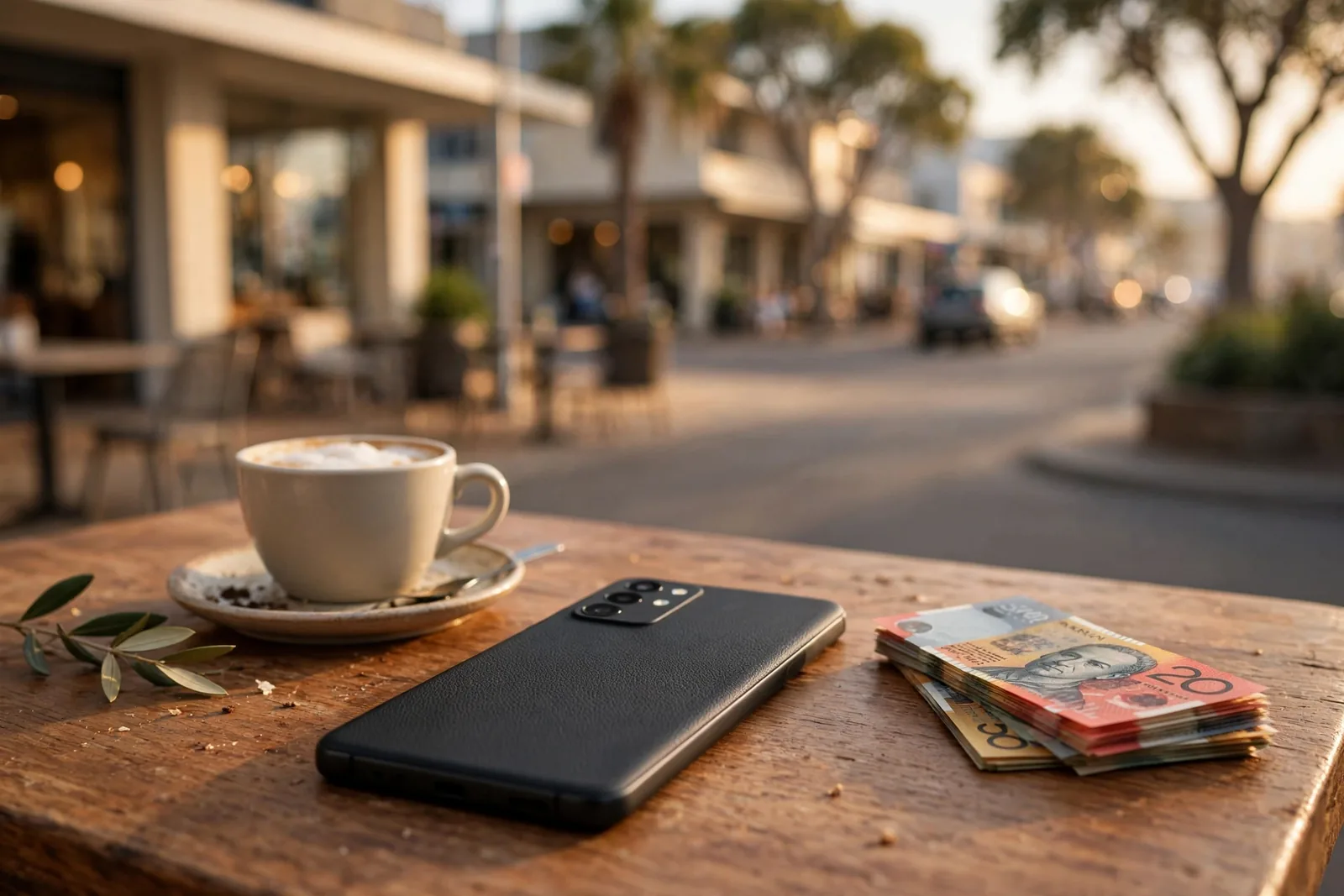
Deposits pass from a wallet to a casino, while withdrawals require operator approval and wallet availability; payment access and offshore risks also matter.

An e-wallet sits between your bank or other funding source and an online account. You put money into the wallet, then use its balance to fund a casino account where that method is accepted. A withdrawal reverses the route: the casino sends an approved payout to the wallet, and you can then keep the funds there or move them elsewhere using the wallet’s available options.
That is the basic idea behind e-wallet pokies payments. The wallet is not the casino account itself, and a successful deposit does not mean a later withdrawal is automatically approved. The operator still has to process the payout, and the wallet provider has to receive it. Two separate services, two possible points of delay.
MiFinity, Skrill and Neteller are examples of e-wallets used for both deposits and withdrawals. Whether a particular wallet is available depends on the operator and the account. Check the payment screen and the terms for that service before sending money. A logo or payment option visible somewhere on a site does not, by itself, tell you whether it is available for both directions.
If you’re looking at online pokies with e-wallet payments in Australia in 2026, use this list as a starting point for checking each operator’s available information. Review payment options and terms directly before choosing.
LuckyVibe
LuckyVibe is listed with a Curacao Gaming Control Board licence, OGL/2023/176/0095, held by Hollycorn N.V.
Vegaz Casino
Vegaz Casino lists a Curacao OGL/2024/1335/0780 licence and a minimum deposit of EUR 20.
LevelUp Casino
LevelUp Casino lists a Curacao eGaming licence, OGL/2023/174/0082, under Dama N.V. Its minimum deposit is A$15.
SkyCrown
SkyCrown lists a Tobique Gaming Commission licence. Its stated payout speeds are around 10–15 minutes for crypto and 1–5 days for fiat; the minimum deposit is A$30.
SpinsUp
SpinsUp lists a Curacao Gaming Control Board licence, OGL/2023/174/0082, under Dama N.V.
JustCasino
JustCasino is listed with a Curacao Gaming Control Board licence.
Uptown Pokies
Uptown Pokies is listed as operating under a Curacao licence since 2017. Its minimum deposit is A$20.
Roby Casino
Roby Casino is listed with a Curacao eGaming licence held by Roby Games Ltd.
Ricky Casino
Ricky Casino lists crypto payouts in under an hour and PayID payouts in 1–3 business days. The minimum deposit is A$20, or A$30 to qualify for the bonus.
MrPacho
MrPacho lists crypto payout times of 30–120 minutes and fiat payout times of 24–72 hours. Its minimum deposit is A$30.
When you choose an e-wallet at the cashier, the payment is routed through the wallet provider. You may be asked to sign in to that wallet and approve the transaction. If it goes through, the wallet balance is debited and the casino account is credited. If the authorisation is declined, the deposit may not reach the casino account; check the wallet’s transaction record before trying again so you do not mistake a pending or failed payment for a completed one.
The practical benefit is a degree of separation between the casino account and the bank details you use to fund the wallet. But it is not a guarantee of privacy, instant settlement or a successful payment. The wallet provider and the operator both have their own processes, and a transaction can be delayed or refused. I have learned not to treat a payment button as proof that the money has arrived.
Deposits and withdrawals can also follow different rules. Some operators require a withdrawal to return through the method used to deposit; some payment options are available for deposits only. That can matter if you pick a wallet simply because it appears in the deposit menu. Before funding an account, find out whether the same wallet can receive withdrawals and whether any method-specific conditions apply. Annoying to check first. Worse to discover later.
A withdrawal is not necessarily sent as soon as you press the button. The casino may first place it in a pending period, then review the request and release it. After that, the wallet provider has to process the incoming payment. So the time shown for the wallet transfer may not include the operator’s review or pending stage.
A specialist review reports that e-wallet withdrawals can arrive within 24 hours after the casino’s pending period. That is a reported timing, not a promise for every operator or transaction. The full wait can be longer if the casino has not yet approved the request, if details need checking, or if the wallet provider has not completed its part. Read the stated processing conditions rather than assuming a countdown starts when you submit the request.
A payout may also be split across stages: the request is submitted, the casino checks it, the casino releases it, and the wallet records the incoming funds. If your balance has not changed, first establish which stage the transaction is at. A status marked pending is different from a payout marked sent; contacting the wrong provider before identifying that distinction can leave you going in circles.
The first cashout is often where account verification becomes visible. A casino may ask for KYC checks, such as a selfie or identity document and proof of address. The purpose is to establish that the account holder’s identity and details match the information being used for the transaction. Until the requested checks are completed and accepted, a payout can be held.
Make sure the submitted documents are readable and that the details match the account information. If the operator asks for a clearer image or another document, the review may take longer while you respond and the information is checked again. Do not assume that a deposit proves your identity or settles these checks; funding and verification are separate steps.
If a withdrawal is delayed, look at the account’s payment status and any verification request before submitting another cashout request. Keep the transaction reference and any relevant messages. If you contact support, a clear question about whether the request is pending, under review or released is more useful than simply asking why the money has not arrived.
E-wallets can make the route between an account and a payment service easier to follow, but they do not remove the operator’s approval step or the first-withdrawal checks. Know which wallet can receive funds, understand the pending period, and complete identity checks when requested. The money still has to clear each stage.
On a phone, the account you use is generally the same one you use on a desktop. Most Australian mobile casino access happens through a browser, so switching devices does not mean starting with a separate profile. Your username, account details and play history are tied to that account, not to the screen you happen to be using.
That sounds simple, but I have found it easy to treat a phone as a different kind of place to play. It is always close by, and opening a browser can feel like a smaller decision than sitting down at a computer. It is not a different account or a separate version of the money involved. If you sign in on mobile, you are still using the same account.
If you move between desktop and mobile, take a moment to check that you have reached the account you meant to use. A saved login or an old browser tab can make it less obvious which profile is open. I have learned not to assume that a familiar-looking screen means I am in the right place. Check the account details before doing anything involving real money.
A sign-in is also not a reason to save credentials carelessly. If you share a device, avoid leaving an account open for someone else to use. On a personal phone, think about whether your screen is visible to people nearby and whether the device itself is protected. These are ordinary account habits, not a special feature of e-wallet play.
An e-wallet does not create a separate casino identity. The account remains the point where access and play are managed. So the phrase “e-wallet login pokies” can blur two different things: the e-wallet is a payment account, while the casino login is the account used to access the service. Keeping that distinction in mind helps avoid confusion when you move from one screen to another.
Real-money play can feel different once you are signed in and focused on what is happening on screen. I have made the mistake of deciding when to stop only after I was already caught up in a session. That is a poor moment to make a calm decision. It is more useful to decide beforehand what you can afford to lose and how much of your time you are prepared to spend, then stick to that boundary.
A specialist gambling review describes account controls such as setting a ceiling on deposits, losses or wagers, limiting session time, and self-excluding. The names and availability of controls can differ between services, so look through the account settings rather than assuming a particular tool is present. If a control is offered, understand what it changes and when it takes effect before relying on it.
Limits work best as boundaries you set while clear-headed, not as targets to approach. A deposit limit is not a suggestion to deposit up to that amount. A time limit is not a reason to keep playing until the timer runs out. If you find yourself changing a boundary because you want to continue, pause instead of treating the setting as a hurdle to get past. Small distinction. Big difference.
Self-exclusion is a more serious step than a reminder or a session timer. If you choose it, read the explanation carefully and make sure you understand its effect on access to the account. It is not something to select casually just to test how the settings work. The practical point is to know which controls exist before you are under pressure to make a quick choice.
The word “real-money” can make an account sound more concrete than the experience feels. On a phone, balances and buttons are displayed in a compact interface; the money is still real, even when the screen makes each action feel routine. I try to slow down before any decision that changes what I am spending or how long I am staying.
Social and free-play casino apps use virtual credits rather than real-money gambling. These apps are available through the Google Play Store and Apple App Store and are legal to use in Australia. Virtual credits are not the same as money you can withdraw, and using a free-play app does not tell you what a real-money account’s controls or terms will be.
If you notice that you are chasing losses, hiding your play, or repeatedly moving a limit, logging out is a sensible immediate step. A control cannot make a decision for you, and a familiar mobile login can make it tempting to return without thinking. Treat the same-account convenience as an access detail, not as a reason to keep playing.
A page describing e-wallet pokies for Australians can look like a simple directory: payment symbols, a few claims about cashouts, then a verdict. I’ve learned not to treat that as enough to decide whether a payment method will work for both directions. A deposit option and a withdrawal option are not automatically the same thing.
Start by looking for a clear distinction between methods accepted for deposits and those available for withdrawals. Some casinos make a method deposit-only; others require a withdrawal to go back through the method used to fund the account. One specialist review describes these restrictions as applying at some casinos, rather than as a rule across the market. That distinction matters: a listing that shows an e-wallet logo may only be telling you that you can pay in, not that you can cash out to that wallet.
If the listing does not say which direction a method supports, don’t fill in the gap yourself. Look for the casino’s payment terms and check the withdrawal section specifically. The wording should make it possible to tell whether the e-wallet is deposit-only, eligible for withdrawals, or subject to a same-method rule. “E-wallets accepted” is too broad to answer that. Nor does a row of payment logos tell you whether a particular wallet is available to customers in Australia.
A withdrawal limit can make a big difference to what a listing’s payout claim means in practice. One specialist review reported weekly limits in the $4,000–$10,000 range at some casinos. Treat that as a reported range, not a promise about every operator or a current market standard. Limits can differ between casinos, and the listing should identify the terms that apply rather than leave you to infer them from a general claim.
Check whether a stated cap applies per week or month, and whether it is a maximum withdrawal amount or a limit on how much can be paid out over that period. Those are not interchangeable. If a listing gives no timeframe, or does not make clear which withdrawals count toward the cap, its payout information is incomplete.
Also look for conditions that can change the practical effect of a limit, such as different rules for particular payment methods. Don’t assume that a displayed limit applies to every cashout route. If the listing makes a broad payout claim but leaves the method-specific terms unclear, verify the casino’s own terms before relying on it.
Words such as “fast” or “easy” don’t tell you whether withdrawals are allowed to the e-wallet you intend to use, or what cap applies. I’ve made the mistake of reading a confident headline as if it answered those questions. It didn’t. Check for specific, written conditions and make sure they refer to withdrawals, not just deposits.
Be wary of a listing that presents an e-wallet badge as proof of compatibility, but gives no explanation of restrictions. A useful listing should help you identify what remains to be checked: whether the wallet can receive withdrawals, whether the deposit method must be reused, and what payout cap applies. If those details are missing, the honest takeaway is that the listing hasn’t settled the issue.
The same caution applies to a ranked table. A high position or a glowing label is not evidence that the payment route suits your needs. If a listing does not explain how it assessed withdrawal access and limits, use it as a starting point for checking terms, not as a decision on your behalf. No ranking can replace the actual conditions attached to the account and payment method.
An Australian-facing list may describe offshore, crypto-friendly casinos; that description is not an endorsement or a guarantee that a service will accept you or process a withdrawal as you expect. Any recommended casinos in such listings are offshore and crypto-friendly. Before depositing, confirm directly that the site accepts your location and check the current payment terms. A listing can become outdated, and a payment logo alone cannot confirm your eligibility.
For a quick comparison, note four things for each entry: whether the e-wallet is listed for deposits, whether it is available for withdrawals, whether a same-method rule applies, and what withdrawal limit and period are stated. Mark unclear details as unclear instead of assuming the most favourable interpretation. If the listing omits one of these, that omission is useful information: you know what still needs confirmation.
I prefer a plain entry with precise conditions to a polished “top pick” that leaves the cashout rules vague. The point of an e-wallet casino listing is not to make the choice for you; it is to show what the payment terms say, and where they stop. If it cannot do that, don’t mistake a neat table for a complete answer.
When you are trying to fund an account in Australian dollars, the payment options shown on a mobile site can look more settled than they really are. A specialist review describes PayID, BPAY, cards and cryptocurrency among the methods offered by some mobile casinos, with processing times differing by method. That is a description of options reported across sites, not a promise that every method will appear at the one you are looking at.
I would treat the cashier as a menu that needs checking, not a guarantee. A method can be listed in general information but unavailable for your account, bank or location when you reach the deposit screen. If you are comparing AUD e-wallet pokies, the same caution applies: seeing an Australian-dollar option mentioned does not tell you whether it is supported for deposits, or how the transaction will be handled by your provider. The small print matters more than the icon.
PayID is one of the methods a punter may encounter. A specialist review describes it as near-instant for deposits and typically free. Those are that review’s reported characteristics, not a fixed promise about every bank or operator. A transfer can still depend on the details supplied, the bank’s own processing and whether the receiving service accepts the payment. Check the amount and recipient shown before confirming anything; a payment sent to the wrong details is not a problem that a method label can solve.
BPAY is also identified in specialist coverage as a possible mobile deposit route, but the processing time can differ from other options. Do not assume that all bank-based payments settle at the same speed just because they start from an Australian account. If the cashier says a payment is pending, avoid sending it repeatedly to try to force it through. Duplicate attempts can leave you with multiple transactions to trace.
POLi needs a different kind of check: whether it is actually a current option at all. The service ended its Australian operations in September 2023, so it no longer handles local payments. If an old page still presents POLi as a working Australian route, that information is stale. I would not make a deposit plan around a method that has stopped processing transactions here.
A card payment can fail even when the card works for ordinary purchases. A specialist review notes that some Australian banks block or flag gambling-related card charges. In that situation, the decline may come from the bank’s handling of the transaction rather than a typing mistake or a fault with the mobile page.
That distinction matters because retrying the same card may not change the result. Check your banking app or contact the bank through its normal support channel if you need to understand a declined charge. Don’t share card details or verification codes with anyone claiming they can push a blocked payment through. A payment screen cannot override a bank’s decision.
A failed attempt also does not automatically mean money has vanished. Check the transaction status in your bank account and the casino account before trying again. If the bank shows a completed charge but the deposit is not reflected, keep the transaction record and contact the relevant support teams rather than sending another payment. If there is no completed charge, the bank may have rejected or reversed the attempt. The exact status is more useful than guessing from a spinner or error message.
For any AUD deposit route, read the payment instructions on the actual cashier page before acting. Confirm the currency, the method name, any displayed fees and the payment details. If the page redirects you to a bank or another payment service, check that the request matches what you intended. A familiar logo alone is not enough to establish that the payment is correct.
Cryptocurrency may also appear among methods described in specialist coverage, but it is not the same as a bank transfer simply because you are funding an account from Australia. Its processing and value handling differ, so do not treat it as a substitute for an AUD bank route without understanding what the payment screen requires. The method list tells you what may be offered; it does not tell you that every option is suitable for you.
I have learned not to let a deposit button rush the decision. A method marked “instant” is still subject to the relevant provider, and a method shown on an old review may no longer be available. Take a moment to verify the current cashier details and the transaction status. Less guesswork.
When a casino is new to me, I check the access format before I get distracted by the look of the site. “App-like” can mean a few different things: opening a website in your mobile browser, saving a Progressive Web App (PWA) to your home screen, or installing a separate native app. They may look similar once open, but they are not the same thing.
For casinos that claim to accept Australian customers, browser access and PWAs are more typical than native mobile apps. Casino apps are rarely available through Google Play or Apple’s App Store in Australia, so opening the site in a browser is the default. That is worth knowing before you assume there must be an app waiting in an official store.
Visit the casino website using your phone’s browser with no separate installation required.
A home-screen shortcut that opens the website in an app-like view.
Separate software installed on the device, often via sideloading outside official stores.
With browser access, you visit the casino website using your phone’s browser. There is no separate casino app to install. The page is designed to work on a mobile screen, and you use the website itself rather than a downloaded program.
This is the least confusing format to identify: you open a web page, and it remains a web page. If a site asks you to install something, pause and check what it is asking you to add. A prompt to save a PWA to your home screen is different from downloading an app file from outside an official app store.
I’m wary of treating a polished mobile layout as proof that a site has a native app. It may simply be the website adapting to the phone. “Mobile app” can be loose sales language. The distinction matters because the installation route tells you more than the label does.
A Progressive Web App is a shortcut to the casino website that behaves more like a native app on a mobile device. It can sit on your home screen, giving you a familiar icon to tap instead of typing in or returning to the website address each time. It is still connected to the website, rather than being the same thing as a conventional app downloaded from an app store.
If the casino website offers a PWA, the installation process is simple: tap the site’s install or add-to-home-screen prompt, then confirm. The wording and placement of the prompt can vary, so look at what your phone is asking you to do before accepting. Once installed, the shortcut should open the website in an app-like view.
That convenience has limits. A home-screen icon does not make a site more trustworthy, and it does not turn a web service into an app vetted by Google or Apple. I’ve learned not to confuse a tidy icon with a safety check. Different things.
A native app is a program installed on the device, rather than a website shortcut. If an operator directs you to download an app file outside Google Play or Apple’s App Store, that is sideloading. Sideloaded casino apps carry security risks, and their safety depends on the operator. You cannot rely on an official app-store listing to provide the usual point of reference if the app is not listed there.
Before installing anything, consider whether the browser version or a PWA is enough. If you do proceed with a separate file, pay attention to where it comes from and what permissions the device requests. A casino’s own assurance is not the same as independent vetting. If the download instructions are unclear, pressure you to hurry, or do not match what your phone displays, stop rather than trying to force the installation through.
I would not install a file just because a site presents it as the “best” way to play. That word does not explain what is being installed, who controls it, or what access it requests. Keep the decision practical: if browser access works, there may be no reason to add software to your device.
A mobile site that loads poorly is not automatically evidence that you need an app. Connection problems, limited available memory, an outdated browser, and too many apps running in the background can all contribute to mobile trouble. A specialist review identifies those as possible causes, so it makes sense to check the phone and connection before blaming the access format.
Try closing other open apps, checking that your browser is current, and seeing whether the connection is stable. If the same page still behaves badly, switching between a browser and a PWA may not fix the underlying issue: both lead to the casino website. That distinction saved me from repeatedly reinstalling things when the real problem was elsewhere.
Treat each format for what it is. A browser gives you direct website access; a PWA puts a website shortcut on your home screen; a native app is separately installed software. For a newly encountered casino, knowing which one you are being offered is a sensible first check—not a reason to trust the operator, and not a reason to install more than you need.
The legal position is easy to blur when a website looks polished and accepts Australian visitors. Under the Interactive Gambling Act 2001, operators are prohibited from offering online casino-style games to people in Australia. That covers real-money casino games, including pokies. A site being reachable, having an account page in Australian dollars or displaying an overseas licence does not change that basic position.
The Act does not make an individual Australian punter’s decision to play offshore a crime. That distinction matters, but it is not a promise that the experience is protected or that every dispute has a local remedy. I used to treat “available in Australia” as if it meant “safe for Australians”. It doesn’t. Access and protection are different things.
ACMA, the Australian Communications and Media Authority, works to restrict access to gambling services that breach the rules. It can block sites, so a page that opened last time may not remain accessible. A block is not a technical glitch to work around; it is part of the enforcement environment. Trying another route does not make the operator subject to Australian casino regulation.
Operators that accept Australians may point to licensing jurisdictions such as Curaçao, the Malta Gaming Authority or Gibraltar. That information can tell you where an operator says it is licensed, but it does not mean it has permission to offer online casino games in Australia. Nor does a licence abroad put an Australian government agency in charge of resolving a disagreement between you and the operator.
That is the part I would want made plain before any money moves: if an offshore casino refuses to pay winnings, there is no Australian government body for you to take that complaint to. You may be left dealing with the operator or whatever process it offers under its own terms. That is a very different position from having a local regulator to turn to. No safety net.
Any casinos recommended in this context are offshore and crypto-friendly. That description should not be mistaken for an endorsement or a guarantee. Crypto-friendly describes an available payment orientation, not a measure of fairness, reliability or recourse. Before depositing, confirm directly that the site accepts customers located where you are. Do not assume an Australian currency option or a successful page load proves that your location is accepted.
Be at least 18 to register and gamble. And read the operator’s terms with the same attention you would give the payment screen. If the site’s rules, complaint route or location restrictions are unclear, that uncertainty is part of the risk, not a detail to tidy up later.
A VPN may make a blocked website appear reachable, but using one to get around access restrictions can create another problem. The casino may treat it as a breach of its terms; winnings could be voided and the account closed. I would not assume a VPN hides the issue or gives you a stronger claim if something goes wrong. It can leave you with less access and fewer options.
The practical point is not that every offshore operator behaves identically. It is that the Australian legal framework does not provide the protections people may associate with a locally regulated casino, and ACMA blocking is a real part of that framework. An offshore licence, a familiar payment method or a smooth mobile page cannot erase those limits. If you are weighing a deposit, first be clear about who controls the service, whether it accepts your location, and what you can realistically do if the operator disputes a withdrawal.
A “no-deposit” label sounds like there is nothing to weigh up. It describes how an offer begins, not what you must do to keep or withdraw any resulting bonus balance. I’ve learned to treat the headline as the least useful part and read the terms before accepting.
Start with the wagering requirement: check what amount must be wagered, and whether the calculation applies to the bonus, the bonus plus a deposit, or something else specified in the terms. A specialist review describes welcome-bonus requirements in the 30x–50x range and treats anything above 40x as steep. Those figures are a reference point, not a promise that an offer you see will use them. The exact calculation matters more than the “free” wording.
Then look for conditions that change the practical cost. A minimum deposit may be required to activate an offer or make a withdrawal possible, even when no deposit is needed to claim it. Check whether a clock starts on acceptance, how long you have to meet the wagering requirement, and what happens if the deadline passes. Some offers may expire before you have completed the conditions.
Game restrictions matter too. The terms may exclude certain games or count play on them differently towards wagering. If you overlook that detail, activity that feels like progress may not clear the requirement as expected. Check the full list of eligible games and any contribution rules rather than relying on a banner summary.
Finally, read the cashout cap: it can limit how much of a bonus-related balance may be withdrawn, regardless of the balance shown on screen. Check whether the cap applies to winnings from the bonus, and whether other conditions apply before a withdrawal is allowed.
I would compare the wagering requirement, minimum deposit, deadline, game restrictions, expiry date and cashout cap together. A low-looking requirement can still be poor value if the time window is tight or the cap is restrictive. If the terms are hard to find or unclear, that is a reason to pause, not to accept first and untangle them later.
Read the complete terms before claiming any offer. That includes the wagering rules, eligible games, expiry conditions and cashout limits—not just the headline. If the conditions do not make sense to you, leaving the offer alone is a valid choice. No bonus is owed to you.
Yes, you can play through a mobile browser, usually with the same account you use on desktop. Casinos accepting Australian players typically offer browser play or a Progressive Web App instead of a native app.
A wagering requirement means you must wager a multiple of the bonus amount before it is cleared. Welcome bonuses commonly require 30x to 50x wagering, and many must be cleared within 7–10 days; missing the deadline means losing the bonus.
No, you can usually play in a mobile browser, and your account is the same one you use on desktop. Some casinos offer a Progressive Web App, which acts like a home-screen shortcut to the website.
An e-wallet withdrawal can typically arrive within 24 hours after the casino’s pending period, but the casino must first approve and release it. Completing any requested identity checks can help avoid delays.
A native app is installed as an app, while browser play runs through the casino’s website. A Progressive Web App is a website shortcut that behaves like a native app; browser play is the usual option for Australian mobile casinos.
Created by the ”Richard Casino” editorial team.