The key distinction is between gambling you may encounter and services an operator may legally provide to people in Australia. Under the Interactive Gambling Act 2001, operators cannot provide real-money online casino games to customers physically located here. That covers online pokies as well as poker and table games such as blackjack and roulette. The law is about the service being supplied to someone in Australia; an overseas address or a foreign licence does not make the service lawful for Australian customers.
I used to read a polished website as a kind of reassurance. That was a mistake. A professional-looking page, familiar game labels or confident claims about oversight do not change the Australian rules. A foreign licence is not an Australian authorisation, and it does not make it lawful to supply prohibited interactive gambling services here. The question is not whether an operator looks established. It is whether the service can legally be offered to people in Australia.
The Interactive Gambling Act places the legal prohibition on operators supplying these services. Its restrictions also cover advertising prohibited interactive gambling services to people in Australia. This is why I can explain the legal position, but I cannot recommend or promote an offshore online casino, direct you to one, or dress a suggestion up as a neutral comparison. That would point readers towards a service that the law does not permit operators to provide here.
Choosing an online casino for an index page is easier when you can quickly check the details that matter to you. Use these short verdicts as a starting point for deciding which operators to explore further.
LuckyVibe
LuckyVibe is listed with a Curacao Gaming Control Board licence, number OGL/2023/176/0095, held by Hollycorn N.V. You can use this licensing detail as a starting point for further checks.
Vegaz Casino
Vegaz Casino lists a Curacao OGL/2024/1335/0780 licence and a minimum deposit of EUR 20. Check whether that deposit amount suits you.
LevelUp Casino
LevelUp Casino lists a Curacao eGaming OGL/2023/174/0082 licence held by Dama N.V. Its minimum deposit is A$15.
SkyCrown
SkyCrown is licensed by the Tobique Gaming Commission. Its stated payout times are around 10–15 minutes for crypto and 1–5 days for fiat.
SpinsUp
SpinsUp lists a Curacao Gaming Control Board licence, number OGL/2023/174/0082, held by Dama N.V. This licensing information is the key detail available for your quick reference.
JustCasino
JustCasino lists a Curacao Gaming Control Board licence. This is the only specific detail available here, so you may want to check further information before deciding.
Uptown Pokies
Uptown Pokies lists a Curacao licence, has been operating since 2017, and has a minimum deposit of A$20. These details can help you decide whether to look into it further.
Roby Casino
Roby Casino lists a Curacao eGaming licence held by Roby Games Ltd. The licence and company name are the available points to check as you consider the operator.
Ricky Casino
Ricky Casino lists crypto payouts in under 1 hour and PayID payouts in 1–3 business days. The minimum deposit is A$20, or A$30 to qualify for the bonus.
MrPacho
MrPacho lists crypto payout times of 30–120 minutes and fiat payout times of 24–72 hours. Its minimum deposit is A$30.
The Act sets substantial maximum daily penalties for breaches: up to $360,000 for an individual and $1.8 million for a body corporate. Those figures concern people or organisations violating the law; they are not a fee or a penalty imposed on a player simply for using an offshore service. The legal framework does not make the player liable for that use. Still, “the player isn’t fined” is not the same as “the service is lawful” or “nothing can happen to the site.” Keep those points separate.
An offshore operator may claim to accept Australian customers, but a claim on its own does not establish legal permission. Nor does a page describing itself as licensed, secure or approved settle the Australian question. These words can sound reassuring while leaving out the issue that matters: the Interactive Gambling Act prohibits operators from supplying real-money online casino games to people physically in Australia. Marketing language is not a change to the law.
The Australian Communications and Media Authority, or ACMA, is the federal agency responsible for enforcing the Act and monitoring compliance with federal interactive gambling laws. It can investigate and take enforcement action when an operator provides or advertises prohibited services. ACMA can also ask Australian internet service providers to block access to sites that provide prohibited interactive gambling services or advertise them here.
That blocking power is part of active enforcement, not just a warning on a government page. Following enforcement action, ACMA has blocked more than 1,455 illegal gambling and affiliate websites since November 2019. A blocked site may become difficult to reach from Australia, but access changing or disappearing does not turn the underlying offer into a lawful one. I would not treat a working link as evidence of approval, either.
There is a discrepancy in the public figures for services that have left the Australian market after enforcement began in 2017. One account says more than 210 illegal services have withdrawn; another says over 190. Those totals do not match, so it would be misleading to present either as an uncontested count. The broader point is clear without choosing between them: ACMA enforcement has led illegal services to withdraw, while website blocking remains one way the regulator can respond.
People often use a single word for the whole experience: “legal”—as if it describes the site, its licence, its games and access from Australia all at once. It does not. The important issue here is the supply of real-money casino-style services to people in Australia, and the law prohibits operators from providing them. I can set out that boundary and explain ACMA’s role; I cannot turn the boundary into a recommendation for an offshore service.
This also means a disclaimer would not fix promotional content. A page cannot point readers towards prohibited services and make that appropriate simply by adding “check local laws” or calling the material independent. The practical effect still matters. For the same reason, I will not rank offshore operators or frame access instructions as consumer advice. That would blur the legal line rather than clarify it.
If you come across a site making claims about Australian legality, check the law and ACMA’s information rather than relying on the site’s own wording. The Interactive Gambling Act 2001 is published through the federal legislation register, and ACMA explains its enforcement role on its official website. Those sources help distinguish a regulator’s action from an operator’s advertising. They do not provide a reason to assume a foreign service is permitted.
The law described here concerns operators and advertising, not a fine for an individual player. But legal permission and practical access are different questions: ACMA can seek blocks, and sites can withdraw after enforcement. That is the line this page will keep. No sales pitch.
A region name can make a claim sound more grounded than it is. “Pokies for people in the country” or “options near the coast” may suggest that a particular service is available in that place. But a location in a headline does not establish what a wagering service offers, whether it can be accessed there, or whether the claim is accurate. I’ve learned to pause when a broad label is doing the work of evidence. It often isn’t enough.
The national legal position is the starting point. Under the Interactive Gambling Act 2001, operators must not provide real-money online pokies to people physically located in Australia. The restriction applies whether someone is in a capital city, a regional town, or somewhere remote. Changing your postcode does not make a prohibited service permissible. Nor does a website’s claim that it is “local” change the rule.
That distinction matters because location-based wording can blur two different things: where a reader is, and where a service is allowed to operate. An offshore online casino might use regional names to make its pitch feel tailored, but those names do not turn it into an Australian service or create an exception to the national law. I would treat any such wording as a claim to assess, not proof of local suitability.
Regional references can also create an impression that the experience varies by state or territory. That may sound plausible, especially when people are used to different local rules for other activities. But it would be a mistake to infer that online pokies are permitted in one part of Australia because a page singles out that region, or to assume that a venue or product is available simply because a location appears beside its name. The national restriction still applies to real-money online pokies offered to people in Australia.
ACMA is the federal body responsible for enforcing the Interactive Gambling Act 2001 and monitoring compliance with federal interactive gambling laws. It can ask Australian internet service providers to block access to websites that provide prohibited services or advertise them in Australia. That enforcement role is relevant across the country; it is not a local endorsement when a website remains reachable, and a regional label is not evidence that a service has passed a legal check.
I would separate claims about online services from claims about physical venues, too. A page that mentions a town, a venue, or a local entertainment area is not automatically describing an online service, and the reverse is also true. One kind of claim cannot verify the other. Without reliable, specific information, I wouldn’t turn a place name into a recommendation or suggest that a named venue has particular machines, opening arrangements, or regional features.
The same caution applies to maps, location filters, and pages that group results by state or region. Those tools can organise information, but organisation is not confirmation. A pin on a map does not tell you whether a service is lawful for someone in Australia. A state heading does not establish that every claim beneath it applies throughout that state. And a phrase such as “available in your area” can be marketing language rather than a clear explanation of what is actually being offered.
I’ve been caught by this sort of presentation before: a detail that looks personal can make an offer feel more credible before I’ve checked what the detail really proves. It proves, at most, that the page chose to mention a place. It doesn’t establish that an operator has permission to provide prohibited online gambling services here. The label can be neat. The underlying claim can still be wrong.
For readers comparing information by region, the useful question is not whether a page has named their area. It is what the page is claiming about that area, and whether the claim has a dependable basis. Be wary of language that slides from “for people in this region” to an implication of local approval, local availability, or special local treatment. Those are separate claims; one does not follow from another.
There is a straightforward boundary here. The federal law applies to people physically in Australia, wherever they happen to be. Regional wording cannot remove that boundary, and ACMA’s enforcement powers are not limited to one part of the country. I would not treat a postcode, town name, or regional category as a reason to trust or use an offshore online casino. Place names can personalise a page. They can’t rewrite the law.
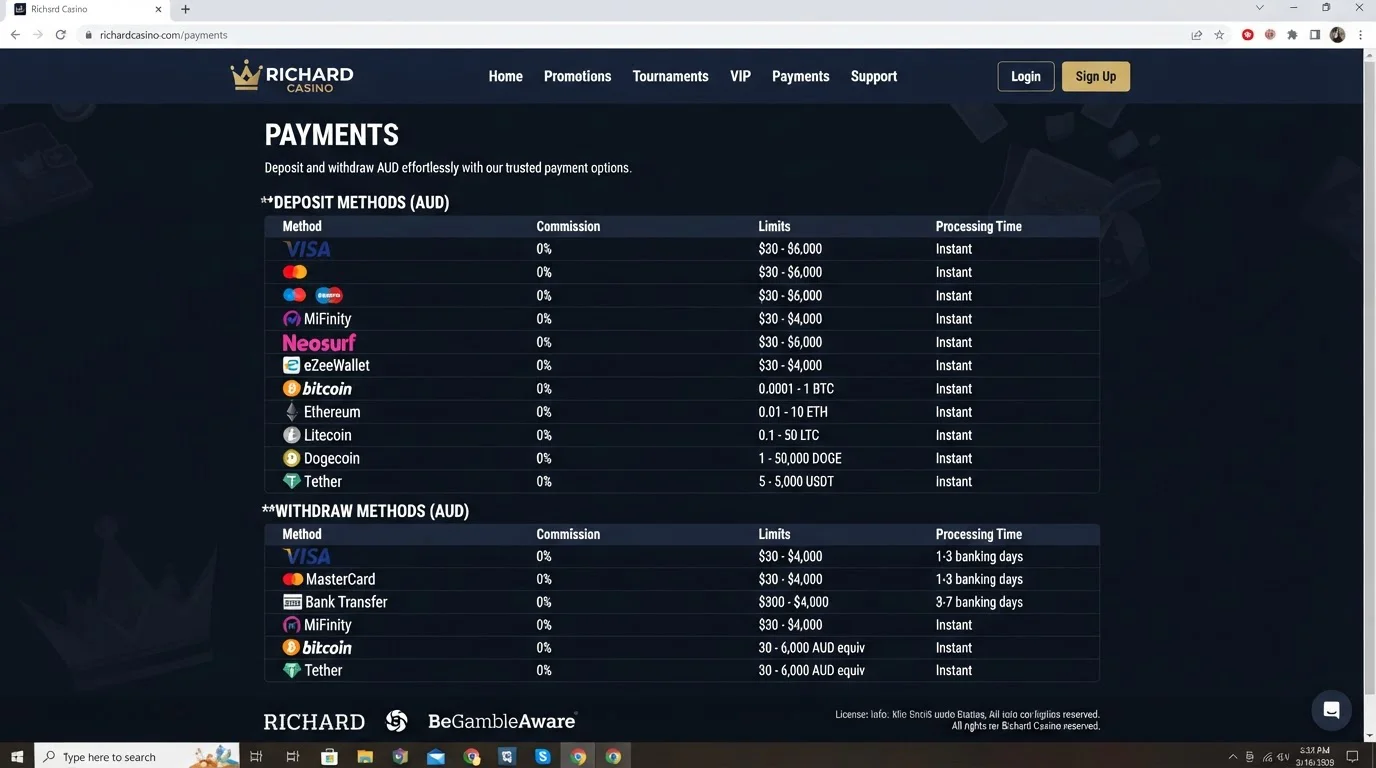
Payment language can make an offshore online casino sound more dependable than it is. “Instant” is a claim about speed; “secure” is a claim about handling information; neither tells you whether the service is lawful in Australia or whether a payment will go as described. I used to treat a familiar payment logo as a kind of reassurance. It isn’t. A method being recognisable does not make the wagering service behind it legitimate.
The legal line matters before the checkout page does. Under the Interactive Gambling Act 2001, operators cannot provide real-money online casino games to people physically located in Australia. That covers services involving pokies and table games. The restriction is on providing the service, not on a particular way of moving money. Changing the payment route does not change the nature of the service.
That distinction is easy to lose when a page talks only about deposits and withdrawals. A list of methods can look like a practical comparison, but it cannot establish that an offshore online casino is permitted to serve Australians. Nor can it establish that a payment will be accepted, returned, or handled in the way an advertisement suggests. Those are separate claims, and they need evidence of their own. A tidy checkout screen is not evidence.
I would be wary of any pitch that treats payment convenience as proof of safety. “Easy” may describe the steps shown on a page; it does not settle what happens if an account is restricted or a withdrawal is disputed. “Trusted” is a sales word unless the reason for trusting the service can be checked. I have been pulled in by polished wording before. It felt reassuring in the moment. That feeling did not answer the questions that mattered.
The Australian Communications and Media Authority enforces the federal interactive gambling rules and can investigate operators that provide or advertise prohibited services. It can also ask internet service providers to block access to sites offering those services or promoting them in Australia. ACMA has blocked more than 1,455 illegal gambling and affiliate websites after enforcement activity since November 2019. That does not mean every inaccessible page has the same history, or that a payment page can tell you what action has been taken. It does show that access and availability are not a reliable sign of permission.
There is also a disagreement in the published withdrawal figures: one version says more than 210 illegal services left the Australian market after enforcement began in 2017, while another says the number is more than 190. I would not quietly choose one and present it as settled. Either way, the point for someone considering a payment is narrower: operators have withdrawn from the market, and a service’s past presence does not establish that it can lawfully keep serving Australians.
The same caution applies to claims about refunds, chargebacks, processing times, fees, or the handling of personal and financial details. A page may state such terms, but that statement alone does not prove how they work in practice. A payment provider’s name, where one appears, does not amount to an endorsement of the gambling service using it. I would not read a familiar name as a guarantee that a transaction is protected or that a dispute will be resolved in a particular way.
This is not a reason to share payment details just to find out what happens. If a service is offering real-money online casino games to people in Australia, the underlying offer is already on the wrong side of the law for operators. There is no payment option that turns it into an authorised local wagering service. And while the law targets providers rather than making the player criminally liable for playing at an offshore casino, that does not make the service dependable or remove the practical uncertainty around a transaction.
A safer habit is to separate what a payment page says from what it proves. Read claims as claims. Do not infer local approval from a method being available, a page loading, or an account appearing to work. If you have already sent money and are unsure what to do, avoid sending more just to unlock a promised withdrawal. Keep records of the communications and consider seeking independent advice about the transaction.
I know the temptation to focus on the small practical detail—the button, the transfer, the promised arrival—because it feels more manageable than questioning the whole offer. But payment convenience is not a legal check, and an advertised method is not a recommendation. I would rather leave a payment claim unendorsed than dress it up as useful guidance when it cannot establish what matters. No shortcut here.
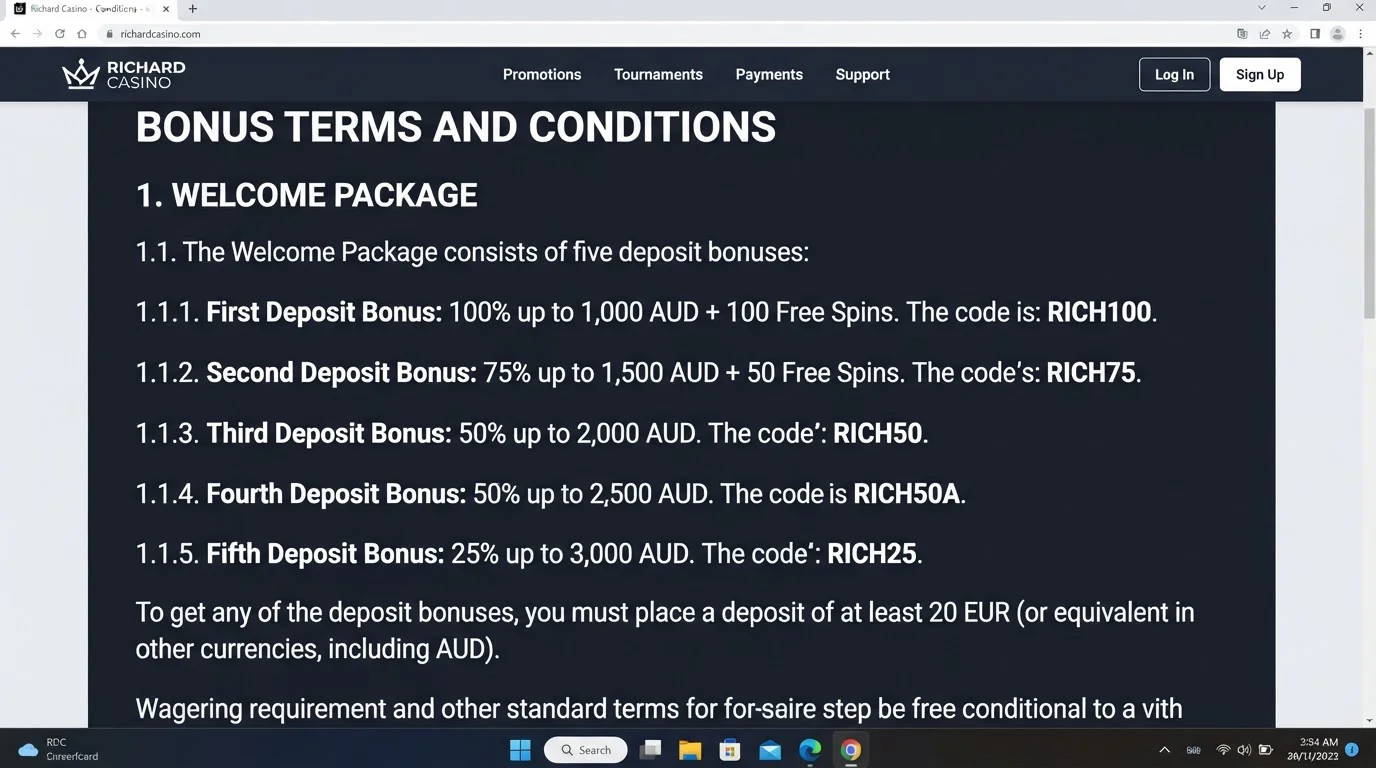
A bonus can make an offshore online casino sound more appealing than it is. “Welcome gift” is advertising language; it does not tell you what the offer means in practice, whether you qualify, or what you would have to do before any advertised value becomes usable. I’ve learned not to treat a bright headline as money in my pocket. It is a pitch, not a promise I can rely on.
There is a more important point in Australia: a promotion does not change the legal status of the service being promoted. The Interactive Gambling Act 2001 prohibits operators from providing real-money online casino games to people in Australia. Advertising offshore online casinos to Australian audiences is also banned. Calling a promotion a bonus, a reward or a special offer does not create an exception.
That matters because bonus language can make an offshore wagering service look ordinary and harmless. A banner might emphasise a welcome offer while leaving the service itself in the background. But the offer and the service are connected: the promotion is intended to draw attention to the operator. It is not a separate, safer product.
Words such as “free,” “exclusive” and “no-risk” deserve a pause. They are persuasive labels, not explanations. “Free” does not automatically mean there are no conditions. “No-risk” does not establish that you cannot lose money or encounter restrictions. And “exclusive” says nothing, by itself, about whether an offer is available to you or lawful to advertise here.
I used to skim past the small print when the headline sounded generous. That was backwards. The headline is written to catch your eye; the conditions, if shown, are where the practical meaning sits. Even a detailed set of terms would not make an offshore casino promotion lawful for Australian audiences. It would only explain the offer being advertised.
It is also easy to confuse a stated bonus with value you can actually use. Promotional wording may describe a benefit, but it cannot answer every relevant question on its own: who the offer is for, how its conditions work, or whether the advertised benefit can be accessed. Without trustworthy, applicable details, treating the headline as a reliable estimate of what you will receive is a gamble before the gambling even begins.
A bonus is not just a perk floating outside the rules. When an operator uses it to attract people to prohibited online casino services, the promotion is part of the advertising picture. The Australian Communications and Media Authority (ACMA) enforces the Interactive Gambling Act and can investigate operators that provide or advertise prohibited services.
ACMA can also ask Australian internet service providers to block access to websites that provide prohibited interactive gambling services or advertise them in Australia. That makes a promotional page more than a question of whether its wording sounds convincing. Access can be restricted as part of enforcement. A polished page, familiar branding or a prominent offer does not prove that the service is permitted here.
I would be wary of treating repeated exposure as a sign of approval, too. Seeing a promotion online does not mean Australian authorities have cleared it, and a bonus being displayed does not turn an offshore operator into a locally authorised service. Ads can travel farther than the legal permission behind them. Not the same thing.
Australian rules also restrict advertising of gambling services, including inducements and promotions, during specified hours. That restriction should not be read as permission to advertise an offshore online casino outside those hours: advertising offshore online casinos to Australian audiences is banned. Time-of-day rules do not override that prohibition.
When a promotion appears, separate what it says from what it proves. The headline may claim a reward; it does not establish that the service is lawful for people in Australia. The surrounding language may create urgency or make the offer feel personal; that does not verify eligibility or explain the real conditions. And a page that looks professional is still just a page.
I would not use an advertised bonus as a reason to sign up, share personal details or try to access an offshore online casino. That is not because every headline can be decoded into a hidden trap; it is because the promotion is attached to a service operators cannot lawfully provide to people located in Australia. The bonus cannot fix that.
If you have already seen an offer, the useful question is not whether it sounds generous. It is whether the service behind it is permitted to provide online casino games to people in Australia. Under the Interactive Gambling Act, operators are prohibited from doing so. A promotional label does not alter the rule.
That can feel less exciting than comparing offers. It is also a clearer way to make sense of the ad. I have wasted enough attention on words designed to make me focus on a reward and forget the conditions around it. In this market, the bigger issue comes first: a bonus is still an advertisement, and an advertisement cannot make a prohibited offshore casino service lawful. No clever wording changes that.
“Pokies” is the familiar Australian word for slot-machine games. In an online setting, the label can make the activity sound like a straightforward digital version of something people already know. That familiarity does not change the legal position: offering real-money online pokies to people in Australia is prohibited under the Interactive Gambling Act 2001.
A familiar Australian term for slot-machine games, which are classified as prohibited interactive gambling services when offered for real money online to people in Australia.
I have learned to be wary of the small shift in wording that makes a pitch sound harmless. “Just the online version” can still mean a wagering service taking real-money play. A screen, a familiar format and a casual name do not turn that into a different kind of service. The important point is what is being offered and to whom, not whether the page calls it pokies, slots or something more polished.
Pokies are built around a simple idea: a player makes a wager, the game produces an outcome, and the result may involve a return. Online versions use software and a screen rather than a physical machine, but the category remains recognisable. Where real money is involved and the service is provided to people in Australia, the law treats online slots as prohibited interactive gambling services.
That is why a catalogue of titles would give the wrong impression here. A list can look like an invitation to browse, compare and try. I’m not going to dress the category up that way. The point is not that one title is better or safer than another; it is that naming games in a setting where they cannot lawfully be offered would turn an explanation into promotion.
There is a difference between describing what “pokies” means and encouraging someone to play them online. I can explain the term without giving a route to a wagering service, repeating promotional language or suggesting that a particular game is available to Australians. That line matters. A page can sound like neutral information while still functioning as a sales pitch.
A service may use broad labels such as “games” or “entertainment” rather than “pokies”. That wording alone does not decide what the service is. In Australia, online slots are specifically included among the real-money services that operators cannot provide to people physically located here. Calling a game a novelty, a feature or a different format does not make the legal issue disappear if it is still real-money online play.
I used to think the label on a page told me enough. It doesn’t. Advertising is designed to make a product feel simple, and a familiar word can hide the more important question: what activity is actually being offered? If the answer is real-money online pokies for people in Australia, the relevant rule is not softened by a friendly name or tidy presentation.
The Interactive Gambling Act 2001 sets the boundary for operators. It is illegal for them to provide real-money online slots to customers in Australia. That is not a judgment about whether a particular title is entertaining, well made or popular. It is the rule that determines whether the service may be offered here.
A description of the category should not be mistaken for a recommendation. There is no particular title I can point to as an option for Australians, and I won’t frame online pokies as a pastime to explore. Doing so could steer readers toward a service that operators are not allowed to provide in this market.
I also avoid the language that often surrounds these games: claims about excitement, easy wins or a “must-try” experience. Those phrases are designed to create appetite, not clarify the legal position. Even a disclaimer would not make a promotional pitch neutral if the rest of the writing nudged someone toward playing.
The same goes for ranking games by supposed quality or describing a shortlist as a guide. Rankings create a sense that the reader should choose between options. In this context, that is the wrong message. The useful distinction is between understanding what the word means and being directed to a real-money service.
If you come across a page offering online pokies for real money to Australians, the fact that it is accessible on a screen does not make the offer lawful. The law addresses the operator providing the service; it does not turn the offer into a permitted one because the product is described as entertainment or sits beside other games.
ACMA is the federal authority responsible for enforcing the Interactive Gambling Act and monitoring compliance with federal interactive gambling rules. It can ask Australian internet service providers to block access to sites that provide prohibited services or advertise them here. That enforcement role is another reason I won’t treat a game page as an ordinary shopping choice.
There is no need to turn this into a catalogue, a ranking or a set of directions. Pokies is a familiar term, but familiarity is not permission. For Australians, real-money online slots sit on the prohibited side of the line. That’s the part worth remembering.
A game does not become lawful because it sits inside an app, and an app does not become harmless because it looks polished. That distinction is easy to miss when a screen is full of bright tiles, familiar card tables and neat menus. I’ve learned to distrust the presentation: a tidy interface tells you how something was designed to feel, not whether it can lawfully be offered to people in Australia.
The Interactive Gambling Act 2001 prohibits operators from providing real-money online casino games to people physically in Australia. That covers familiar forms such as poker, blackjack, roulette and slots. The relevant question is not whether a product calls itself an app, a game hub or a social club. It is what service is being supplied and whether real money is involved.
That legal line matters more than a product’s branding. An offshore online casino might describe its software as entertainment or put a free-play mode in front of the paid service. Those labels do not, on their own, settle what the operator is providing. A free demonstration and a real-money gambling service are not the same thing, but a free-looking screen is no guarantee that the wider product has no real-money component. I would not treat the wording on a download page as a legal assessment.
An app is a way to access software; it is not evidence that the underlying service is permitted. The same applies to a mobile website saved to a home screen. A shortcut can feel like a native app, but the icon and layout say little about the operator’s legal position. Nor does a smooth installation process prove that an Australian user is entitled to use the service.
I used to treat professional design as a kind of reassurance. That was a mistake. Branding, animations and polished menus can make a product feel established without answering the questions that matter: what is being offered, to whom, and under which law? If those answers are fuzzy, adding a mobile interface does not make them clearer.
There is also a difference between describing a category and recommending a product. I can say that real-money casino-style services are prohibited when supplied to people in Australia. I cannot responsibly turn that into a catalogue of apps, named games or “best” picks. Naming a product without a sound basis for its status and features could give it credibility it has not earned—and might steer a reader toward a service that should not be promoted here.
That restraint is deliberate. No sales pitch. No app shortlist dressed up as neutral advice.
The Australian Communications and Media Authority (ACMA) enforces the federal interactive gambling rules. Where a service is prohibited, the regulator can ask Australian internet service providers to block access to its website, and it can act against operators that provide or advertise prohibited services. Since November 2019, ACMA’s enforcement actions have led to access being blocked for more than 1,455 illegal gambling and affiliate websites.
A blocked page is not a recommendation in disguise, and finding a route around a block would not change the law. Access can change as enforcement takes place; a working link today is no proof that a service is approved or likely to remain reachable. I would not use a site’s continued availability, a download link, or a claim about offshore oversight as a substitute for the Australian rules.
The law is directed at operators providing prohibited services. That does not make the operator’s service legal, and it does not turn an app into something that can be recommended or advertised. Those are separate questions, and mixing them up can make a risky service sound officially acceptable.
When someone describes an app as “verified”, I want to know what that word means. Verified by whom, for what purpose, and under which rules? A software check, an identity check or a foreign certification badge is not the same as approval to provide real-money casino games in Australia. A label without a clear scope is just a label.
The same caution applies to claims about game libraries, updates and mobile features. Without reliable details about a particular product, there is no sound basis to say what it contains, how it works, or whether those details are current. A screenshot may show a screen; it cannot establish the service’s legal status. A review can repeat a claim without proving it.
So the useful distinction is simple: apps are delivery tools, while the law concerns the service being delivered. In Australia, real-money casino games supplied to people here are prohibited, whether reached through a browser or a mobile interface. I won’t dress an unverified product up as a recommendation. A slick icon is not a green light.
Published by the Richard Casino team.