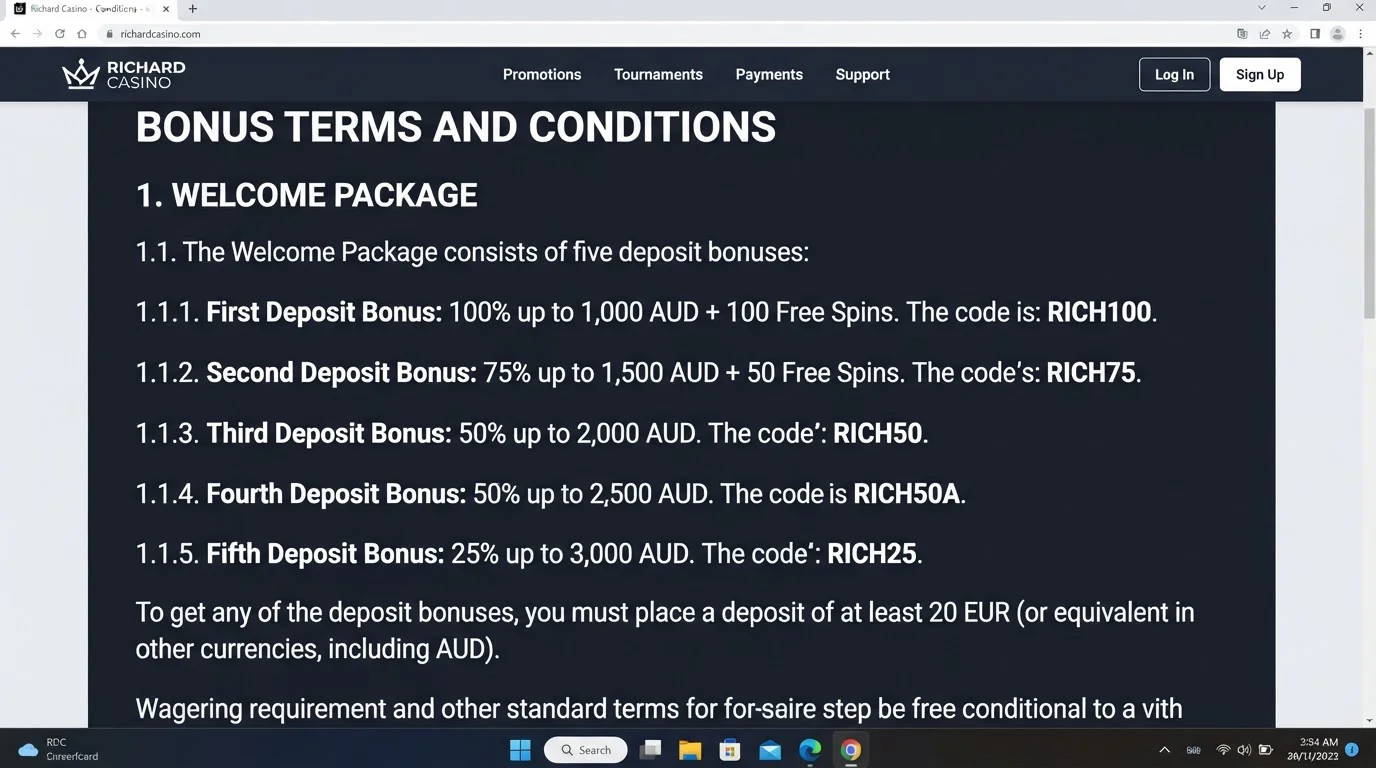
No-deposit offers may award bonus cash or free spins, but the label alone does not explain the conditions or what happens before cashout.

“Free” sounds simple until you ask what, exactly, is being offered. In a no-deposit promotion, the basic exchange is that a casino may offer bonus cash or free spins when you create an account, without requiring you to make a deposit first. That is the core idea behind an online pokies offer described as no deposit: the promotional benefit is attached to opening an account, not to paying money into it.
I used to read the word “free” as if it meant there was nothing more to understand. That was the wrong shortcut. It describes one part of the arrangement: you do not make a deposit to receive the advertised offer. It does not, by itself, explain what kind of bonus you are getting or what you can do with it. Those are separate questions, and the label alone cannot answer them.
The offer might be bonus cash, which appears as a promotional balance, or free spins, which are turns on a pokie. They are different forms of an incentive, not interchangeable names for the same thing. If the promotion says “free cash”, that points to a bonus balance. If it says “free spins”, it points to a set of spins rather than cash handed to you. The wording matters because it tells you what the offer is at its starting point.
For an Australian search for online pokies no-deposit bonuses in 2026, check the available operator details before deciding which offers are worth investigating. The information below is a reference point, not confirmation that a no-deposit bonus is currently available.
LuckyVibe
LuckyVibe is listed with a Curacao Gaming Control Board license, number OGL/2023/176/0095, held by Hollycorn N.V.
Vegaz Casino
Vegaz Casino is listed with Curacao license OGL/2024/1335/0780 and a minimum deposit of EUR 20.
LevelUp Casino
LevelUp Casino is listed with a Curacao eGaming license, OGL/2023/174/0082, held by Dama N.V. Its minimum deposit is A$15.
SkyCrown
SkyCrown is listed with a Tobique Gaming Commission license. Its stated payout times are around 10–15 minutes for crypto and 1–5 days for fiat, with a minimum deposit of A$30.
SpinsUp
SpinsUp is listed with a Curacao Gaming Control Board license, OGL/2023/174/0082, held by Dama N.V.
JustCasino
The available detail for JustCasino is its Curacao Gaming Control Board license; no bonus-specific details are provided here.
Uptown Pokies
Uptown Pokies is listed as operating since 2017 under a Curacao license. Its minimum deposit is A$20.
Roby Casino
Roby Casino is listed with a Curacao eGaming license held by Roby Games Ltd.
Ricky Casino
Ricky Casino lists crypto payouts in under an hour and PayID payouts in 1–3 business days. The minimum deposit is A$20, or A$30 to qualify for the bonus.
MrPacho
MrPacho lists crypto payout times of 30–120 minutes and fiat payouts of 24–72 hours. Its minimum deposit is A$30.
That distinction is easy to miss when a page uses several phrases at once: “no deposit”, “free”, “bonus”, “pokies”. I now separate them in my head. “No deposit” describes whether you have to put money in to access the offer. “Cash” or “spins” describes what the promotion provides. Neither phrase, on its own, tells you how the offer works after it has been granted.
A no-deposit bonus is not the same thing as a promise of cash with no strings attached. The word “bonus” is doing real work there. You are being offered promotional play, not simply handed an unrestricted sum to spend or withdraw as you please. I would not treat an advertised balance as if it were already ordinary money in my account. That is where the shine wears off. Read the label literally, not generously.
The same goes for free spins. “Free” tells you that the spins are offered without a deposit being the price of entry; it does not turn them into cash. They are a promotional way to play a pokie. If you are comparing a free-spin offer with bonus cash, start by noticing that they give you different things. A headline that makes either one sound like free money is stretching the wording.
People looking for Australian online pokies with no-deposit bonuses are often trying to answer a very plain question: can an account receive something before the player puts money in? The basic answer is that such an offer may be made for creating an account. But “may” matters. The phrase describes a type of promotion, not a promise that every casino has one available, or that every person who sees the wording will receive it.
That is why I try not to let a promotional headline do the explaining. “Aussie pokies no deposit bonus” can sound like one standard product, when it is really a broad description of a possible offer. One promotion may be framed as cash; another as spins. The shared feature is the absence of a deposit as the condition for the initial offer. Beyond that, the details belong to the individual promotion.
I also keep the idea of “no deposit” separate from the idea of “no cost” in the broadest sense. The phrase does not tell you what information is requested to open an account, what rules apply to bonus play, or whether the offer suits you. It only describes the deposit part of the arrangement. Treating it as a complete explanation is like judging a book by its cover. A bright one, too.
So when I see “online pokies free no deposit bonus”, I translate it into plain English before deciding what the words mean: an account may be offered promotional cash or spins without a deposit being made. That is less exciting than the headline, but much clearer. It keeps the actual offer in view and stops “free” from quietly becoming “anything I hoped it would mean”.
The useful starting point is modest: identify whether the advertised benefit is cash or spins, and understand that the no-deposit label refers to receiving an offer without first depositing. Don’t add extra promises to it. A promotional headline can describe the doorway; it cannot tell you everything waiting beyond it. Read it that way, and the word “free” becomes a description to check, not a reason to assume.
A large-looking no-deposit offer can shrink fast once you read the conditions attached to it. I’d compare the rules before comparing the headline amount: wagering requirements, the maximum cashout, the maximum bet and the expiry time all affect what the offer is worth in practice. “Free” is the sales pitch; the small print is the actual deal.
Start with wagering. A specialist review puts the wagering requirement on Australian-facing no-deposit bonuses in the 40× to 60× range, but that is not a promise about any offer you may see. The operator’s own terms are what count. Check what the multiple applies to, too: the bonus amount, winnings, or another defined figure. A number without its calculation base is only half an explanation.
Then look at the cashout cap. Offers in this market commonly limit how much bonus-derived money can be withdrawn, with caps reported from A$50 to A$200. That can make a high wagering requirement even less attractive: you could be asked to keep betting after the amount you can take out has already been capped. The practical question is not just “How much could I win?” but “What is the most I could actually withdraw if I meet every condition?”
The cap and the wagering rule do different jobs. One sets the amount of betting needed to satisfy the requirement; the other limits the withdrawal. Don’t assume clearing the first removes the second. I’d write both down side by side before deciding whether the offer deserves your time.
The maximum bet is another easy term to overlook. A specialist review describes bonus-fund limits in the A$5 to A$6.50 range. The limit applies while wagering conditions are active, and going over it can void the bonus. That means a bonus can be lost through a single oversized bet, even if the rest of your play followed the rules. Check whether the stated cap is per spin or otherwise defined, and don’t rely on memory when the terms set a firm ceiling.
I’ve learned not to treat a bet limit as a suggestion. If the allowed stake is lower than the amount you naturally play, that offer may be awkward to use safely. A generous headline figure won’t fix that mismatch.
Expiry is the clock on the whole arrangement. A specialist review describes seven days as the validity period for most no-deposit cash bonuses and 72 hours for free spins. Those timings are not a guarantee for a particular promotion, so read its own expiry wording. Note when the period begins and whether the condition refers to using the bonus, completing wagering, or both. A short window can make a demanding offer harder to finish, even when the other terms seem acceptable.
For a quick comparison, I’d make a small checklist:
If one term is unclear, don’t fill the gap with the most favourable interpretation. Look for a definition in the full promotion terms, not just the banner. “Up to” can sound generous while the cap, bet limit or expiry narrows the usable value.
I’d also avoid judging two offers by their wagering multiple alone. One might have a lower requirement but a tighter cashout cap; another might allow a higher withdrawal but set a bet limit that doesn’t suit your play. There isn’t one number that settles the comparison. The whole bundle of conditions matters.
My simple rule is to compare the worst constraint, not the best headline. If the expiry is tight, the cap is low, or the permitted bet is easy to exceed, those details can outweigh an attractive bonus label. Read the terms before you treat the offer as a real opportunity. Small print first.
A no-deposit offer can look as though it starts the moment you create an account, but registration and bonus crediting are not always the same step. You may need to complete the account form, confirm your email address, and then check whether the offer has appeared in your balance. I used to assume that seeing a welcome message meant the bonus was ready. It didn’t.
Email verification is one possible checkpoint. A specialist review reports an offer that required the player to use an email verification link within 24 hours. Treat that as a condition to check for the particular promotion, not a standard deadline for every casino. If the link does not arrive, look in your junk folder and check that you entered the right address before trying to register again.
After confirming your account, look at the bonus area or cashier and see whether anything has been credited. One specialist review describes offers that were added automatically, as well as offers requiring a bonus code during registration or in the cashier. The process can depend on the promotion. If the offer says a code is needed, entering it in the wrong place—or skipping it altogether—may leave you with an ordinary account and no bonus. Annoying, but easy to miss.
The label matters, too. “Free spins” sounds like a pile of plays you can use wherever you fancy; the actual offer may attach them to one named pokie. A specialist review describes free spins as tied to a specific game. Before you start, find out which pokie they apply to and whether it is available in the games area. Don’t assume you can move those spins to another title.
Claiming Bonuses
Account Registration
Complete the account form and confirm your email address via the verification link.
Bonus Activation
Check the cashier or bonus area to see if the offer is credited automatically or requires a code.
Game Selection
Identify the specific pokie attached to the free spins or the selected slots eligible for a chip bonus.
A no-deposit chip is a different sort of offer. A specialist review describes free-chip bonuses as potentially usable on selected slots, rather than being locked to one particular pokie. That still does not mean every game qualifies. Check what the offer itself says before choosing a game; the word “selected” is doing real work there.
I’d also take a screenshot or keep a note of the offer’s name and the steps you completed. Not because that proves you are entitled to anything, but because it makes it easier to spot where the process stalled: registration, email confirmation, code entry, or crediting. If the balance has not changed, check the promotion’s instructions before making another account or entering details again. Re-registering in a hurry can create a separate problem rather than fixing the first one.
A welcome screen can be cheerful and still tell you very little. What matters at sign-up is whether the account is verified, whether the offer needs an extra step, and whether the spins or chip are available for the game you expected. I learned to check those basics before celebrating. No confetti yet.
A balance showing real-money winnings is not necessarily money you can withdraw. With a no-deposit bonus, the casino may require you to complete wagering before it will let you request a payout. I used to read the balance as if it were already in my bank account. It wasn’t.
Here’s the arithmetic that makes the difference. If a casino gives you an AU$20 no-deposit bonus with a 40× wagering requirement, you need to place AU$800 in qualifying bets before cashout. That figure is the total amount wagered, not the amount you need to win. You can reach it through many spins, and the balance can rise or fall as you go. Completing the required bets does not guarantee a profit.
The word “real money” can muddy this. It may describe winnings that could eventually be withdrawn, but those winnings can remain locked behind the bonus conditions. Until the wagering is complete, the cashout button may be unavailable or a withdrawal request may be declined. I’ve learned to treat the displayed balance as conditional, not spendable.
There is another step after the wagering hurdle: verification. A casino may ask you to confirm your identity before processing a withdrawal. Bonus winnings are generally subject to both wagering and verification requirements, so finishing one does not necessarily finish the other. If a request is pending, check whether the casino needs documents or account details, and read its instructions rather than sending information through an unfamiliar channel.
Even after wagering and verification, a cashout cap can limit what you receive. Many no-deposit offers restrict the amount of bonus winnings that can be withdrawn. That can mean a balance earned through a long run of play is not the same as the amount payable. I’d check the cap before putting time into the wagering, then keep a note of the rule that applies to that offer.
A common mistake is to keep playing after completing the requirement without knowing what happens next. If you have met the wagering condition, check the account’s bonus status and withdrawal rules before placing more bets. More play can change your balance; it does not automatically make the payout easier.
For free spins, the same distinction matters: a win may appear in your account, but the offer’s conditions can still govern whether and when it becomes withdrawable. A spin win is not automatically cash in hand. Look at the actual bonus terms attached to the account, not just the promotional label.
I’d keep the process simple: confirm the wagering progress, make sure any verification request is resolved, then check the cashout cap and submit a withdrawal only when the account shows the relevant conditions as complete. If the figures or status do not line up, pause and ask support to explain the calculation in writing. It is less exciting than another spin. Much less costly, too.
“Offshore” can sound like a loophole. I used to read it that way: if a casino was based overseas, I assumed the Australian rules stopped at the border. That is not how the Interactive Gambling Act 2001 works.
The Act makes it illegal for an operator to provide real-money online casino games to people physically in Australia. That includes interactive pokies, online poker and casino table games. The rule applies whether the business is based in Australia or overseas. An overseas location does not make offering those services to Australian residents lawful.
The important distinction is who the law targets. The prohibition is directed at providers, not at Australian residents who access, register with or play at an offshore casino. Residents do not face criminal or civil penalties simply for doing those things. That does not turn an offshore service into a lawful one; it means the legal responsibility described by the Act falls on the operator.
That distinction matters if you are looking at a no-deposit bonus for Australian online pokies. A promotion, a sign-up offer or a label such as “no minimum deposit” does not alter the legal position of the business offering real-money play. Nor does an overseas licence change the fact that the service is being offered to people in Australia. Bonus wording is not a legal exemption.
There is another practical side to this. Offshore casino services may be blocked in Australia, and the absence of a penalty for the player is not the same as a guarantee that a site will remain accessible or that an account will work as expected. I would not treat “players are not prosecuted” as a promise of protection. It is a narrow statement about the resident’s legal liability, not an endorsement of the operator.
The gap can become especially obvious when something goes wrong. Australian consumer protections do not apply to an offshore casino in the way they would to a local business, and there may be no practical recourse if the operator refuses a withdrawal or voids a win. That leaves you dealing with the operator’s own terms and processes, rather than relying on Australian safeguards. Not a small detail.
So the plain version is this: Australian law prohibits businesses, including overseas businesses, from providing real-money online casino games to people in Australia. Residents are not subject to criminal or civil penalties merely for accessing or playing at an offshore site. Those statements can both be true at once.
I still see “Australian players welcome” or a no-deposit sign-up bonus and feel the old pull to treat it as reassurance. It isn’t. A promotion tells you what a business is advertising; it does not establish that the service is lawful here, or that you have local protection if a dispute arises.
“No minimum deposit” sounds straightforward: the offer is meant to be available without putting money in first. But I’ve learned to read that phrase as a description of how a promotion starts, not a promise that no payment will ever be requested. The distinction matters when a small balance is involved.
A specialist review describes listed offers that require an A$5 deposit before the bonus can be activated. That is a specific condition reported for some promotions, not a rule that applies to every offer. Still, if you are looking for an online pokies welcome bonus that genuinely begins without a deposit, check the activation wording before registering. A label can say “no deposit” while the terms attach a payment to claiming or unlocking the offer.
Then there is the other end of the transaction. A specialist review puts minimum withdrawals at many offshore casinos aimed at Australians in the A$25–A$100 range. If your balance is below the operator’s stated threshold, having winnings displayed in your account may not mean you can request a payout yet. The amount available to withdraw and the minimum amount accepted for a withdrawal are separate things.
That gap can make a small bonus balance feel more substantial on screen than it is in practice. For instance, if the withdrawal floor is higher than your balance, you may have to leave the funds there rather than cashing them out. Don’t assume the displayed balance can be withdrawn in full, or that a small amount will be paid automatically. Check the minimum shown in the withdrawal terms and whether it applies to bonus winnings.
A specialist review also describes a further condition some operators may set: making a minimum PayID deposit to connect a bank account before requesting a withdrawal of no-deposit winnings. In that situation, the initial offer might not require a payment, yet accessing a payout could involve one later. That is not the same as a deposit required to activate the bonus, so look for both conditions separately.
I used to focus on whether the offer was free to claim and leave the rest for later. That was backwards. The useful check is whether the promotion can be activated without paying, and whether its withdrawal rules let a small balance reach you without another deposit. “No minimum deposit” answers only part of that. Read the payout threshold too.
Names such as Uptown, Pocket and Golden can make an offer sound familiar before you have even found its terms. I have made that mistake: I saw a confident bonus label and treated it as proof that a promotion was live. It wasn’t proof of anything. A name in a page title, advert or old review does not confirm that an offer is currently available, or that it applies to your account.
If you come across a claimed no-deposit offer associated with one of these names, look for the actual conditions attached to it. The wording should make clear what the promotion provides and what you need to do before any winnings can be withdrawn. No-deposit offers can still carry wagering requirements, a maximum cashout cap, restrictions on eligible games and an expiry period. Those details matter more than the word “free”.
I now check whether the offer appears on the relevant site’s own promotion page and whether its terms are accessible, current and consistent with the claim. If the terms are missing, vague or refer to a different promotion, I don’t assume the headline fills in the gaps. A third-party page can be useful as a pointer, but I would not rely on it as confirmation of an active deal.
The same goes for searches for a particular kind of pokie, including hold-and-win games. A phrase suggesting a no-deposit bonus for that category does not mean every game in the category is eligible. Check whether the offer names eligible games or sets restrictions that could rule them out. Don’t assume that a game’s mechanics or title make it qualify.
One more thing I learned the clumsy way: an offer can look relevant and still be unusable under its own conditions. Read the terms tied to the specific promotion, not just a general bonus page or a copied description. If the information does not let you tell what is included, what is excluded and when the offer expires, treat the claim as unconfirmed.
No headline magic.
A post calling an offer “new” tells me very little. It may be old material dressed up again, a claim copied from another page, or a promotion that was never available to everyone. I’ve learned not to treat a screenshot, a countdown graphic or a comment saying “worked for me” as proof that a bonus is current.
That applies to claims about newly launched pokies with a no-deposit bonus, too. A new game does not automatically mean a new offer. If a post links a bonus to a partnership, check whether the operator’s own promotion terms actually describe that arrangement. A logo beside a game image is not evidence of a partnership. No proof, no assumption.
Social-media posts about PayID and no-deposit offers need the same scepticism. PayID is a payment method; its name in a post does not establish that a bonus exists or that using it qualifies you for one. I’d look for the offer’s conditions on the operator’s own pages and check that the details match the post before taking the claim seriously. If the post gives no clear route to those terms, I move on.
The word “best” is another bit of advertising language, not a useful measure by itself. A post can make an offer look generous while leaving out the conditions that matter. Even the wagering requirement can differ from one promotion to another. A specialist review reports no-deposit requirements ranging from 40x to 70x; that is a reported range, not a promise that every current offer falls within it.
I used to read a big bonus figure and assume the post had done the checking for me. It hadn’t. Now I try to verify the actual offer, its dates and its conditions rather than relying on a social caption or a shared screenshot. If the details are missing, contradictory or hard to find, I don’t count the claim as a deal.
Marketing travels fast. Terms matter more.
A bonus can appear without you entering anything, or it can depend on a code. A specialist review describes both routes: some no-deposit offers are credited automatically, while others ask for a bonus code during registration or in the cashier. That is why I check the offer’s own instructions before finishing either step. If a code is required, copying it into the wrong box—or missing the field altogether—could leave the promotion unapplied.
Don’t assume a code found beside a Pocket or Uptown offer is valid just because the wording sounds official. Check that the terms on the casino’s own offer page match the promotion you intend to claim, and that the code is meant for that offer. A label is not confirmation.
Then check which games count. No-deposit terms may exclude progressive jackpots, table games and live dealer titles. I once treated a game lobby as one big eligible pool. It isn’t. If the rules name permitted games, stick to those; moving onto an excluded title can put the bonus balance at risk.
This matters while you are playing through the offer, not just when you first claim it. Before opening a game, look for a list of eligible titles or an exclusion note in the bonus terms. If the wording is unclear, stop and ask the operator to clarify rather than guessing. A game that appears beside eligible pokies in the lobby is not necessarily included in the promotion.
Keep the code and the terms together until you can see the bonus has been applied as described. If the code fails, don’t keep trying random variations or switch games in the hope that the offer will sort itself out. Check the exact instructions, and save a copy of the conditions you relied on. Small print first. Surprise later.
PayID is a bank transfer method, not a bonus. When an Australian bank supports it, a payment can be sent using an email address or mobile number instead of entering BSB and account details. Transfers are described as settling in seconds, and Australian banks describe PayID deposits as instant and free.
That can make the payment step look straightforward. It does not mean a casino’s sign-up offer is genuinely deposit-free, nor does having PayID guarantee that an offer is available. Read the promotion’s own conditions rather than assuming the payment logo tells you anything about bonus eligibility.
There is another detail I used to overlook: paying in and getting money out may work differently. At most offshore casinos aimed at Australians, withdrawals are made by bank transfer rather than PayID. So a site showing PayID for deposits does not establish that it will return funds through the same route.
Keep the distinction clear. PayID describes how money may be sent to a recipient; it does not settle whether a withdrawal will be approved, how it will be processed, or whether the operator will pay. Offshore online casino services are prohibited from serving people in Australia under the Interactive Gambling Act 2001. PayID does not change that legal position, and Australian consumer protections do not apply to an offshore casino.
I learned to treat a familiar payment method as a technical detail, not reassurance. Different direction. Different rules.
Yes. Australian residents face no criminal or civil penalties for accessing and playing at offshore casinos, although offering real-money online casino games to people in Australia is illegal for the operator.
Not always: some bonuses are credited automatically, while others require a code during sign-up or in the cashier. Check the offer’s terms to see which applies.
Yes, but winnings are generally subject to wagering and verification requirements, and a maximum cashout limit may apply.
A $10 balance may be below the typical minimum withdrawal of A$25 to A$100. PayID is generally used for deposits; offshore casinos usually pay withdrawals by bank transfer, and may require a PayID deposit before allowing a withdrawal.
Yes, in the sense that you do not have to deposit to receive the offer. But it is promotional money, not unrestricted cash, and terms such as wagering requirements and cashout limits can apply.
Yes, if you meet the wagering and verification requirements. A maximum cashout cap may also limit the amount you can withdraw.
Created by the ”Richard Casino” editorial team.