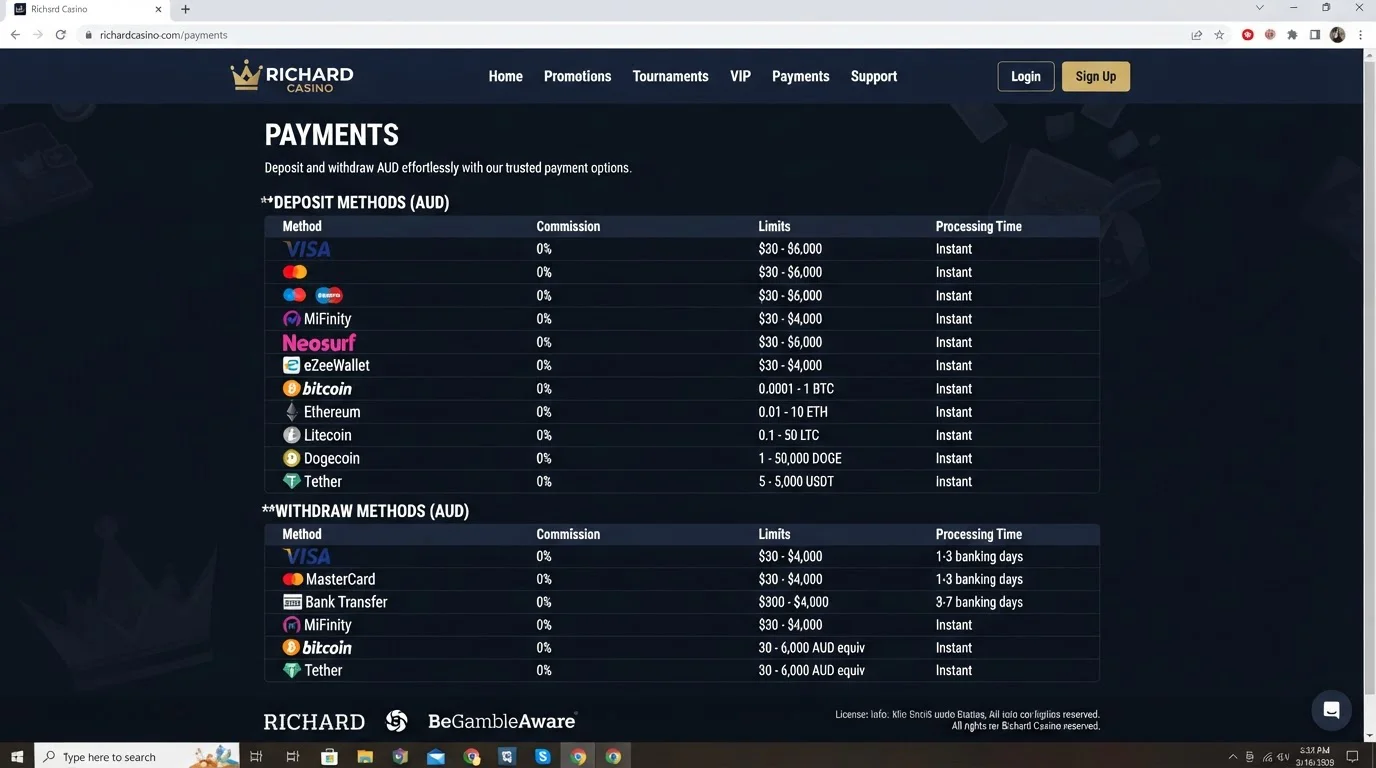
A payment logo or cashier option does not establish that an operator may offer real-money casino games in Australia or return funds by the same route.
A search for Australian online pokies or a casino that takes Paysafecard can sound like a simple comparison task: find a payment option, see what games are listed, decide whether a site suits you. I’ve learned not to treat a tidy-looking result as proof that the service is lawful to offer here. The Australian rules come first, before any question about how a site presents itself or what a cashier appears to accept.
Under the Interactive Gambling Act 2001, operators must not provide real-money online casino games to people in Australia. The prohibition covers casino-style games such as poker, blackjack, roulette and pokies. It is directed at the operator’s act of providing the service to customers in Australia. That distinction matters: a site may describe itself as international, or show Australian-facing pages, but those labels do not change the law that applies to offering the service here.
The law also assigns enforcement to the Australian Communications and Media Authority, usually called ACMA. Its role is to enforce the Interactive Gambling Act. That is not the same as saying every website is safe, available or lawful simply because it can be found online. Nor does a payment logo on a page settle whether a casino service may legally be offered to Australian residents. Different questions, different checks.
If you’re looking for casino sites that accept paysafecard in Australia in 2026, use this list as a starting point and check each site’s current payment options before choosing. The details below highlight only the information available for each operator.
LuckyVibe
LuckyVibe is listed with a Curaçao Gaming Control Board licence, number OGL/2023/176/0095, held by Hollycorn N.V.
Vegaz Casino
Vegaz Casino is listed with Curaçao licence OGL/2024/1335/0780. Its stated minimum deposit is EUR 20.
LevelUp Casino
LevelUp Casino is listed with a Curaçao eGaming licence, OGL/2023/174/0082, held by Dama N.V. Its stated minimum deposit is A$15.
SkyCrown
SkyCrown is listed under the Tobique Gaming Commission. Its stated payout times are around 10–15 minutes for crypto and 1–5 days for fiat, with a minimum deposit of A$30.
SpinsUp
SpinsUp is listed with Curaçao Gaming Control Board licence OGL/2023/174/0082, held by Dama N.V.
JustCasino
JustCasino is listed with a Curaçao Gaming Control Board licence.
Uptown Pokies
Uptown Pokies is listed as operating under a Curaçao licence since 2017. Its stated minimum deposit is A$20.
Roby Casino
Roby Casino is listed with a Curaçao eGaming licence held by Roby Games Ltd.
Ricky Casino
Ricky Casino lists crypto payouts under 1 hour and PayID payouts in 1–3 business days. Its minimum deposit is A$20, or A$30 to qualify for the bonus.
MrPacho
MrPacho lists crypto payouts in 30–120 minutes and fiat payouts in 24–72 hours. Its stated minimum deposit is A$30.
One point that often gets blurred is the difference between the operator’s obligations and a player’s position. The Act prohibits operators from offering online casino games to Australians, but it does not explicitly make an individual player’s use of an offshore site a criminal offence. So it would be wrong to tell you that simply playing there automatically makes you liable to prosecution under this law.
That separation is not an endorsement or a green light. The operator can still be breaching the rules by providing the service, even where the Act does not explicitly criminalise the player. I used to read “not illegal for the player” as though it meant “nothing to worry about”. That was a lazy shortcut. Legal exposure is only one part of the picture, and it says nothing by itself about whether a service is reliable or what happens if a dispute arises.
There is another practical distinction worth keeping clear: the law’s focus on operators does not mean Australian consumer protections step in to make an offshore casino accountable like a local business. Australian consumer law does not protect players who use offshore casinos. If a dispute occurs, you should not assume that local protections will give you a straightforward way to recover funds or resolve the matter. That can leave you with less recourse, even though the player is not explicitly criminalised under the Interactive Gambling Act.
No neat loophole. No comfort blanket.
When a page says it serves Australian players, or presents Paysafecard among its payment options, that wording can feel like a practical answer: “they take customers here”. But acceptance language and legal permission are separate matters. A payment method does not turn a prohibited online casino service into a permitted one. And a page that appears accessible does not, on its own, establish that the operator is entitled to offer real-money casino games to people in Australia.
That is why I would not start by asking whether a particular site is the best Australian Paysafecard casino. The phrasing can make the premise feel settled before you have checked it. First recognise what the law says about the operator’s service; then keep player liability distinct from the operator’s obligations. Neither point verifies that a casino accepts Paysafecard, and neither makes the service lawful to promote.
Australia’s framework also makes promotional language a poor substitute for clarity. A phrase such as “Australian online casino” may describe the audience a page is trying to attract, not a local legal status. “Best” is an advertising claim, not a legal category. Even a page written in a familiar style or showing Australian currency should not be read as proof that the underlying service is permitted here.
I know how easy it is to let convenience lead: see a payment name you recognise and assume the rest has been checked. But payment details answer a narrow question. They do not erase the operator-side prohibition or create local consumer protection. Keep those issues separate, and the search results become less persuasive than they first look. That’s the part I’d check before anything else.
A small-deposit search sounds straightforward: you want to know whether a Paysafecard payment can be used to put a modest amount into an online casino account. But the wording alone cannot tell you whether a particular service accepts that payment, what its minimum deposit is, or whether a fee applies. A number typed into a search bar is a question, not a cashier’s terms.
That distinction matters when the amount is the main reason you are considering a payment method. “Low deposit” can mean the site advertises a low starting point, while the cashier may show different options or conditions. And even a page that names Paysafecard does not, by itself, confirm that the method is available to Australian customers at the time you reach payment. I have learned not to treat a neat-looking payment badge as the same thing as a completed, clearly explained transaction. Different things.
There is another issue that comes before the deposit screen. Under the Interactive Gambling Act 2001, providing real-money online casino games to people in Australia is prohibited. That covers casino-style offerings such as poker, blackjack, roulette and pokies. The Australian Communications and Media Authority enforces the law. The restriction is directed at operators; it does not make an Australian player criminally liable simply for using an offshore casino. Still, Australian consumer law does not protect players who use offshore casinos.
So a search for a casino deposit by Paysafecard should not be read as a recommendation or as proof that a deposit route is lawful, available or protected. A page can describe a payment method while leaving the crucial questions unanswered: whether it works for Australian users, what amount is accepted, whether any charges apply, and what conditions accompany the transaction. If those details are not clear before you commit, the advertised “easy” deposit has not told you enough.
A stated minimum is useful only if it applies to the specific payment route and customer location you are looking at. A general minimum shown elsewhere on a site may not match the amount offered through Paysafecard. Nor does a payment method’s existence establish that the cashier permits it for deposits. The only meaningful figure would be one tied to the actual method, currency, account and terms at the point of payment.
Fees need the same care. A deposit amount and the amount ultimately charged are not necessarily interchangeable if a payment or conversion charge is involved. I would want the total cost shown before confirming anything, rather than assume that a small advertised amount is the whole cost. There is no point calling a payment “low cost” when the charge is left out of view.
The same goes for a minimum. A low threshold in a headline can draw the eye, but it does not establish that Paysafecard is accepted, that the amount can be selected, or that the payment will be processed. It is not a promise of access. Keep the claim separate from the transaction details.
Even seeing a payment option is not the end of the check. A cashier may present a method without making clear whether it is available to your account or whether additional terms apply. Before entering any payment details, read the terms for the payment method and the relevant account conditions. If a fee, minimum or other restriction is unclear, do not guess your way through it.
Also keep the legal context in view. Offshore casino advertising and provision are restricted in Australia, and access to offshore services may be actively blocked. A page appearing in front of you does not change the law or give you the protections of Australian consumer law. A payment option does not make an online casino service lawful for Australian residents.
That is the part I would keep front and centre when weighing a supposed small Paysafecard deposit. The search wording may point to the thing you want to know, but it cannot supply a verified minimum, fee, or confirmation of acceptance. Those are specific terms, not details you can safely fill in from a headline. If they are not plainly established before payment, the sensible move is to stop rather than treat the missing detail as a green light.
A payment method that appears at the point of putting money into an account does not automatically work in reverse. That distinction matters when a Paysafecard search is paired with words such as “instant withdrawal.” The wording expresses what someone wants; it does not establish that a Paysafecard withdrawal is supported, or that any transfer would be immediate.
I’ve learned not to treat a familiar logo in a cashier as a complete payment policy. Depositing and withdrawing are separate actions, and an operator can set different conditions for each. A method shown for one direction is not proof of availability for the other. With Paysafecard, the practical question is not just whether a payment option is mentioned, but whether the withdrawal route is explicitly described and applies to the account in question.
“Instant” is another word I’d read carefully. It can sound like a promise about the whole process, when the phrase alone does not tell you what stage it refers to. It does not establish how quickly a request is reviewed, whether a payment method can receive the money, or when funds would be usable. I wouldn’t turn that label into a timing expectation.
A useful description would make clear that Paysafecard is supported for withdrawals, rather than only appearing in a list of deposit methods. It would also state the relevant conditions and explain what “instant” means in practice. Without those details, the claim leaves the central issue unresolved.
That is not a reason to fill the gaps with assumptions. A casino cashier can change, payment arrangements can differ between operators, and the wording on a promotional page may not match the options available to an individual account. Before relying on a claim, read the operator’s current payment terms and look for a clear statement about withdrawals specifically. If the wording only discusses deposits, it has not answered the withdrawal question.
Identity checks can also be part of the process. Online casinos commonly ask customers to complete identity verification before carrying out financial transactions. That makes an instant-sounding label a poor substitute for understanding the operator’s requirements: a payment claim does not by itself explain what checks apply or how a withdrawal request is handled.
I’d also separate a payment method from the status of the service offering it. In Australia, the Interactive Gambling Act 2001 prohibits operators from providing real-money online casino games to people in the country. The Australian Communications and Media Authority enforces the Act. Australian consumer law does not protect people using offshore casinos, so a payment statement should not be mistaken for local oversight or a safeguard if a dispute arises. The law does not make the player criminally liable simply for using an offshore site, but that is not the same as having consumer protections.
A phrase combining a withdrawal with a no-deposit bonus can blur two separate issues. A bonus label does not establish that Paysafecard can receive funds, that a withdrawal is permitted, or that a particular condition has been met. Nor does a promise of speed answer those questions. The payment route and the terms attached to any offer would need to be clear in their own right.
The same caution applies when the wording mentions pokies. Adding a game category to a payment claim does not make a withdrawal method more certain. I won’t recommend operators or point you toward real-money casino play; the legal position in Australia is the reason to keep this discussion informational.
For a Paysafecard withdrawal, the sensible conclusion is narrow: don’t infer a return route from a deposit option, and don’t treat “instant” as a verified processing time. Read the withdrawal terms, consider the lack of Australian consumer-law protection for offshore casinos, and avoid making a money decision on a label alone.
Labels aren’t guarantees.
“Accepts Paysafecard” sounds like a simple yes-or-no statement. In practice, the wording alone tells you very little: it does not identify who is making the claim, which customers it applies to, or whether it reflects a current payment option. I’ve learned not to treat a payment logo or a confident headline as proof. They’re clues at best.
A meaningful acceptance claim would need to be specific about the operator and the relevant country. A method shown on a page for customers elsewhere does not establish that it is available to people in Australia. Nor does a general list of payment brands show that every listed method works for every customer. The important distinction is between a broad statement about a brand and reliable evidence about a particular service and jurisdiction.
Even then, “accepted” can be doing a lot of work. It might mean a payment method is mentioned in an article, appears among a set of logos, or is available to some customers under particular conditions. Those are not interchangeable. A page can sound definite while leaving the central point unresolved: whether the claim applies to the person reading it in Australia.
There is also a legal issue that a payment label cannot settle. Under the Interactive Gambling Act 2001, operators are prohibited from providing real-money online casino games to people physically in Australia. The fact that a page describes a payment option does not make the service lawful to provide here. Australian consumer law does not protect players who use offshore casinos. That matters more than whether a payment brand appears in a promotional graphic.
I would also separate a claim from its evidence. Is it an operator’s own statement, a third-party review, or a copied line repeated across pages? Does the wording clearly say it applies to Australian customers, or does it merely mention Australia somewhere nearby? Is the information current, and does it describe actual support rather than a general possibility? If those points are vague, the headline is not enough to rely on.
The same caution applies to phrases such as “Paysafecard casino” or “casino with Paysafecard.” They compress several assumptions into a few words. A reader may take them to mean that an operator is available in Australia and supports the method there. But the phrase itself proves neither point. It is a label, not a confirmation.
I wouldn’t turn a confident claim into a recommendation. For Australians, an offshore casino’s payment wording does not remove the legal restrictions on the operator or create consumer protection for the player. A method name can make a page look more concrete than it is. Still just wording.
So read “accepts Paysafecard” as a claim that would need clear, current, jurisdiction-specific support—not as a promise or an endorsement. If the page leaves the country, customer eligibility, or source of the statement unclear, the safe conclusion is simply that the wording has not established what it appears to promise.
A “best” label sounds like the result of a comparison: named sites checked against the same criteria, with evidence that they support the payment method and are appropriate to use. Without that, a ranked list would look more certain than it is. I’m not going to dress guesses up as recommendations.
That matters especially in Australia. The Interactive Gambling Act 2001 prohibits operators from providing real-money online casino games to people in Australia, and the Australian Communications and Media Authority enforces the law. A foreign website appearing in a list does not make its service lawful to offer here. Nor does a polished page, a familiar brand or a payment logo change the legal position. Australian consumer law does not protect players who use offshore casinos.
I know how easy it is to treat a shortlist as a shortcut. I have clicked through confident-looking reviews before and taken the word “best” to mean someone had checked the details. Often, the label tells you more about the page’s sales pitch than the quality or status of the option. That is not a sound basis for naming a Paysafecard casino in Australia.
The same goes for lists of sites or websites said to take Paysafecard. A name on a page is not proof that the operator currently accepts the method, that the arrangement applies to Australian users, or that the service may lawfully be offered to them. Those are separate claims, and none can be inferred just because the words appear together. Familiarity is not verification.
Bonus language makes the problem worse. A Paysafecard bonus may sound like a payment-specific benefit, but the phrase alone establishes neither the terms nor whether the offer is available to a reader in Australia. I would not use bonus claims to rank sites or steer anyone towards an offshore gambling service. “Exclusive” is just a label until its conditions are clear—and in this context, it does not resolve the legal issue.
Searches for a casino website, a list of sites, or a site described as the best all ask for an answer that depends on current, operator-specific evidence. A generic roundup cannot supply that simply by repeating a payment name beside a brand. I would rather leave the names out than imply I have tested or endorsed options I cannot substantiate. No shortlist. No borrowed certainty.
This is not a claim that a particular operator does or does not accept Paysafecard. It is a boundary on what I can responsibly present: a named ranking could be mistaken for a recommendation, while the Australian legal framework prohibits operators from offering real-money online casino games here. A list does not become safer because it is called a comparison, and a disclaimer cannot turn prohibited promotion into neutral advice.
So I can’t responsibly give you a best Paysafecard casino, a ranked set of Australian sites, or a catalogue of supposed options. That restraint is deliberate. A confident list might feel useful for a moment, but if it sends you towards an unlawful service or gives an unsupported claim the appearance of a check, it has done the opposite of helping.
A payment label and access to a particular game are separate things. I’ve learned not to read more into a cashier option than it actually says: even if a payment method is shown, that alone would not tell you what a customer can access after paying. The reverse is true too. A game being displayed somewhere does not establish that Paysafecard can be used in connection with it.
That distinction matters when you see phrases such as “Paysafecard casino games” or “play with Paysafecard.” They can sound as if the payment method is tied to a specific catalogue. But the wording itself proves nothing about which games are offered, whether any are available to Australian residents, or whether a payment method enables access. Those are different claims, and one cannot safely stand in for the others.
There’s also a more basic Australian issue. The Interactive Gambling Act 2001 bars operators from providing real-money online casino-style games to people in Australia. The Australian Communications and Media Authority enforces that law. So a payment reference should not be taken as an invitation or assurance that an offshore service is lawful or available here. Australian consumer law does not protect players who use offshore casinos. That is a real risk, not fine print to skip.
I used to treat a cashier’s list as a kind of menu: if a method appeared, I assumed the rest would fall into place. That was a shaky leap. Payment support, where it exists, does not verify game access, and a game label does not verify payment support. Different questions.
For a reader looking into Paysafecard and casino games, the sensible limit is to avoid assuming a connection that has not been established. Nothing in the phrase “casino payment” tells you which titles, if any, could be reached through that method. Nor should a mention of pokies be read as proof of an available or permitted service in Australia.
I’d keep the claim narrow: a payment method is about paying; game access is a separate matter. Neither label settles the other, and neither changes the Australian legal position.
A payment method is about paying, while game access is a separate matter. Neither a cashier option nor a game label verifies the other, and neither changes the Australian legal position.
Putting “pokies” and a Paysafecard withdrawal in the same phrase can make them sound like parts of one established service. They are separate questions: one concerns access to gambling games, and the other concerns how money might be returned. The wording alone does not connect them.
That distinction matters in Australia. The Interactive Gambling Act 2001 bars operators from providing real-money online casino-style games to people in Australia, including pokies. The Australian Communications and Media Authority enforces the law. A foreign website’s wording or payment description does not change that position. Australian consumer law also does not protect people using offshore casinos.
I’ve seen how easy it is to treat a familiar payment name as reassurance. It isn’t. A reference to Paysafecard beside pokies does not, by itself, establish that a withdrawal route exists, that winnings could be returned through it, or that a particular service is lawful to use in Australia. Nor does calling something an “all Paysafecard casino” settle what the phrase means in practice.
For an Australian reader, the sensible way to read a claim about Paysafecard withdrawals on a pokies site is as a claim—not as proof of a working payment arrangement or permission to use the service. Don’t infer that a way to put money in also provides a way to take money out. They are different functions, and the wording can blur them.
There is no need to test the claim by opening an account or sending money. The legal boundary is the more important point: online casino-style games offered for real money to people in Australia are prohibited, and offshore services do not become locally protected because they mention a familiar payment method.
Search wording can bundle “pokies” and “Paysafecard withdrawal” together. That bundle answers neither the legal question nor the practical one. Read it cautiously. The label isn’t the route.
“Paysafecard casino” is a compact label for a payment method and a type of gambling service. It can express what someone hopes to find, but it does not establish that a particular service accepts Paysafecard, or that the service can lawfully offer casino gambling to people in Australia.
I’ve learned not to treat a tidy label as proof. A page can put Paysafecard beside casino language without showing that the payment method is supported, and a mention of it does not tell you what a transaction would involve. The same goes for broad claims that a casino accepts Paysafecard: the wording alone settles nothing.
There is a more important Australian distinction, too. Under the Interactive Gambling Act 2001, operators cannot legally provide real-money online casino games to people in Australia. That prohibition covers casino-style games such as poker and table games. It is about what operators may offer; it does not mean a search phrase makes an offshore service lawful or safe to use. Australian consumer law does not protect players who use offshore casinos.
That is why I would read “Paysafecard casino Australia” as a description of someone’s interest, not as evidence of a local, lawful option. Nor does adding words about payouts or pokies establish that a payment route is supported. Those are separate claims, not facts contained in the label.
I used to see familiar payment names beside gambling language and assume someone had checked the details. That shortcut is tempting, but it skips the part that matters: whether a claim is reliable and whether the service can legally target Australian customers. A phrase can’t answer either.
So the useful takeaway is modest. Paysafecard casino wording tells you what someone is looking for. It does not verify acceptance, operator status, or legal availability in Australia. Keep those distinctions clear. No shortcuts.
In Australia, paying by tapping a contactless credit or debit card is an ordinary part of daily life. Mobile wallets such as Google Pay and Apple Pay are also accepted almost everywhere. That gives a useful picture of how people pay here, but it does not tell you which payment methods an online casino accepts.
I used to treat a familiar payment logo as a kind of shortcut: if I saw a method I recognised, I assumed the service would take it. That assumption can save no time at all. Everyday acceptance at shops and other businesses does not carry over automatically to a gambling website, and it says nothing specific about Paysafecard.
People here are also comfortable moving between cards, mobile wallets and bank-linked services such as PayPal. That flexibility is part of the local payments backdrop; it is not evidence that a particular Australian-facing casino supports Paysafecard, or that the method is available for any particular transaction there. A search for an Australian casino using Paysafecard may reflect a preference, not a confirmed payment option.
There is another distinction I would not brush aside. The Interactive Gambling Act 2001 prohibits operators from providing real-money online casino games to people in Australia. Australian consumer law does not protect players who use offshore casinos. Payment habits do not change either point, and a method being familiar in daily life does not make an offshore casino lawful to use or advertise.
So, when I see cards, phone wallets and bank-linked services described as common in Australia, I take that as context about consumers—not a recommendation and not proof of Paysafecard acceptance. The cashier’s stated options would be a separate matter to verify, and general local habits cannot settle it. Familiar is not confirmed.
When I compare payment methods, I try not to let a familiar name do the work of evidence. A Paysafecard label may sound like a complete answer, but it does not establish that a particular service accepts it, what conditions apply, or whether the payment is lawful for someone in Australia. The same caution applies to other payment options: a method being used for everyday purchases does not make it a permissible route for online casino gambling.
Cryptocurrency descriptions, for instance, often focus on quick transfers and low or absent fees, while bank transfers are associated with longer waits and higher charges. Those broad descriptions are not a recommendation, and they do not show that either method is available or appropriate for gambling. Nor do they tell you what a specific service would charge or how it would handle a transaction.
The practical comparison is less about which method sounds easiest and more about what the terms actually say: who processes the payment, what fees may apply, how a failed transaction is handled, and whether the method is permitted for the purpose. I would not infer any of that from a payment logo. Small detail, big difference.
There is also an identity-check step to keep in view. Online casino operators commonly ask customers to complete identity verification before they process financial activity. A payment option alone therefore cannot tell you whether a transaction would proceed; account checks and the operator’s rules matter too.
Most importantly, Australian law prohibits operators from providing real-money online casino games to people in Australia. Offshore casino use does not give players the protection of Australian consumer law. So I can’t turn a comparison of payment methods into a suggestion for funding casino play. Keep the payment facts separate from the gambling claim—and don’t mistake a method’s general description for permission to use it in that context.
Check the casino cashier for American Express as a deposit option. If it is available, you can select it, enter your card details and deposit amount in AUD, and submit the payment.
Jackpot City Casino, Spin Palace, Ruby Fortune, Ignition Casino, Joe Fortune, and PlayAmo are listed as supporting Amex deposits for Australian players. Acceptance can vary by casino.
You should not assume your money is protected: Australian consumer law does not protect players using offshore casinos, which can leave you with less recourse if a dispute arises. Australian banks may also block gambling transactions on Amex, and a payment may be declined if Amex blocks the website.
Some casinos allow Amex withdrawals, but not all do, and you generally need to have deposited with Amex first. Withdrawals can take up to five days to clear, and a casino may charge a fee.
Yes, an Amex gift card can be used for deposits at casinos that accept American Express, but not for withdrawals.
Yes, Amex deposits at casinos are processed instantly. Withdrawals can take up to five days to clear.
Prepared by the Richard Casino editorial staff.