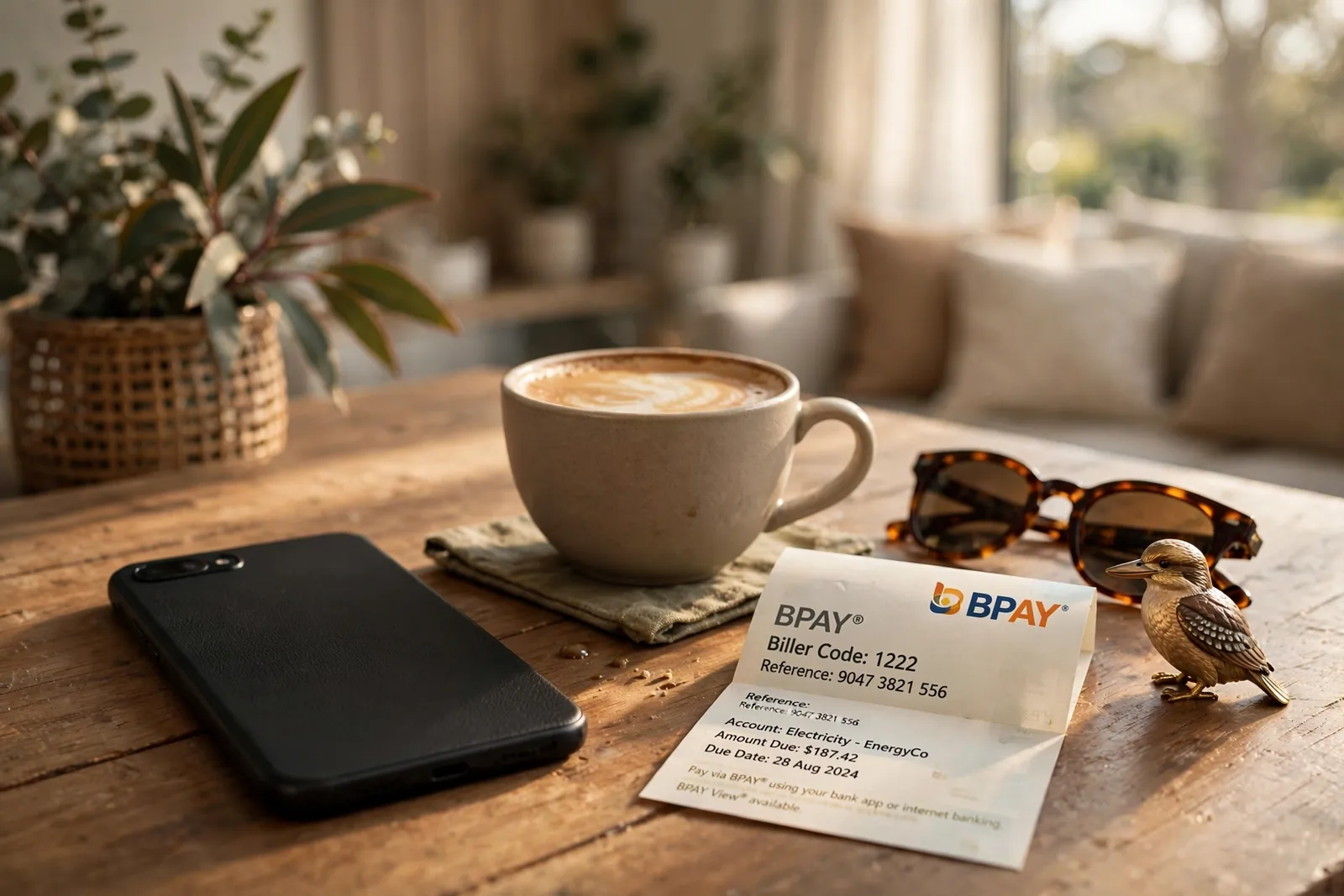
Osko support requires current operator-specific evidence; a payment label alone does not establish that casino games are available or lawful in Australia.

If you are trying to work out whether an Australian-facing online casino accepts Osko, the first thing I’d separate is the payment claim from the wider question of online pokies. They are not the same thing. A site mentioning a payment service would not, by itself, establish that its games are available to people in Australia or that using the site is protected under Australian law.
There is no sound basis here to name an Australian online casino that accepts Osko, or to describe any such operator as the best choice. That is a narrower claim than it may look: it would need to be supported by current, operator-specific information, not a page that simply repeats a payment label beside a pokies heading. I’ve learned not to treat a confident label as proof. Marketing words are cheap.
There is also a legal boundary that matters more than a payment label. Under the Interactive Gambling Act 2001, operators may not provide real-money online casino games to people physically located in Australia. That prohibition covers casino-style services such as poker, blackjack, roulette and pokies. The Australian Communications and Media Authority is responsible for enforcing the Act, and offshore casino services are subject to blocking and enforcement. Australian consumer law does not protect players who use offshore casinos.
If you want to pay with Osko, use this list as a starting point and check directly with each casino whether Osko is currently available for deposits in Australia. The details below highlight what is known, but do not confirm Osko support.
LuckyVibe
You can note that LuckyVibe is listed with a Curacao Gaming Control Board licence, OGL/2023/176/0095, held by Hollycorn N.V. The available details do not specify its payment methods.
Vegaz Casino
Vegaz Casino is listed with Curacao licence OGL/2024/1335/0780 and a minimum deposit of EUR 20. You should confirm whether Osko is available before depositing.
LevelUp Casino
LevelUp Casino is listed with a Curacao eGaming licence, OGL/2023/174/0082, held by Dama N.V., and a minimum deposit of A$15. The supplied details do not confirm Osko availability.
SkyCrown
SkyCrown is listed with a Tobique Gaming Commission licence and a minimum deposit of A$30. Its stated payout times are around 10–15 minutes for crypto and 1–5 days for fiat; these details do not confirm Osko support.
SpinsUp
You can note that SpinsUp is listed with Curacao Gaming Control Board licence OGL/2023/174/0082, held by Dama N.V. No payment-method details are provided.
JustCasino
JustCasino is listed with a Curacao Gaming Control Board licence. The available information does not specify its deposit methods or confirm Osko availability.
Uptown Pokies
Uptown Pokies is listed as operating since 2017 under a Curacao licence, with a minimum deposit of A$20. You will need to check directly whether Osko is currently offered.
Roby Casino
Roby Casino is listed with a Curacao eGaming licence held by Roby Games Ltd. The supplied details do not include payment methods.
Ricky Casino
Ricky Casino lists a minimum deposit of A$20, or A$30 to qualify for the bonus. Its stated payout times are under one hour for crypto and 1–3 business days for PayID; this does not establish that Osko deposits are accepted.
MrPacho
MrPacho lists a minimum deposit of A$30 and payout times of 30–120 minutes for crypto and 24–72 hours for fiat. The supplied details do not confirm Osko availability.
That does not mean a player is criminally liable simply for using an offshore site: the legal prohibition described here applies to operators providing the service. But it would be misleading to turn that distinction into reassurance. A lack of player liability is not the same as legal approval, local consumer protection or a dependable route to resolve a dispute. I would not read “available” on a website as meaning lawful or protected for an Australian resident.
The phrase “Australian online pokies” can also blur two different meanings. It may refer to a site aimed at Australians, or simply to a person in Australia looking for games online. Neither wording changes the legal status of real-money casino games offered to people physically in the country. Nor does a payment method change what kind of service is being offered. Osko cannot make a prohibited casino service lawful.
So what can be established about the specific idea of Australian pokies accepting Osko? Not that a particular operator accepts it, that a mobile casino supports it, or that a game is connected to it. Those claims need evidence tied to the operator and the relevant service. Without that, presenting a list or recommendation would create certainty where there is none. I’d rather leave a name out than dress up an unconfirmed claim as a finding.
This is also why “best” needs care. A payment label alone would not establish that a service is legal for Australian residents, safe to use, or suitable. And calling something a new Osko pokies option would still leave the central issue unresolved: real-money online casino games may not be provided to people in Australia under the Interactive Gambling Act. A fresh label does not alter that.
The useful takeaway is narrow, but important: the search for Australian online pokies with Osko does not establish that any lawful, locally protected casino option exists. It is possible to discuss what the terms mean without directing you to a gambling service or pretending that a payment claim settles the legal question. No operator list. No game recommendations. Just the boundary.
A small deposit figure can make a payment claim look reassuringly concrete. It still answers only one question: what amount someone says can be paid in. It does not establish that Osko is accepted, that a payment will go through, or that an account can be used for real-money online casino gambling from Australia.
I’ve learned not to treat a payment logo or a line of promotional copy as the whole story. The relevant details would need to be clear in the operator’s own cashier and terms: whether Osko is actually offered for deposits, who processes the payment, what information is required, whether any conditions apply, and what happens if a transfer is not credited. Without those particulars, calling a deposit “easy” or “instant” is just a claim, not a useful description of the transaction.
A quoted minimum is especially easy to misread. A figure such as a ten-dollar deposit, if shown somewhere, would not by itself confirm that the payment method is available to an Australian customer. Nor would it tell you whether the amount applies to Osko, to another payment route, or only under particular account conditions. The number and the method have to belong to the same, clearly stated offer. Otherwise, the apparent detail can create more confidence than it deserves.
There is another issue that comes before the cashier. Under the Interactive Gambling Act 2001, operators are prohibited from providing real-money online casino games to people physically located in Australia. That includes casino-style games such as pokies, poker and table games. The Australian Communications and Media Authority is responsible for enforcing the Act, and offshore services are subject to blocking and enforcement. Australian consumer law does not protect players who use offshore casinos. That matters when considering any claim about a deposit: a payment description does not change the legal position or provide the protections a local consumer might expect.
I know how tempting it is to focus on the smallest number on a page. It feels like a low-stakes way to test whether a payment works. But a small amount does not remove the wider risks, make an operator’s offer lawful, or guarantee that a transaction will be handled as described. A headline can leave out account checks, restrictions, or other terms; the headline is not the contract. And where the underlying service is prohibited for operators to provide in Australia, payment convenience is not a reason to overlook that.
If a page claims to accept Osko deposits, the wording should be specific enough to distinguish a genuine payment option from a vague mention of bank payments. It should identify Osko itself in the cashier, explain the deposit steps and conditions, and make clear whether the claim applies to Australian users. A generic reference to “bank transfer” does not establish that Osko is included. Equally, seeing Osko named somewhere on a page does not prove it can be selected for a casino deposit.
I would also separate a stated minimum from a confirmed transaction. A displayed threshold may be an operator’s condition, a third-party description, or an old detail that no longer matches the cashier. If the terms are unclear or the payment route is not shown directly, there is no sound basis for treating a particular small amount as an available Osko deposit. “Low minimum” sounds precise. It may still leave the important part unanswered.
No ranking can fix that gap. Calling a site the “best” for Osko deposits would require evidence that the method is actually supported, that the relevant conditions are current, and that the service can lawfully be offered to people in Australia. A polished comparison or confident label does not supply those things. I’d rather leave a claim unendorsed than turn uncertain payment wording into a recommendation.
So the useful distinction is between a deposit claim and a confirmed, lawful service. A minimum amount alone proves neither. For Australians, the legal restriction on operators providing real-money online casino games is not a footnote to an Osko offer; it changes how that offer should be understood. No shortcut around that.
“Instant” sounds like a clear promise. With a casino withdrawal, it is not. It can be used loosely to describe an operator approving a payout, a bank transfer being sent, or money appearing in an account. Those are different stages, and a label alone does not tell you when you could actually access funds.
I have learned not to treat a payment method’s name as proof of a casino’s payout speed. Even if a payment service can move money quickly in some settings, that would not establish that a particular gambling operator supports withdrawals through it, how it handles them, or when a payment would arrive. Osko’s name beside a withdrawal claim does not settle those details.
That distinction matters because withdrawing is not just the reverse of paying in. A casino might apply its own review before releasing funds, while the payment network and receiving bank have separate roles after that. Without clear, specific terms for each stage, “instant Osko withdrawal” remains a headline, not a dependable timing estimate. I would not plan around it.
No stopwatch claim.
The same caution applies to “real money” wording. It does not make a payout method available, or establish that winnings can be sent through it. Nor does adding “no deposit bonus” turn the phrase into evidence of a withdrawal route or a payout timetable. A promotion and a payment process are separate matters; neither should be inferred from the other.
There is also a more important Australian context than payout speed. Under the Interactive Gambling Act 2001, operators are prohibited from providing real-money online casino games to people located in Australia. The restriction covers casino-style services such as poker, table games and pokies. The Australian Communications and Media Authority is responsible for enforcing the Act. A claim about fast withdrawals does not change that legal position.
I know the temptation to focus on the last step: if money can be withdrawn quickly, the rest can feel secondary. I have made that kind of shortcut in my own thinking. But a payout claim cannot answer whether an operator may lawfully offer the service in Australia, and Australian consumer law does not protect players using offshore casinos. That leaves a real gap between a persuasive promise and a remedy if something goes wrong.
So I would read “instant” as a claim that needs precise terms, not as a result to count on. A meaningful statement would explain what event starts the clock, whether the operator must approve the withdrawal first, and what happens between approval and receipt. It would also make clear whether Osko is actually available for withdrawals, rather than mentioning it only in connection with deposits. If those points are unclear, the adjective does very little work.
Those details can affect a real money decision; guessing would be worse than saying nothing.
If you encounter a claim of immediate Osko payouts, separate the wording from what it demonstrates. Does it refer specifically to withdrawals? Does it explain the operator’s approval stage and the transfer stage? Is it an actual term rather than a banner or promotional phrase? Those are useful questions for understanding the claim, not an endorsement or a suggestion to use an offshore casino.
“Instant” is easy to print. A reliable payout, a lawful offer, and protection if a dispute arises are different things. In Australia, the legal restriction on operators providing real-money online casino games remains central, however attractive a withdrawal promise may sound.
A search for Australian casino sites that accept Osko sounds like it should produce a simple answer: a name, a payment option and a clear way to check. But those are separate claims. A page can mention Osko without showing that a particular operator accepts it, and a payment label alone does not establish that a transaction would work for someone in Australia.
I’ve learned not to treat a confident heading as proof. “Accepts Osko” is only useful when it is tied to a specific operator and backed by current, direct information—such as the operator’s own payment terms or a clearly described cashier option. Even then, wording matters: support for a bank-linked service in general is not the same as confirmation that Osko itself is available. Sounds obvious. Easy to miss.
The year in the search matters, too. Payment arrangements can change, so an old mention does not establish what is available now. Nor does a page’s Australian wording prove that an option is offered to Australian residents. A useful claim needs to identify whose service it concerns, what the payment facility actually is, and whether the information is current. Without those details, a list of names can look more certain than it is.
There is a larger Australian context that cannot be skipped. Under the Interactive Gambling Act 2001, operators are prohibited from providing real-money online casino games—including pokies—to people physically located in Australia. The Australian Communications and Media Authority enforces the Act. The law targets operators; it does not make an individual player criminally liable simply for using an offshore site. But that distinction is not an endorsement or a safety guarantee.
Australian consumer law does not protect players who use offshore casinos. That leaves a practical gap if a dispute arises over an account, a payment or winnings. A familiar payment brand, an Australian-facing page, or a polished claim about convenience does not fill it. “Trusted” is just a word until you know what protection actually applies.
So what can the 2026 question establish? It tells you that people want to know whether Osko is accepted by casino operators presented to Australians. It does not, by itself, establish that any particular site offers the service, that a payment would be approved, or that using such a site is lawful for the operator. Those are not interchangeable conclusions.
I would keep the standard plain: a current, operator-specific statement is stronger than a search snippet, and a vague reference to bank payments is not the same as naming Osko. Even a clear payment claim answers only that narrow question; it says nothing about the legal status of the gambling service or the protections available to you.
That is the line between a search phrase and something you can rely on. No shortcut.
“Best” sounds like a verdict. In practice, it is a label someone has chosen, and it only means much when you can see what was compared and how the claim was checked. I used to treat a confident ranking as a shortcut. That was a mistake: a polished heading can make an unsupported claim look settled.
For an Osko-related comparison, the first question would be whether each named service actually supports Osko for the relevant transaction. A comparison would also need consistent, current evidence for every entry—not a claim copied from another page or an old mention that may no longer reflect the service. Without that, a “best” list is not a useful finding. It is advertising-shaped certainty.
There is a more basic issue in Australia. Under the Interactive Gambling Act 2001, operators cannot lawfully provide real-money online casino games to people in Australia. Casino-style offerings such as poker, blackjack, roulette and pokies fall within the prohibited services when supplied to customers here. The Australian Communications and Media Authority enforces the Act. A ranking cannot turn an unlawful offer into a lawful one.
That matters when a page presents a casino as the best Australian choice. The wording can imply that the service has been assessed as suitable for local players, even when the claim says nothing about the legal position or the protection available if something goes wrong. Australian consumer law does not protect players using offshore casinos. I would not read “best” as a safety signal.
Bonuses and game labels do not fix the problem. A bonus claim is not evidence that an Osko payment route exists, and a list of games would not establish payment support either. Nor does a page become a reliable comparison just because it names several sites. The question is whether the statements are independently checkable, specific to Australia and kept current—not how many entries appear beneath a bold heading.
So I would not name a best Osko casino, site or website on the basis of a ranking label alone. I would want clear evidence for the underlying claims and a plain account of the legal context, rather than language that blurs those questions together. If that evidence is not there, the honest answer is not to pick a winner. It is to treat the superlative as unproven.
No shortcut here.
A payment label and a game catalogue answer different questions. Seeing Osko mentioned alongside casino wording would not, by itself, show that it can be used to pay, or that it has any connection to particular games. I’ve learned not to let a neat label do the work of evidence. “Osko casino payment options” sounds definite; the wording alone proves nothing.
That distinction matters when a phrase seems to link Osko with casino games. A payment service, where supported, would concern how money moves. It would not tell you what games are offered, whether they are available to Australian residents, or whether a particular game has any special relationship with that payment method. Those are separate claims, and each needs its own reliable basis.
There is also a more basic Australian context. Under the Interactive Gambling Act 2001, operators cannot provide real-money online casino games to people physically located in Australia. That includes casino-style services such as poker and other prohibited interactive gambling. A payment phrase does not change the legal status of the service it appears beside.
I would be wary of treating a page title, cashier label or promotional phrase as confirmation. The useful distinction is between a claim about a payment method and a claim about game availability. Neither should be inferred from the other. A cashier might describe a payment route; it cannot establish that a game is lawful for Australians to access. Conversely, seeing a game mentioned somewhere would not establish that Osko is accepted.
This is not just wording. If you use an offshore casino, Australian consumer law does not protect you. That leaves you without the protections you might expect from a locally regulated service, even if a site presents its payment or game information confidently. A polished page is not a safeguard.
So I keep the two ideas apart: Osko as a possible payment method is one question; games associated with Osko are another. Neither a shared phrase nor a familiar brand name settles either one. Marketing language can blur the line. It shouldn’t.
When someone in Australia looks for a casino that takes Osko, the wording can make the answer sound like a simple local payment question. I’ve learned not to treat “Australian” in a site description as proof that a service is legally available here—or that a particular payment option works.
The legal position matters first. Under the Interactive Gambling Act 2001, operators cannot provide real-money online casino games, including poker, table games and pokies, to people physically in Australia. The Australian Communications and Media Authority is responsible for enforcing the Act. That is the setting for any claim about an Australian online casino, regardless of the payment method mentioned beside it.
The Interactive Gambling Act 2001 prohibits operators from providing services, but it does not explicitly make a player's use of an offshore site a criminal offence.
There is an important distinction between the operator’s conduct and the player’s position. The law prohibits operators from providing these services; it does not explicitly make a player’s use of an offshore site a criminal offence. But that does not make offshore play protected or risk-free. Australian consumer law does not protect players who use offshore casinos. If something goes wrong, you should not assume you have the same practical recourse as with an ordinary local service.
And the payment question remains separate. An Australian-facing label, an Australian-dollar balance or a familiar local transfer name would not, by itself, establish that a casino accepts Osko. Nor would it change the legal status of the gambling service. I would want clear, current confirmation from an operator’s own terms before treating any payment claim as real—and that still would not make the service lawful for operators to provide in Australia.
So the Australian context is not just a matter of finding a cashier with a familiar option. It is a market where the law restricts the provision of real-money online casino games, and where offshore users lack Australian consumer-law protection. That’s the part the label leaves out.
A payment method appearing in a cashier does not, by itself, tell you whether it can be used to receive a payout. I used to treat “supports” as one simple yes-or-no label. It isn’t. Paying in and receiving money are separate functions, and a mention of Osko in connection with one would not establish the other.
For withdrawals, the details that matter are whether the payment route is actually offered for payouts, who is eligible to use it, and what conditions apply. Those are specific arrangements, not things you can safely infer from the word “Osko” or from a general payment-method description. I’ve learned to distrust tidy labels. They leave out the part that matters.
There is also a more basic issue for anyone in Australia: real-money online casino games, including pokies and table games, cannot lawfully be provided to people here under the Interactive Gambling Act 2001. The Australian Communications and Media Authority enforces that law. A search result or payment claim does not change the legal position, and it should not be read as an endorsement or invitation to use an offshore casino.
Australian consumer law does not protect players who use offshore casinos. That matters when thinking about a payout: a claim about how a withdrawal works is not the same as a protection you can rely on if something goes wrong. The law does not make the player criminally liable simply for using an offshore site, but that does not make the service lawful for its operator or give the player local consumer protections.
So if you encounter a statement about Osko withdrawals, keep the scope narrow: it would need to refer specifically to receiving funds, not merely making a payment. “Instant” or “available” can sound conclusive while saying little about eligibility or the actual route. I would not turn that wording into an assumption about a payout. Plain distinction.
When you see a payment method mentioned beside a casino, it is easy to read that as confirmation you can use it there. I’ve learned to slow down at that point: a name in a headline is not the same as a working option in a cashier. The general question of paying with Osko does not, by itself, establish that any particular operator supports it.
Nor does “pay” tell you what a transaction would involve. It says nothing about whether a service is offered, what conditions apply, or whether a payment would be accepted. Those details cannot be inferred from the wording alone. A confident label can look useful; it can still leave the important part unanswered.
Australia’s payment habits are varied. People commonly move between cards, mobile wallets and services linked to banks, such as PayPal. That broader comfort with different ways to pay should not be mistaken for proof that Osko is available for gambling transactions. Familiarity is not acceptance. Simple distinction.
There is also a more important context than convenience. The Interactive Gambling Act 2001 prohibits operators from providing real-money online casino games to people in Australia. The Australian Communications and Media Authority is responsible for enforcing that law. Players are not criminally liable simply for using an offshore site, but Australian consumer law does not protect people who use offshore casinos. That leaves a real gap between being able to find a payment claim and having meaningful local protection.
I would not treat a payment logo, a general mention of Osko, or a broad claim about “easy payments” as enough to make a decision. The practical question is whether a specific service actually offers that method, and what its terms say; the legal question is whether the activity is permitted for operators in Australia. Those are separate issues, and neither is settled by a payment phrase.
A payment option is not a green light. In Australia, the legal position matters too.
When someone asks about pokies and Osko in the same breath, two different things can get tangled: what a game is, and how a payment might be handled. A payment label does not tell you which games are offered, and a game title does not establish that Osko is accepted. They are separate questions.
I used to treat a familiar payment name as a kind of shortcut: if it appeared beside a gambling term, I assumed there must be a clear, usable option behind it. That was too generous. A phrase linking Osko with online slots is not evidence of a connection between the payment service and any particular game—or of payment support at a casino.
There is a more basic issue for people in Australia. Under the Interactive Gambling Act 2001, operators may not provide real-money online casino games, including slots, to people physically located in Australia. The Australian Communications and Media Authority enforces that law. Australian consumer law does not protect players who use offshore casinos. That is not small print to skim past.
So the useful distinction is simple: a payment method and game information are not interchangeable. Seeing them paired in a description cannot establish that a game is available, that Osko is supported, or that a transaction would work. I would not treat that wording as a reason to pursue an offshore casino or a real-money game.
Keep the categories separate. Payment claims need evidence about the payment; game claims need evidence about the game. Neither can be inferred from the other. No shortcut there.
Limits are set by each casino and can vary. Check the casino’s cashier and terms for the applicable Amex deposit and withdrawal limits.
Jackpot City Casino, Spin Palace, Ruby Fortune, Ignition Casino, Joe Fortune and PlayAmo are listed as supporting Amex deposits for Australian players. Acceptance can still be affected by a card issuer blocking gambling transactions.
Amex deposits are typically free, but a casino may add a 1.5% surcharge, and Amex cards can incur a 3% currency conversion fee. Withdrawal fees may also apply.
Amex casino deposits are processed instantly. Withdrawals can take up to five days to clear.
You should not assume your money is protected: Australian consumer law does not protect players using offshore casinos, and Australian banks may block gambling transactions on Amex. The Interactive Gambling Act prohibits operators from offering online casino games to people in Australia.
Using Amex does not make an offshore casino safe or locally protected. Australian consumer law does not protect players at offshore casinos, and an issuer may block a gambling transaction.
Deposits typically have no fee, but a casino may charge a 1.5% surcharge and Amex cards can incur a 3% currency conversion fee. Withdrawal fees may apply as well.
Yes, at casinos that accept American Express, a gift card can be used for deposits only.
Created by the ”Richard Casino” editorial team.