Richard Casino Account and Registration for Australian Players
 Available in US
Richard Casino currently presents Australia as a supported player market, and Australia is not named in the casino’s current general restricted-country list. Registration still comes with account conditions: the player must meet the applicable age requirement, provide truthful identity and contact information, maintain only one personal account, and be prepared for verification when requested.
The most useful way to approach sign-up is therefore as an account-compliance task rather than a promotional step. Use your own accurate details, keep one account, protect your credentials, and expect the information entered at registration to be checked against identity documents if KYC is triggered. This page explains those rules and the practical mistakes that can create avoidable account problems.

Table of Contents
- Can an Australian create a Richard Casino account?
- Age and identity information required
- The one-account rule
- Do not share login credentials
- When KYC can enter the account process
- Country and currency choices
- Common registration mistakes to avoid
- Registration and withdrawals are connected
- What registration does not prove
- A practical registration checklist
- Bottom line
Can an Australian create a Richard Casino account?
Richard Casino’s current public material includes Australia among the markets from which it says players come, and the current general restricted-country list in its terms does not include Australia. That supports the narrower statement that the site currently presents Australia as an accepted player market under its own account rules.
Site eligibility answers whether the operator’s own rules currently reject Australia in general. It does not answer narrower questions about payment methods, promotions, game-provider access or later verification checks, so those should be assessed separately.
Provider-level and promotion-level restrictions can also exist independently of general account eligibility. An account being accepted does not mean every game, bonus or payment method is available. Those narrower conditions are covered on the relevant topic pages rather than being folded into the registration decision.
Age and identity information required
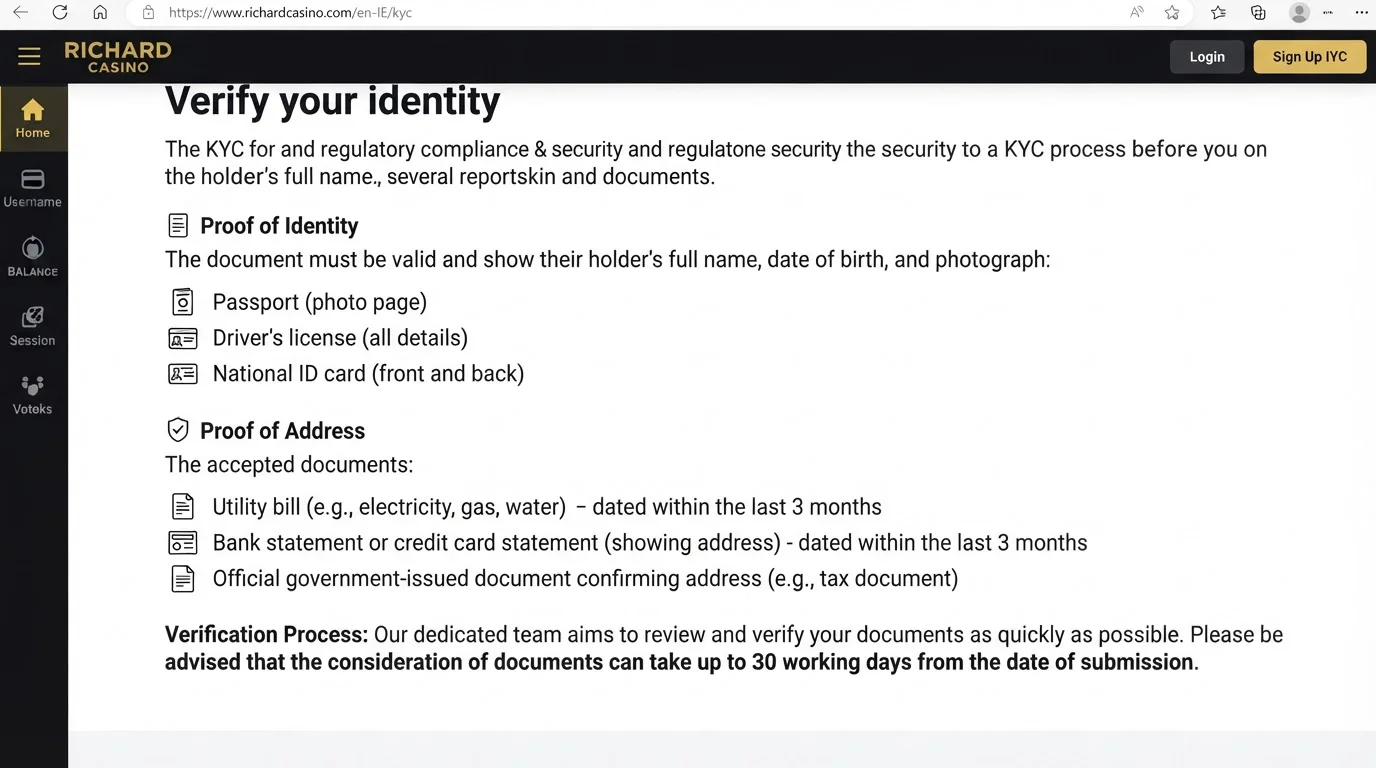
Richard Casino’s current terms require a player to be at least 18 years old or the higher legal gambling age that applies in the player’s jurisdiction. The KYC page says registration information includes date of birth, first and last name, full residential address and a valid email address. It also links age eligibility to valid identification.
The practical lesson is consistency. Enter the same legal identity details that appear on the documents you would use if verification is requested. A nickname, incomplete address or deliberately altered date of birth can create a mismatch later. The casino’s KYC terms expressly warn that false, incomplete, inaccurate or misleading registration information can lead to account action.
Registration data should therefore be treated as account records, not disposable form fields. Use an email address you control, keep access to it, and avoid sharing account credentials with another person. If your address or other details genuinely change later, use the operator’s normal account-update or support process rather than opening another account.
The one-account rule
Richard Casino’s current terms state that each individual may register and maintain only one personal player account. They also say accounts sharing the same residential address, household, IP address or device can be treated as duplicates. The terms reserve the right to close duplicate accounts, cancel pending withdrawals and forfeit winnings associated with duplicate-account activity.
This is one of the most important registration rules because duplicate-account problems can arise from behaviour that a user might otherwise treat as harmless. Opening a second account after forgetting a password, creating a fresh account on a new phone, or registering again because an old email address is inconvenient can all create avoidable risk. Use account recovery or support instead of re-registering.
Shared households deserve particular care. The terms’ duplicate-account wording reaches beyond a matching name and refers to household, address, IP and device signals. That does not mean every shared household automatically violates the rules, but it does mean that creating multiple accounts from the same environment can attract scrutiny. If another adult in the household plans to register separately, consult the current terms and support guidance before assuming that the setup will be treated as independent.
Do not share login credentials
The current account rules prohibit sharing account credentials or allowing another person, including a minor, to access the account. This rule aligns with the one-account model: the account is intended to represent one natural person whose identity can be verified.
From a practical standpoint, that means avoiding shared passwords, letting another person place bets through your account, or handing over access to someone who wants to use your balance or bonuses. It also means that convenience features on a shared device should be used carefully. Saving a password in a browser used by several people can weaken the separation the account rules expect.
If you use Richard Casino on both desktop and mobile, use the same account credentials rather than treating each device as a separate registration. The mobile guide covers the current Android APK and iOS installation routes, but changing the access device does not create a new account entitlement.
When KYC can enter the account process
Richard Casino’s KYC material says the operator can conduct identity and contact-information checks and request additional documentation. The current document categories include government-issued photo identification such as a passport or driver’s licence, proof of address such as a utility bill or bank statement, and in some circumstances proof of the payment method.
The important registration implication is not that every user will encounter the same verification sequence at the same moment. It is that the data entered during sign-up should be capable of matching later documentation. The casino also states that an account can be suspended while satisfactory information is being obtained.
For a detailed explanation of document categories, review timing and the relationship between verification and withdrawals, use the dedicated KYC verification. Keeping that detail on a separate page prevents the registration guide from turning into a document-submission manual.
Country and currency choices
Country selection is part of the account context because availability, payments, promotions and game-provider rights can vary by location. Australian users should select their real country rather than another jurisdiction. A different country choice can create inconsistencies with address documents, payment methods and later verification.
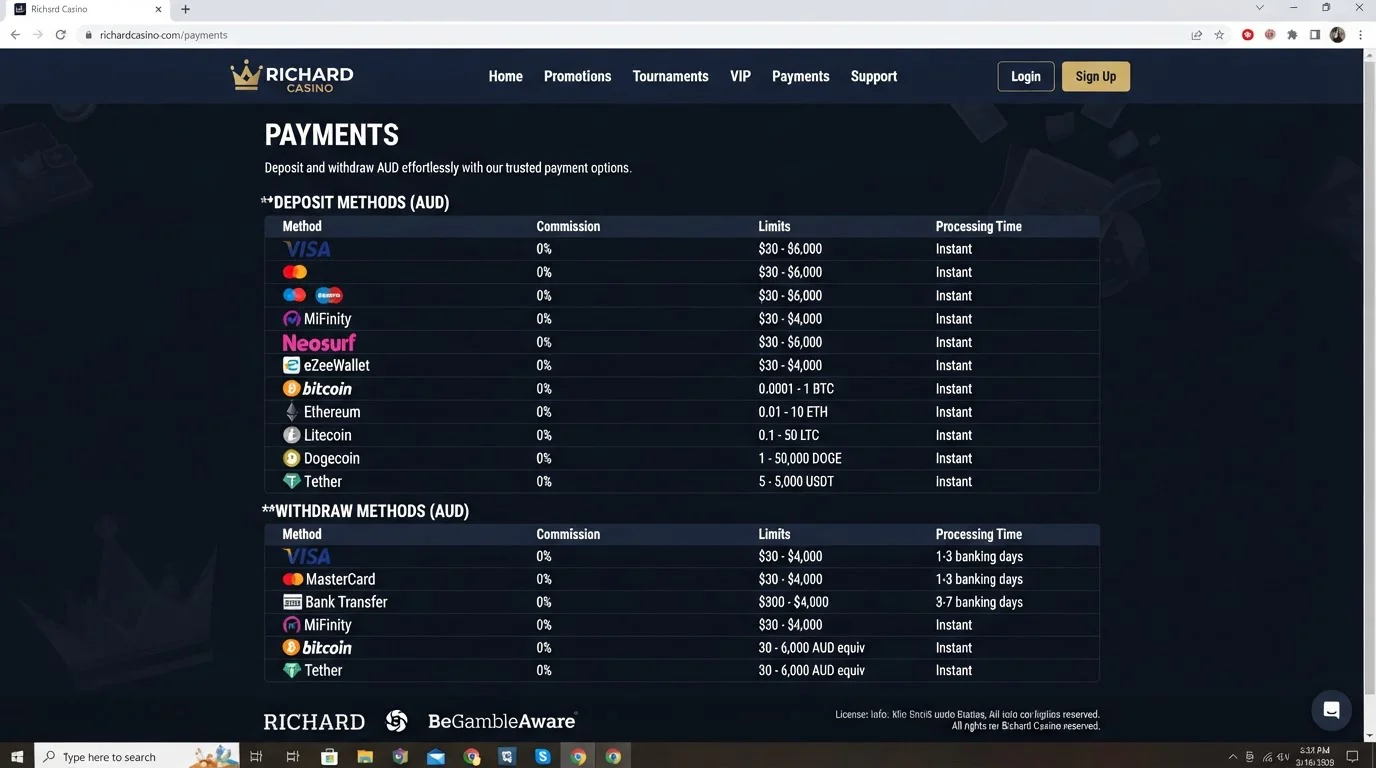
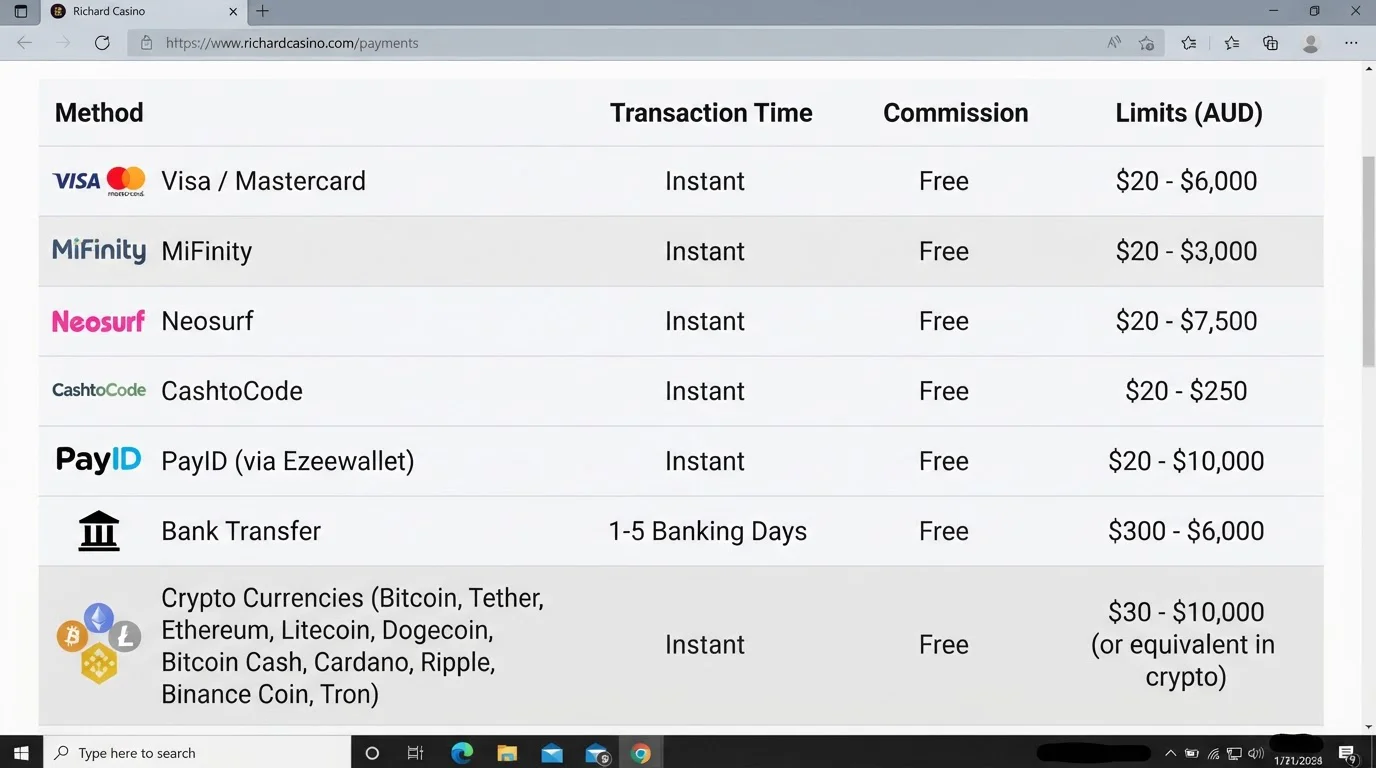
Currency should be treated with the same discipline. The site’s Australian planning context uses AUD, and the current payment pages show Australian-dollar rows for multiple deposit and withdrawal methods. Choosing or using an account currency is not a method for bypassing country restrictions, and this guide does not recommend changing location information to obtain different offers or content.
If your main concern is how AUD deposits and withdrawals are presented, see the payment methods. Account registration should establish accurate identity and location data; payment-method selection is a separate decision made after that foundation is correct.
Common registration mistakes to avoid
- Creating a second account because you cannot remember the login for the first one.
- Entering a shortened or invented name that will not match identity documents.
- Using an address that does not match your current proof-of-address records.
- Sharing the account or password with another person.
- Treating a new phone, browser or app installation as a reason to register again.
- Selecting a different country to try to reach a promotion, game or payment option.
- Assuming that successful registration means every payment method, promotion or game provider is available.
These mistakes have different consequences, but they share one cause: treating registration as a disposable front-end step. The operator’s rules connect the registration record with later identity checks, duplicate-account detection and payment processing. Accurate data at the start reduces the chance of conflicts later.
Registration and withdrawals are connected
A casino account can appear functional before a withdrawal request makes identity consistency more important. Richard Casino’s terms reserve the right to verify identity before processing withdrawals, and its KYC policy allows additional checks. That makes registration accuracy especially relevant for users who eventually want to withdraw rather than merely browse the lobby.
Do not read this as a promise of a particular verification time or payout time. Those are separate high-risk details and are handled on the relevant KYC and withdrawal pages. The useful point here is structural: the identity attached to the account, the payment method and the documents submitted later should describe the same person.
If withdrawal mechanics are your next question, use the site’s withdrawal guide after reading the KYC page. That sequence is more useful than trying to solve payment verification during registration itself.
What registration does not prove
A completed Richard Casino registration does not prove universal payment availability or access to every game provider. Those are separate product questions with their own current terms and availability checks.
This distinction helps avoid a common review-site error: using a working sign-up form as evidence for every other aspect of the product. The account page should answer whether the operator’s own current rules permit the account and what obligations attach to it. The licence and trust addresses the operator and licence context separately.
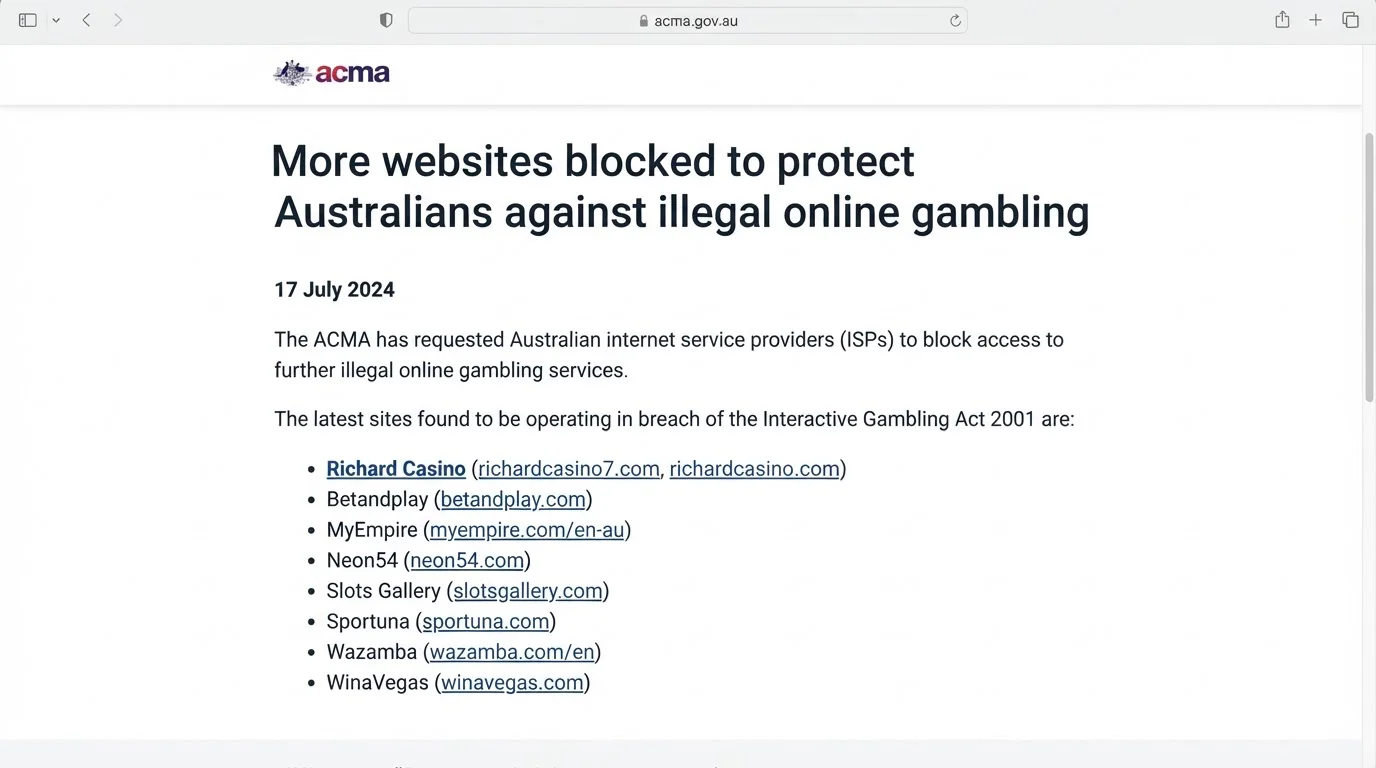
For Australians, that separation is particularly important because online gambling regulation distinguishes between what a site technically permits and what Australian law authorises providers to offer. This guide therefore describes Richard Casino’s own account rules without converting them into a legal endorsement.
A practical registration checklist
- Confirm you meet the applicable age requirement.
- Use your real legal identity and current residential details.
- Use an email address you control and can continue to access.
- Select your true country rather than changing location data to reach a feature.
- Keep one personal account and recover an existing account instead of registering again.
- Do not share credentials or allow another person to use your account.
- Keep in mind that identity and address documents can be requested later.
- Read the current payment and KYC rules before making decisions that depend on withdrawals.
This checklist is intentionally procedural rather than promotional. Registration is easier to evaluate when the focus is on data accuracy and account continuity, not on racing through a sign-up flow to reach a bonus.
Bottom line
Richard Casino currently presents Australia as a supported market and does not name Australia in its general restricted-country list. Its account rules require eligible age, truthful identity information, one personal account and secure control of account credentials. Verification can later require photo identification and proof of address, so the information used at registration should be accurate from the beginning.
That supports a clear decision rule: register only once, use your real details, and treat account, KYC, payments and Australian legal status as related but distinct topics. For document checks, continue to the verification guide; for deposits and withdrawals, see the payments guide; and for regulatory context, use the licence and trust guide. The full Australian review connects those topics in one overview.
Written by the editors at Richard Casino.